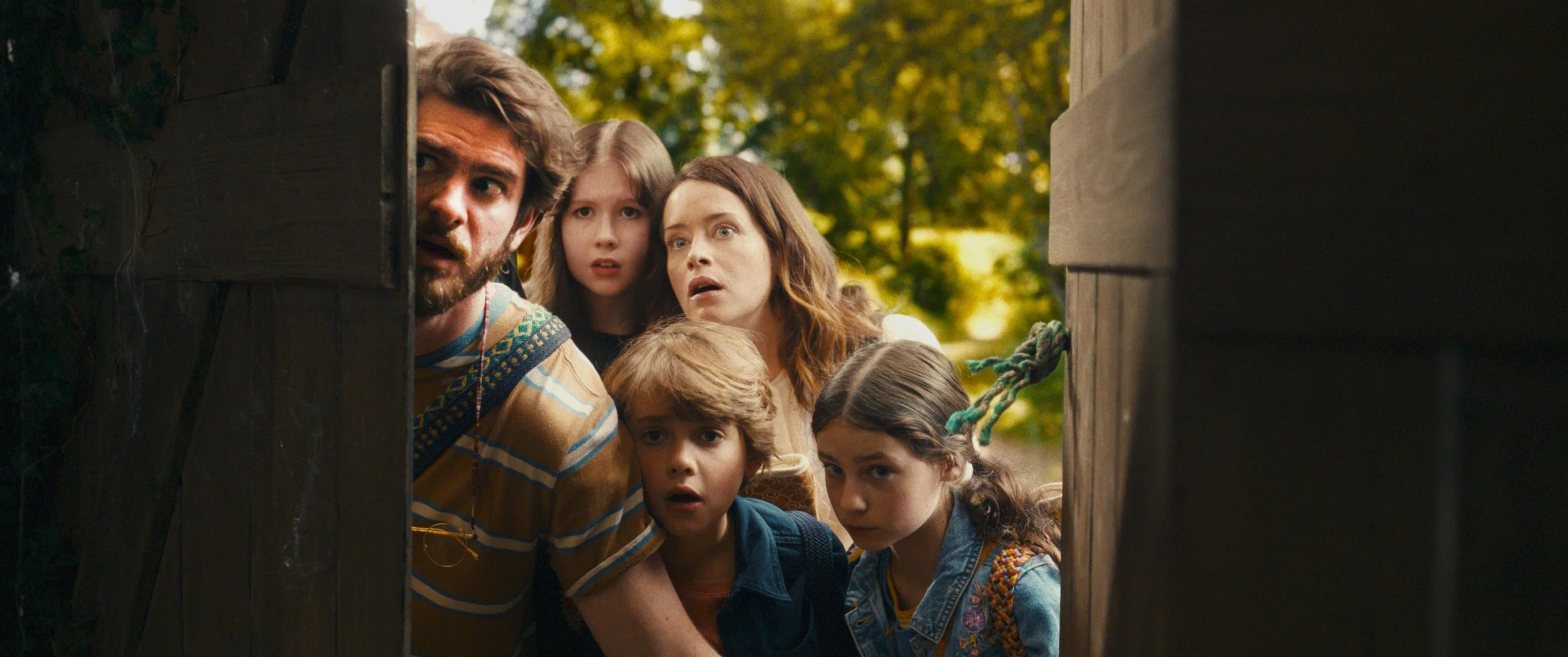

You, Me & Tuscany is an unashamedly female-gaze romantic comedy, and there is nothing wrong with that. Borrowing all the necessary tropes of the genre, it knows exactly what its audience wants to see. All it takes is one glimpse at the attractively appetizing Regé-Jean Page, whether you catch him on the poster or wait until his introduction in the movie, and everything about the gaze, all of a sudden, makes obvious sense.
Read MoreTheir competing attitudes of care are warranted, but take away from the cinematic possibilities of the surreal and existential, like that aforementioned billiards scene. Through all the external squabbling around him, the impressive lead performance of Hugo Armstrong shines. Sam Bullington rightfully steals his share of the spotlight, but the gravitational weight of Watching Mr. Pearson always moves through Armstrong.
Read MoreWithout that type of dramatic weight that pushes harder than a liar’s loose regret, the most performance range we get out of Emanuelle Chriqui and Hayes MacArthur is a minor shift and transformation towards a balanced plane of apology when disagreements create a verbal blow-up. The pain registers differently between the two as the reservation clock is running out.
Read MoreSome of the best acting moments in any given film can happen without dialogue. A facial expression or a piece of body language can mean as much as a multi-page monologue. Those performers who can nail that moment are onto something special in their roles. When possible, Fantasy Life, from writer-director-star Matthew Shear, seeks to make the most of those wordless character statements.
Read MoreWhat is more important: the creation or the creator? While we could open that very debate to a movie and its director—especially this one returning to the director’s chair for his first feature in a tumultuous eight years—this film focuses on the field of architecture. So, more specifically, does the created structure matter more than the artist who conceived the design?
Read MoreIn Storm Rider: Legend of Hammerhead, you’ve got muscular, heavy-metal boats racing for survival through surf laced with dazzling electrical bolts dropping from the sky. That doesn’t have to be entirely serious. Swash that buckle up a bit and squeeze some more color and courage out of this spectacle.
Read MoreSometimes, the low point of a screw-up is the necessary springboard and not the “I told you so” gotcha moment. When that clarity is found in For Worse, it’s treated more as confirmation than a delayed epiphany, which plays truer to life than orchestrated movie moments that plant those revelations in grandiose gestures and climaxes.
Read MoreThat positive togetherness among solid friends is your stamped answer to Lesson #2. The small yet serious life-and-death situation does not need an extra roller coaster. This is a keen balance in a film that is rightly not trying to create pitfalls to rattle cinematic seismometers for the action junkies because the wisening emotions displayed are more than enough.
Read MoreClever comeuppance is not the same as legitimate consequences, and that’s where the stiff reality of real-life outside the dramedy movie crashes the party. Because Signing Tony Raymond hops back and forth between the sordid and the sincere without full potency for one or the other, the cinematic takedown of college football recruitment practices is half-strength, at best.
Read MoreTributes and the flutters of nostalgia exist for the weirdest things in the oddest places, even for a cheesy 1997 movie that made $65 million after being #1 for two whole weeks. It was a helluva time to be alive then, and it’s helluva time to be alive now to see Anaconda both lampooned with love and gilded with the guts of its many victims…err… fans.
Read MoreThere’s an energy—an intoxicating and exhausting fix—to hitchhiking on this downward spiral. However, when it’s all said and done in this male-dominated affair, you’re back to scrounging for or justifying the satisfaction or dissatisfaction of Lesson #3 and the fact that this is, once again, a tizzy made for ping pong.
Read MoreUnlike Stanley Kramer’s much-lauded Judgment at Nuremberg from 1961, which took a more fictional/composite direction, this film uses as many real figures as possible. Even so, there’s plenty of pendulum space for a courtroom drama of this subject matter to veer somewhere between respectful and exasperating. James Vanderbilt had a choice, and he, as an experienced and successful screenwriter known best for his gaudy action flicks, perked up Nuremberg with a little pump and pomp.
Read More