
MOVIE REVIEW: The Weight
Images courtesy of Vertical Entertainmenet.
THE WEIGHT— 3 STARS
LESSON #1: THE MEASURE OF A MAN— Just about every one of the 112 minutes of The Weight holds on the stern gaze and presence of five-time Academy Award nominee Ethan Hawke. In the first 30 or so of those minutes, the film gives you the proverbial measure of the man known as Samuel Murphy, only, unlike Percy Bartholomew Estes’s famous quote from his 1937 book, this man has little to no power during the early years of America’s Great Depression. Tough economic times, bad luck, and the unfairness of lawful authority have stripped him of the capacity he had as a father and a Doughboy World War I veteran.
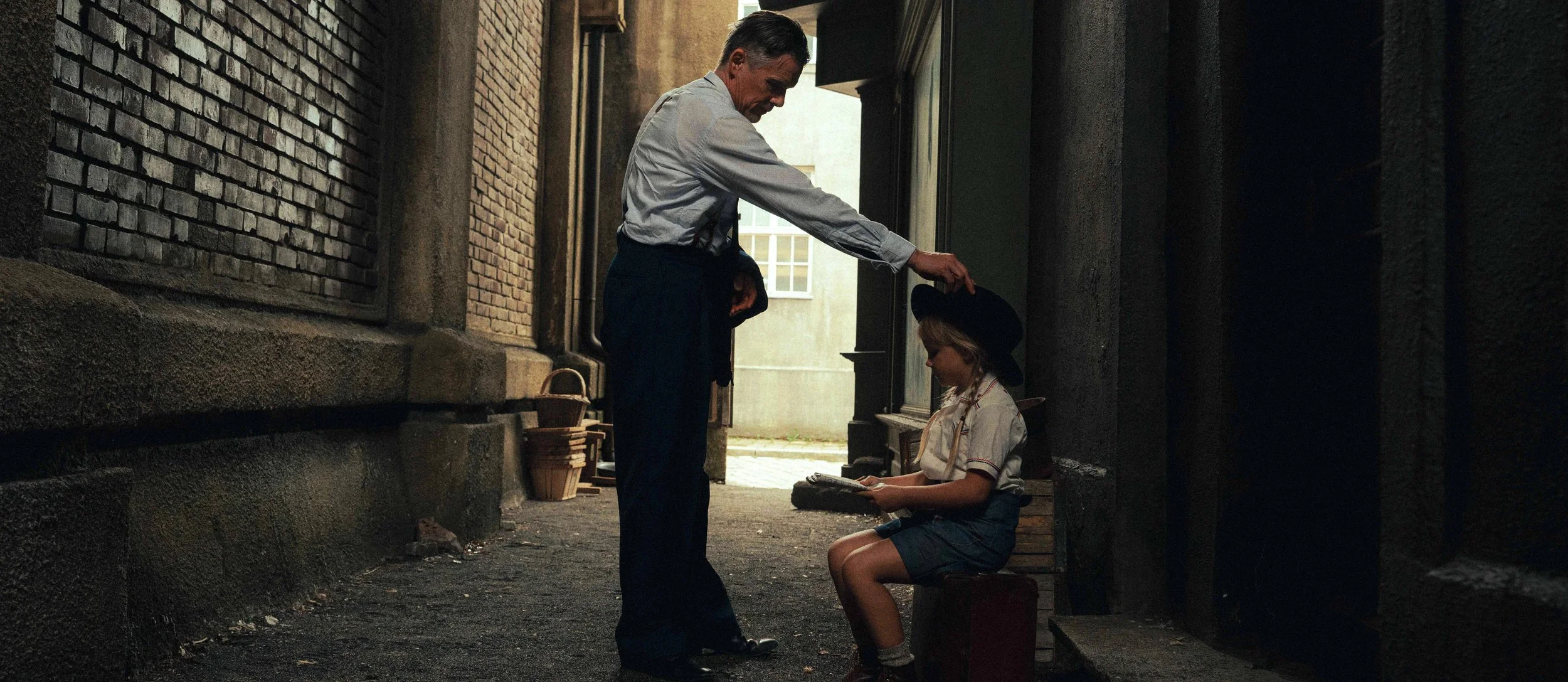
Early in The Weight, Samuel Murphy is presented as a dutiful single father to his teddy bear-totting daughter Penny (Avy Berry of A Quiet Place: Day One). She’s shown giggling with glee as her father whips an old coupe down a gravel road at high speed. Penny is his entire world. Nevertheless, Samuel’s touchy behavior—which may look initially like a bad influence as the two are evicted from their apartment—comes from the resourcefulness necessary of the era. It’s made worse when a misunderstood confrontation with some thugs over squatting leads to an assault charge and an incarceration sentence, separating a daughter from her only remaining parent.
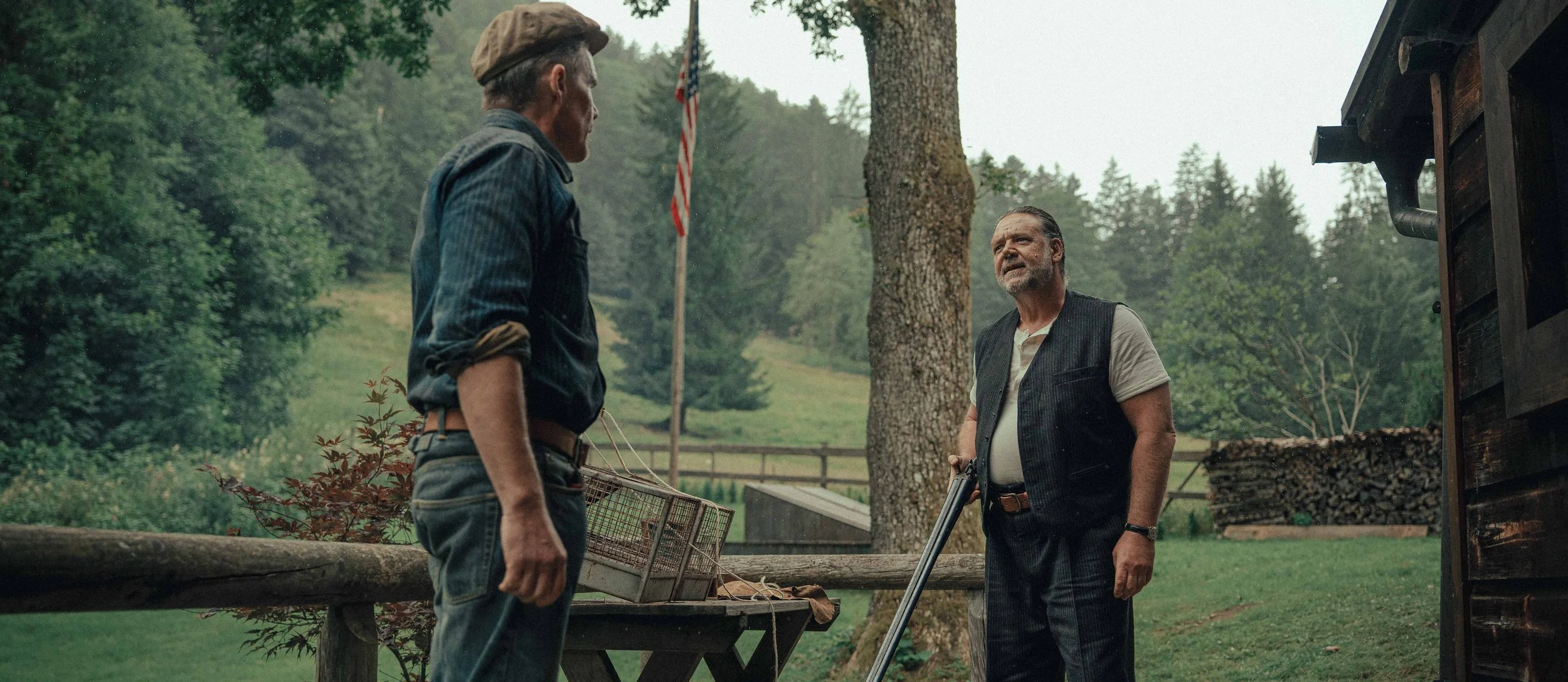
Murphy, now conscripted to hard labor on a road construction crew in the Cascade rain shadow valleys of southern Oregon, has lost his livelihood and sole source of happiness. His innate adaptability is now channeled into getting back to Penny as fast as possible. Working alongside less reliable, hardened cons, Samuel keeps his head down, hoping good behavior and completed work might engratiate him with Warden Clancy (the second-billed Oscar winner Russell Crowe) and shorten his bid. Sure enough, the enterprising Clancy offers the dependably proven Murphy a proposition that dangles his freedom and tests the already strained mettle of his character.
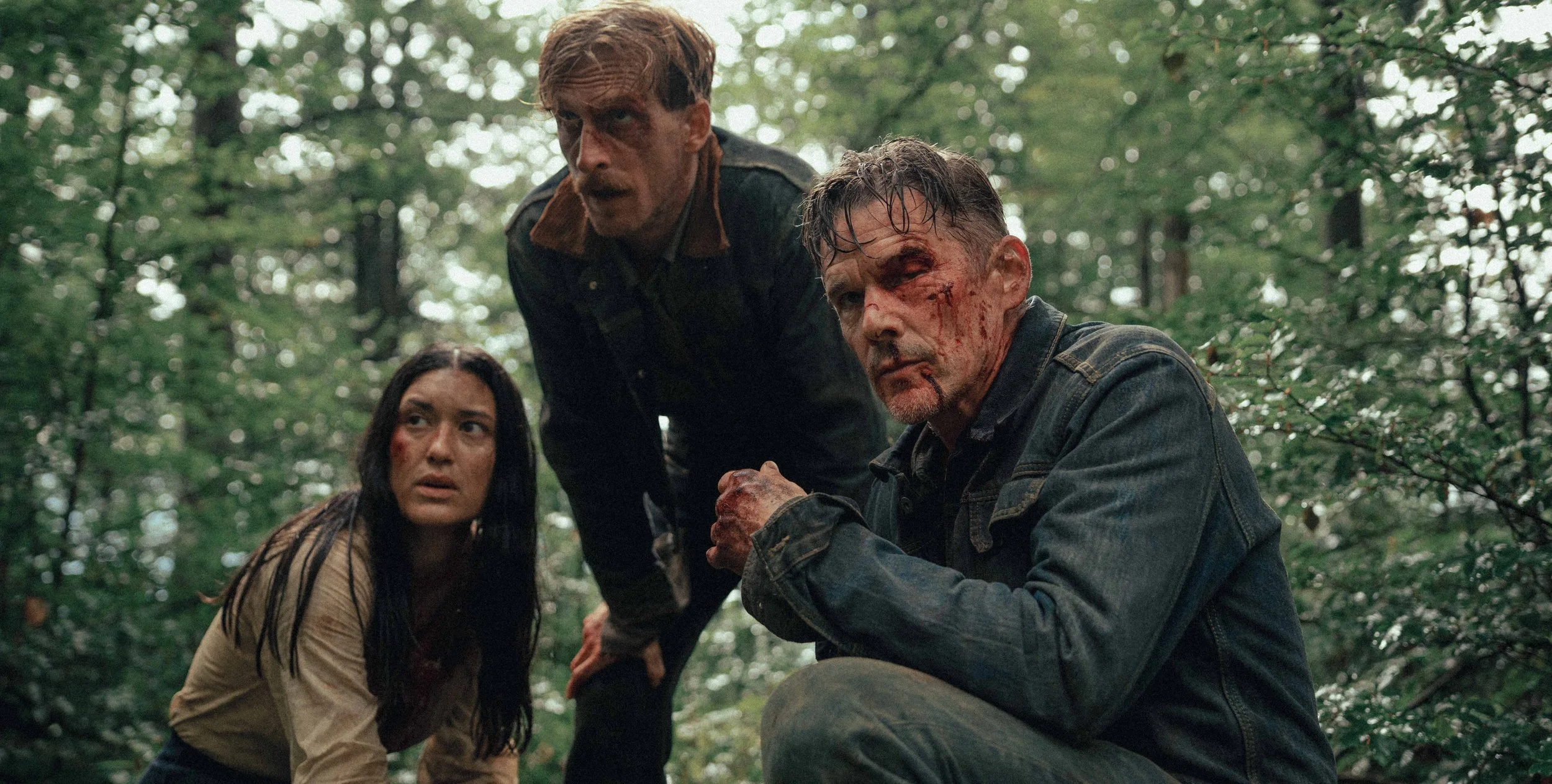
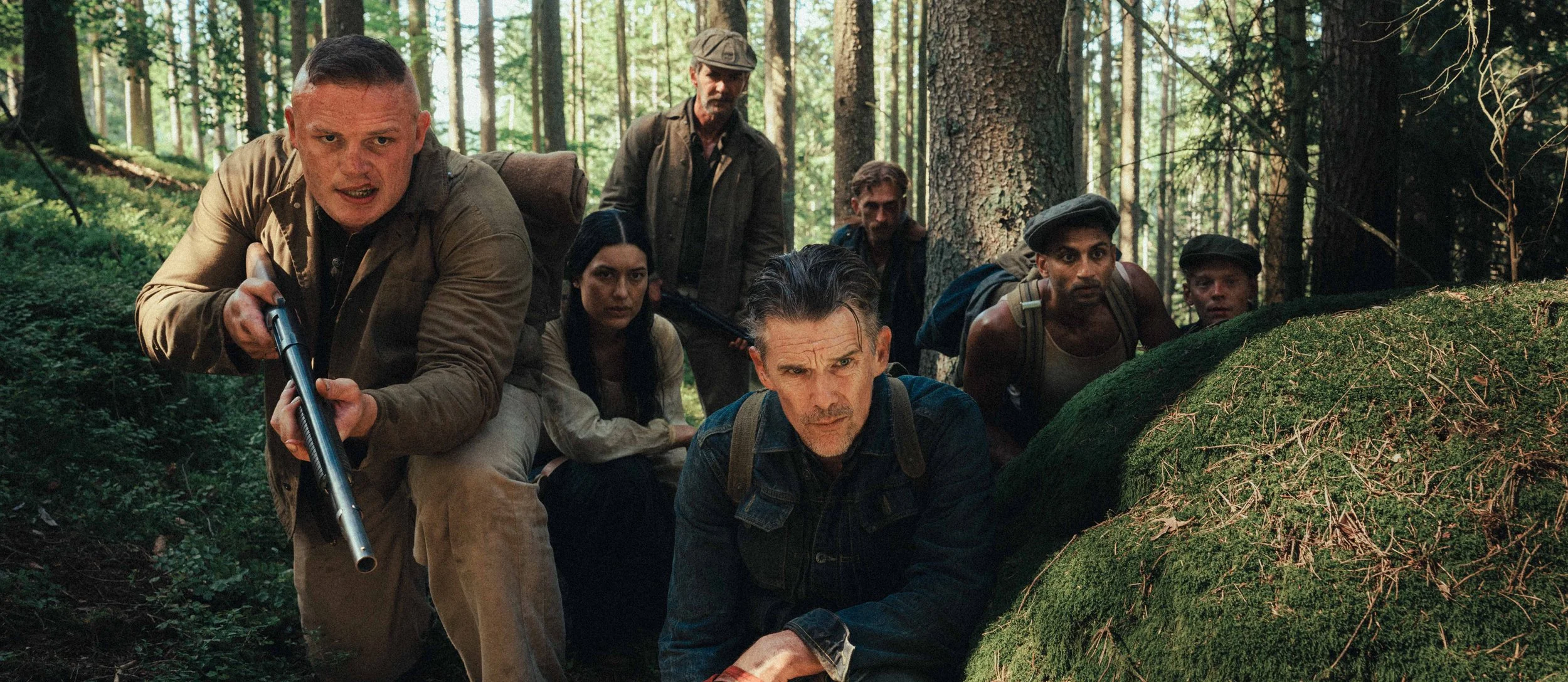
Clancy enlists Murphy to gather a team to be the haulers for a heist job at the Black Hawk Gold Mines near Klamath Falls. The warden’s inside people are looking to abscond with a load of gold bars before the federal government confiscates it to replenish lost national wealth. Joined by two trustworthy immigrant prisoners, Singh and Olson (The Walking Dead’s Avi Nash and Lucas Lynggaard Tønnesen of The Patron), and Rankin (Hit Man heel Austin Amelio), the brash motormouth shit-stirrer, the men have a week to hike the heavy gold 100 miles on foot, off the beaten path, before anyone catches wind it's gone. With The Weight’s ticking clock and promised paperwork waiting at the end, what was patience has now transformed into desperation.
LESSON #2: THE LENGTHS ONE WILL GO OUT OF DESPERATION— Taking on this challenge, Samuel hits another gear of will. It’s not that he devolves into greedy madness around the gold—that’ll be the other men on the crew—or anything near the “a desperate man is a dangerous one” adage. Rather, the urgency of this labor makes him fearless and willing to go to any length to reunite with his daughter. While the title of the film symbolizes the exhausting physical burden being carried, the weight in question also typifies the tremendous risks.
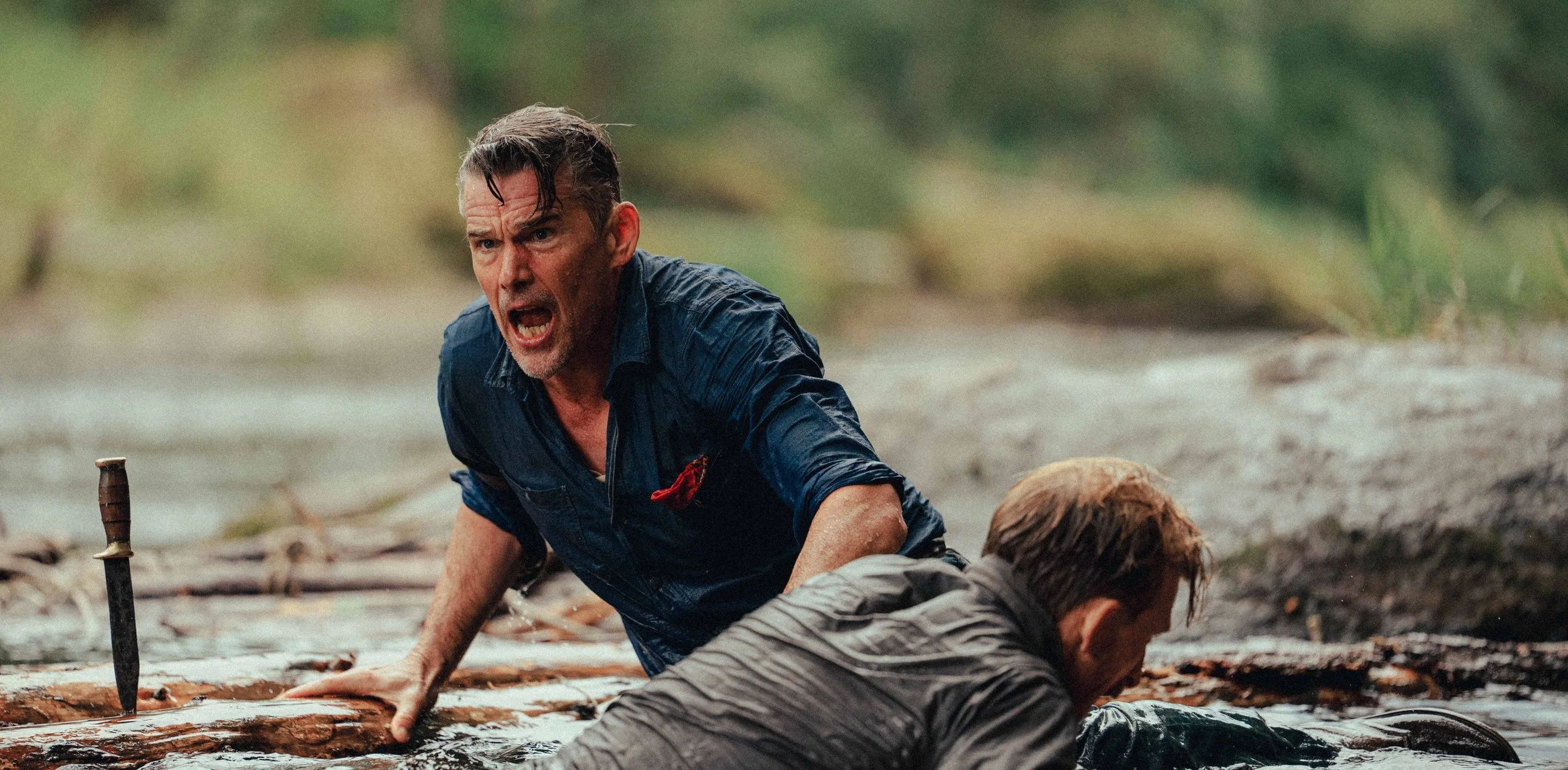
Director Padraic McKinley, making his feature film debut in the big chair, puts these men—and one indigenous runaway woman named Anna (Julia Jones of Dexter: The New Blood)—right in the thick of its Bavarian filming locations doubling as the Pacific Northwest. McKinley and his Italian DP Matteo Cocco envelope the ensemble and audience in the towering dread created by the rugged topography and the physical stunts orchestrated by Volkhart Buff. Cocco captures centerpiece-level sequences of suspense, including traversing a rickety suspension bridge and escaping crushing logs rolling down a river, alongside a steady stream of fade-overlay blends that act as transitions between escalating ordeals. The grim mood is also heightened by the eeriness provided by an experimental score of self-built instruments created from found objects by the GAINES duo of Lathan and Shelby Gaines (who worked with Hawke on his well-regarded directorial effort of Wildcat a few years ago).
Made on an indie budget’s dime with an all-hands-on-deck mentality (including Shelby Gaines helping pen the screenplay with Trench 11’s Matthew Booi), the grit of The Weight is hugely apparent, and it starts with Ethan Hawke. Spitting gravel with every line reading, Hawke weathers the unrelenting march with an understated, yet commanding performance. It would have been conveniently cliché to have his lead descend into The Treasure of the Sierra Madre territory of greed and madness. Instead, the soon-to-be 56-year-old exudes focus and resolve that act as an excellent foil against the self-destructive men around him. His approach stands out and is greatly appreciated.
The difficulty in fully embracing The Weight comes in an unraveling that mires the picture’s final third. After all the good graces gained by the bold stuntwork and mounting threats, McKinley and company lose the ending. We know the long road is going to lead back to one last confrontation with Russell Crowe, after a long absence from the on-screen plot, but the resulting showdown is surprisingly tame after all the simmering desperation. Moreover, by the time the end credits arrive with a Lynyrd Skynyrd needle drop and a Jerry Bruckheimer-style curtain call of the smiling cast, The Weight becomes a movie that thinks it is more sensational and more inexplicably entertaining than it really is, as if we all just finished some rootin’ tootin backwoods adventure. That’s a stamp fitting something with a fun factor, not this kind of film with the lumbering pace of a half-dozen men lugging backpacks to their eventual dooms.



LOGO DESIGNED BY MEENTS ILLUSTRATED (#1431)
