
MOVIE REVIEW: Wicker
Images courtesy of Black Bear
WICKER— 5 STARS
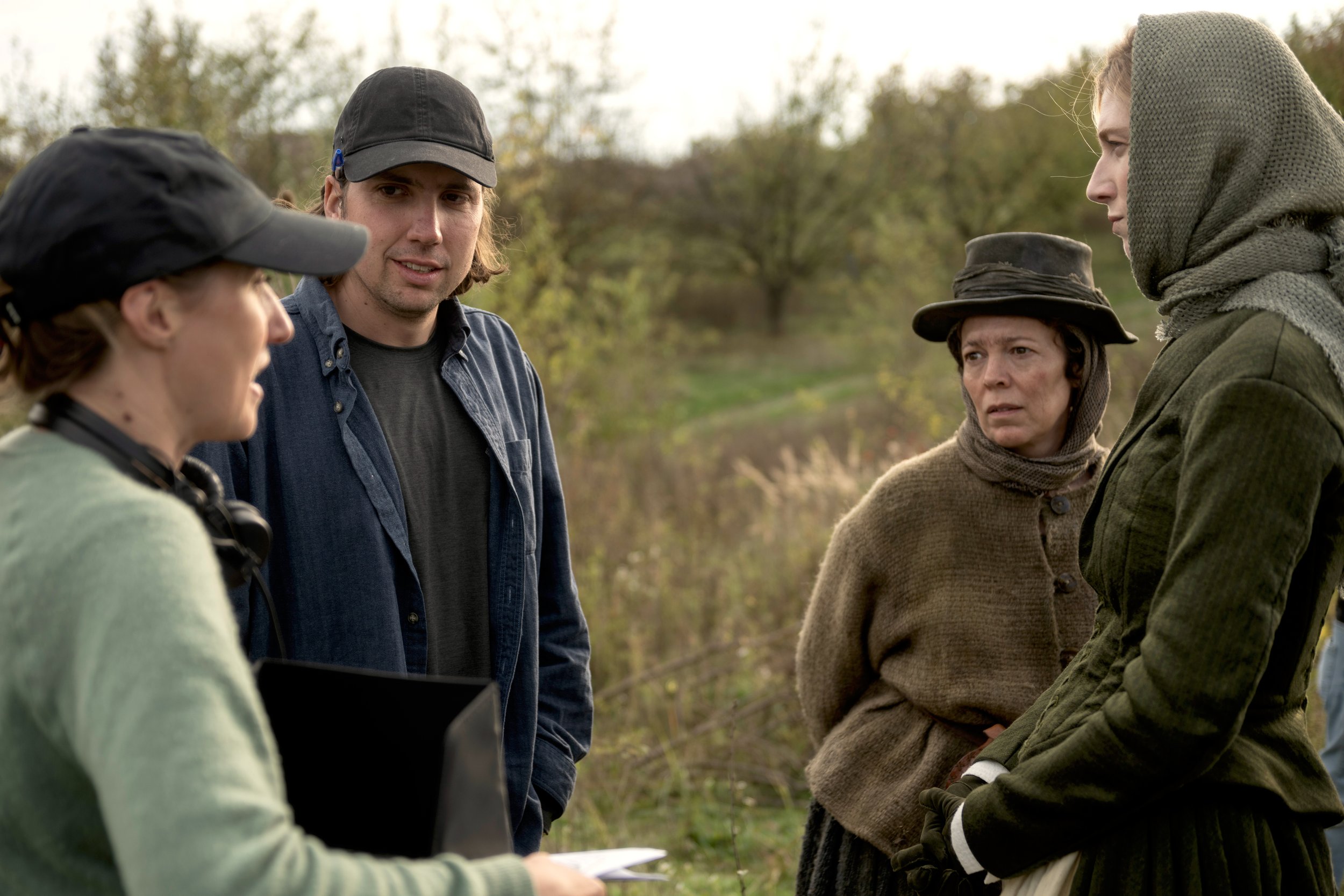
I cannot help but watch the brilliant film, Wicker, the sophomore feature film from the Save Yourselves! directing duo of Alex Huston Fischer and Eleanor Wilson, and see an analog comparison to Spike Jonze’s Oscar-nominated 2013 masterpiece Her. The two films couldn’t be farther apart in terms of polish and setting, yet the narrative goals for finding substantial love from artificial, yet affirming places are wholly unified. Wicker’s thought-provoking weirdness, arresting beauty, utter honesty, and intoxicating charm strike all the same unforgettable chords.
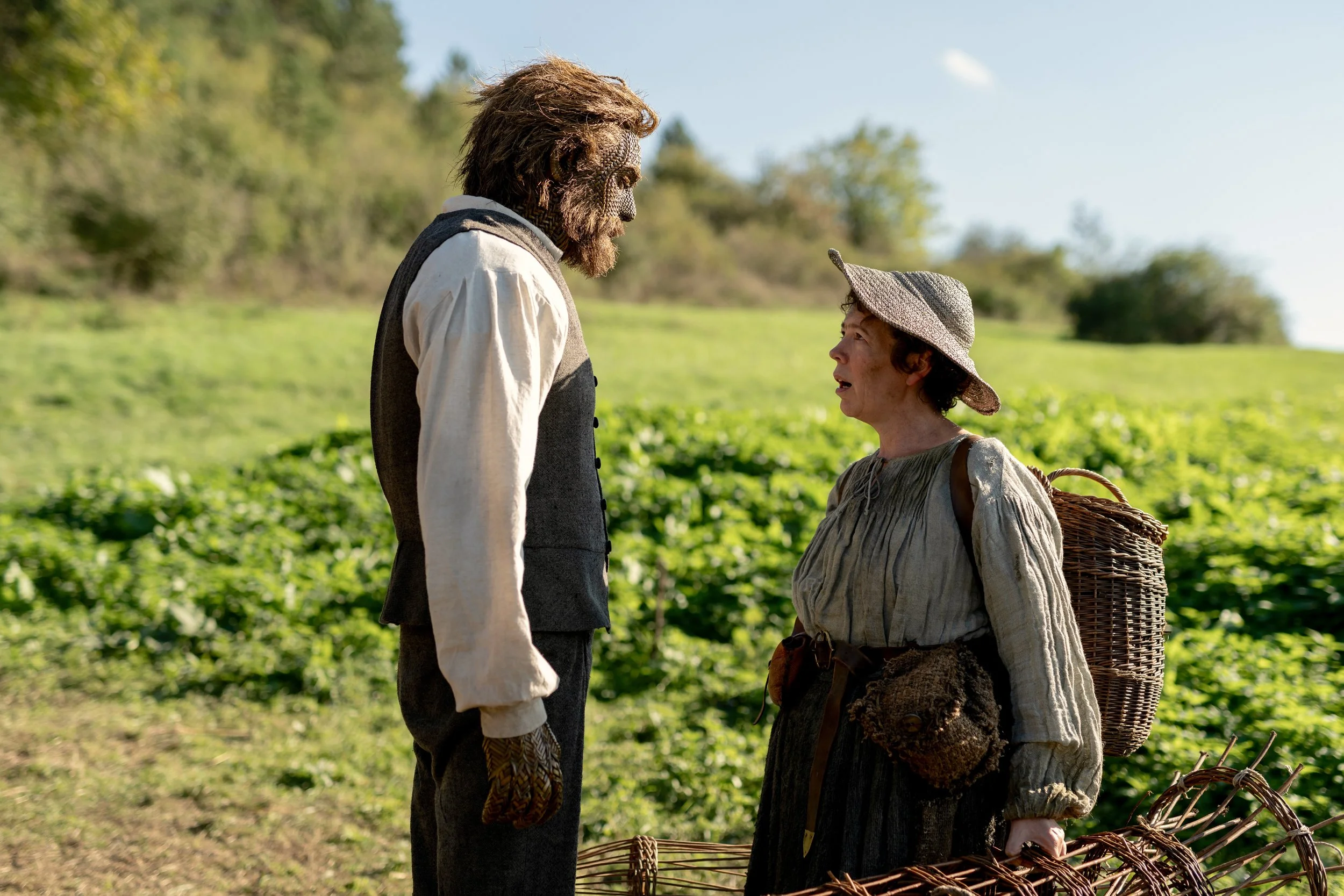
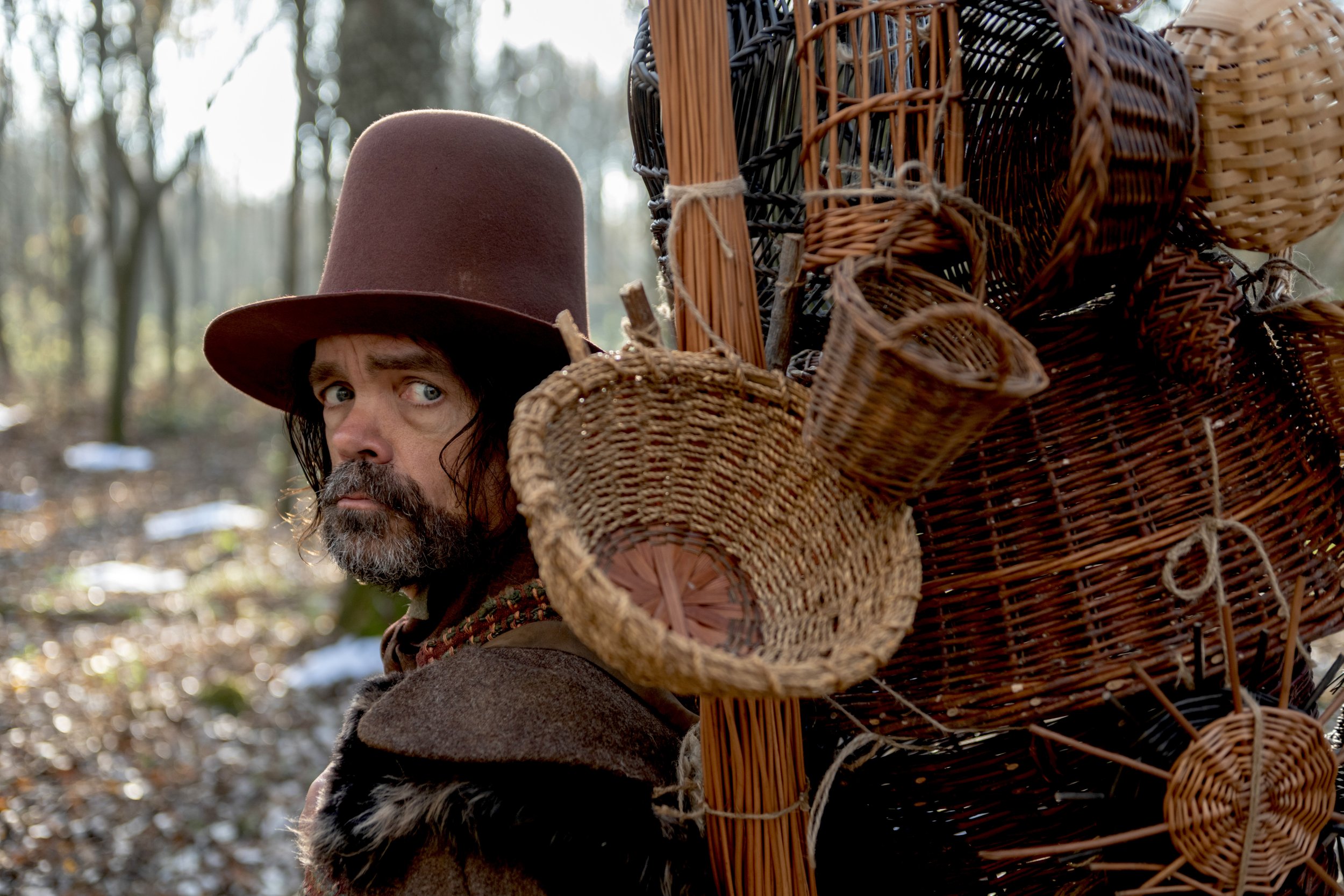
Set in the pre-colonial era and filmed in the rural countryside outside of Budapest, Hungary, Wicker focuses on a spinster woman played by The Favourite Academy Award winner Olivia Colman. Like everyone in her nearby village, she is named for her familiar place or given profession: Fisherwoman. Looked down upon and openly ridiculed by most all for her late age, uncouth attitude, and smelly aura, Fisherwoman lives a solitary life of labor and the occasional crass retort while other citizens appear to thrive with marriage and family. She would love to see her fortunes change in that department and seeks out the travelling Basket Weaver (Emmy winner Peter Dinklage) to work a miracle.
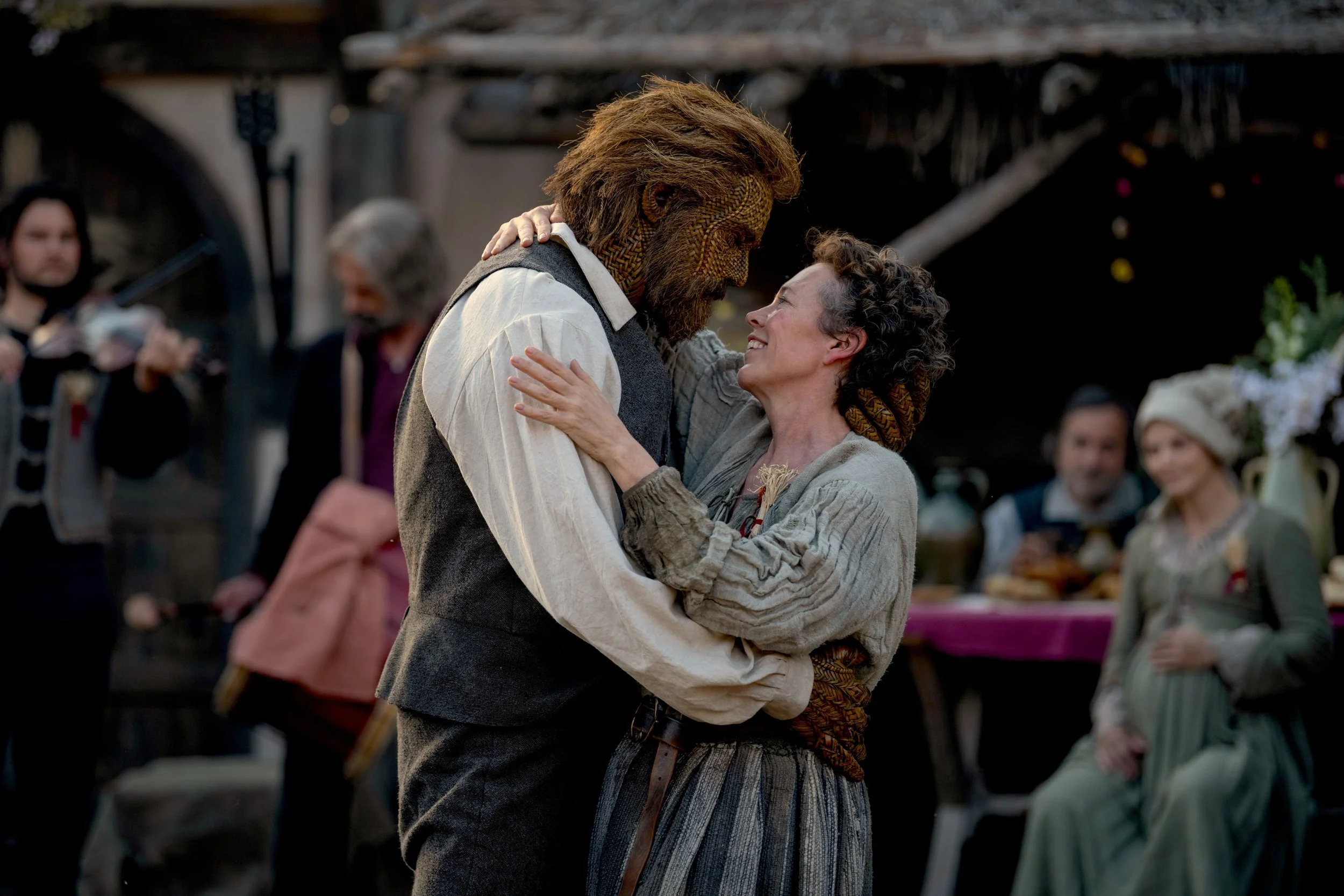
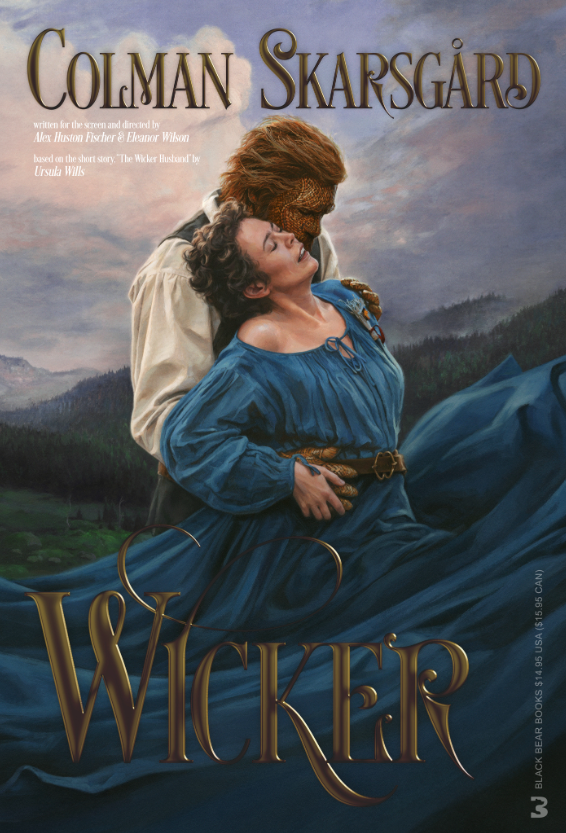
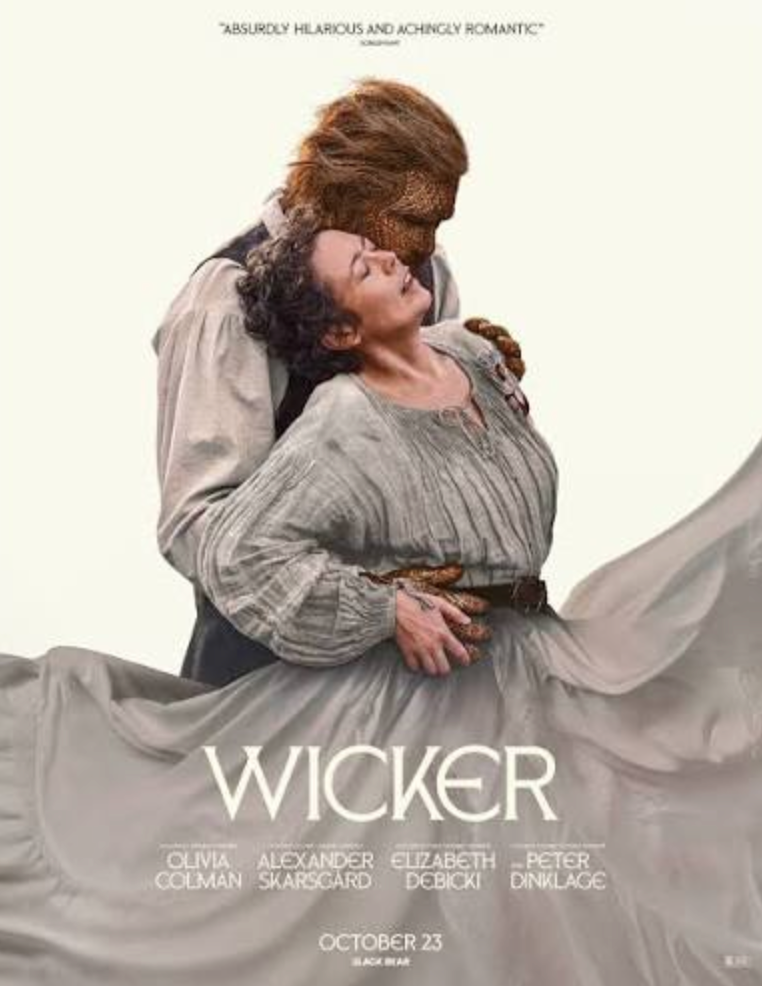
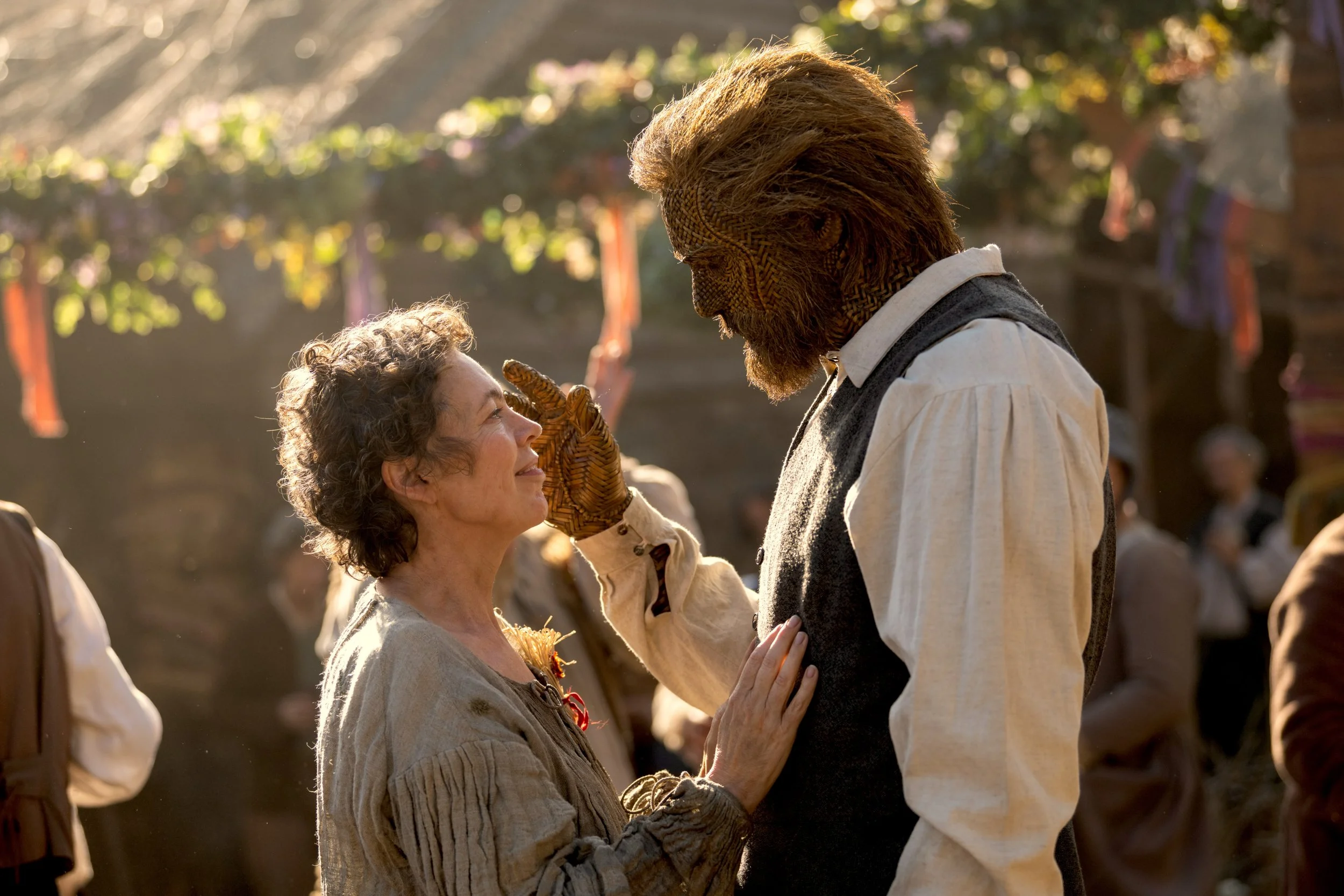
She pays him to “make me a husband,” a tall task for the highly creative and flamboyant craftsman, but one fitting his “has there ever been a more righteous endeavor” ambition. Augmenting Mother Nature like a cross between Victor Frankenstein and Bob Ross, Basket Weaver delivers the Wicker Husband, a strapping figure played underneath a guise of prosthetic makeup and a slight varnish VFX by the ageless heartthrob Alexander Skarsgård. Fibrously woven from different gauges of reeds and willows, the anatomically correct man is not only perfectly built but takes to Fisherwoman immediately.
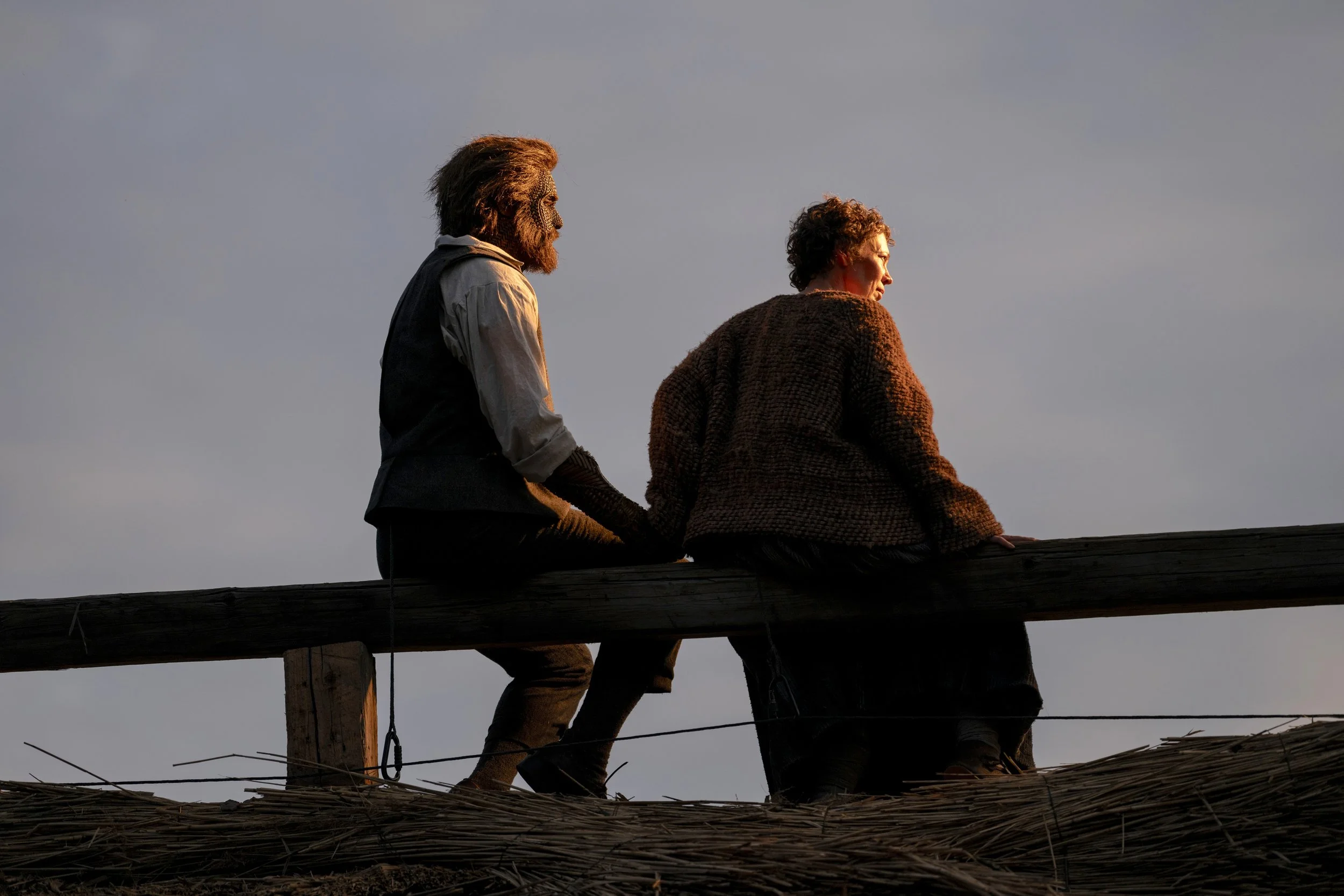
LESSON #1: EXPERIENCING UNCONDITIONAL LOVE— Husband has been enlivened to unconditionally love Fisherwoman not like a pet or servant, but as a romantic and physical equal. Quite simply, his entire thankful existence is to put her first; the socially lonely Fisherwoman has never experienced this level of doting and dutiful affection before, and almost doesn’t know what to do with it. Before this, she doubted love and questioned the worth of marriage. Yet, this companionship is a lightning bolt to her heart, unlocking confidence she never knew she had and satisfaction she never knew she needed.
LESSON #2: CAN LOVE COME FROM ARTIFICIAL SOURCES?— This striking development in Wicker counts as love crossing a not-so-new line to artificial sources and whether—spiritually, morally, or whatever supposed stress of importance one wants to impart on the matter—this is truly fulfilling, healthy, and proper. Like Joaquin Phoenix’s introverted Theodore Twombly in Her finding “Samantha,” or Ryan Gosling’s titular character in Lars and the Real Girl toting around a life-sized doll, Fisherwoman is a better person with Husband in her life. That has to count for something, traditions be damned.
With this new chapter of life and existence, Wicker indeed widens the world to play out this concept for public reaction. Once Fisherwoman and Husband step out publicly at a village wedding, the gossip mill—working mostly through Elizabeth Debicki’s Tailor’s Wife (a sly supporting role as a foil to Colman)—grinds and churns with a myriad of reactions. It’s not necessarily the shock that Fisherwoman has a spouse, but the fact he is so perfect and behaviorally different than every other man in town. Thick with this layer of satire, Wicker’s village is principally populated by unaffectionate, job-focused, surly, fallible, and unromantic men and husbands who want their women at home tending to the house and making babies. They are zero help and grant little freedom in return.
LESSON #3: THE JEALOUSY OF EQUALITY AND WORTH— Pulling from the short story "The Wicker Husband" by Ursula Wills, Alex Huston Fisher and Eleanor Wilson play with these angles of dichotomy with richly dark humor laced with romantic longing. The film offers several cheeky encounters of voyeuristic townspeople reacting to this oddly harmonious union with varying degrees of jealousy. Either the women want a slice of that type of helpful and missing equality in their lives, or the men see their worth being embarrassingly reduced by being shown up by this new figure. Soon, the fun of that external jealousy can bleed into harsher pushback in Wicker.
While challenges certainly lie ahead, the rapturous beauty of Wicker is both in its detailed creation and its positive conviction to put this kind of romance out into the world. Lit by sprawling and favorable cinematography from The Brutalist’s Oscar-winning Lol Crawley and backed by a luscious acoustic score from Scottish composer Anna Meredith, the glow of Olivia Colman is the star of the show, and that’s quite a feat considering the craft fair blue ribbon vessel joining her. The ingenious makeup work of Zsomber Agoston, Zsofia Otvos, Sarah Rubano, and the prosthetics designed by Joe Dunckley (District 9) used to transform Alexander Skarsgård are extraordinary; combined with the puppeteer movements from Callum Lingard, every audible split and visible crinkle creates tangibility that fancy green screens and performance capture shortcuts cannot match.
Beyond these treats, the unexpected romance is the largest draw of Wicker. Through both the eyes and bodies of Colman’s beleaguered woman and Skarsgård’s newborn innocence, the outward displays of passion are incredibly sweeping. As soon as Skarsgård utters a line like “I was made to be with you” with his low purr of diction, the heat rises as it should. The movie is unafraid to shift ways to see and feel beauty, even through—and especially through—artificial sources. What makes her happy makes him happy, and not the over-traditional other way around, and that simple stance speaks volumes. Wicker’s lifts given to a woman’s independence and the proper devotion a spouse should give their partner create harmony sorely missing in the world.

LOGO DESIGNED BY MEENTS ILLUSTRATED (#1440)
