
MOVIE REVIEW: Wildwood
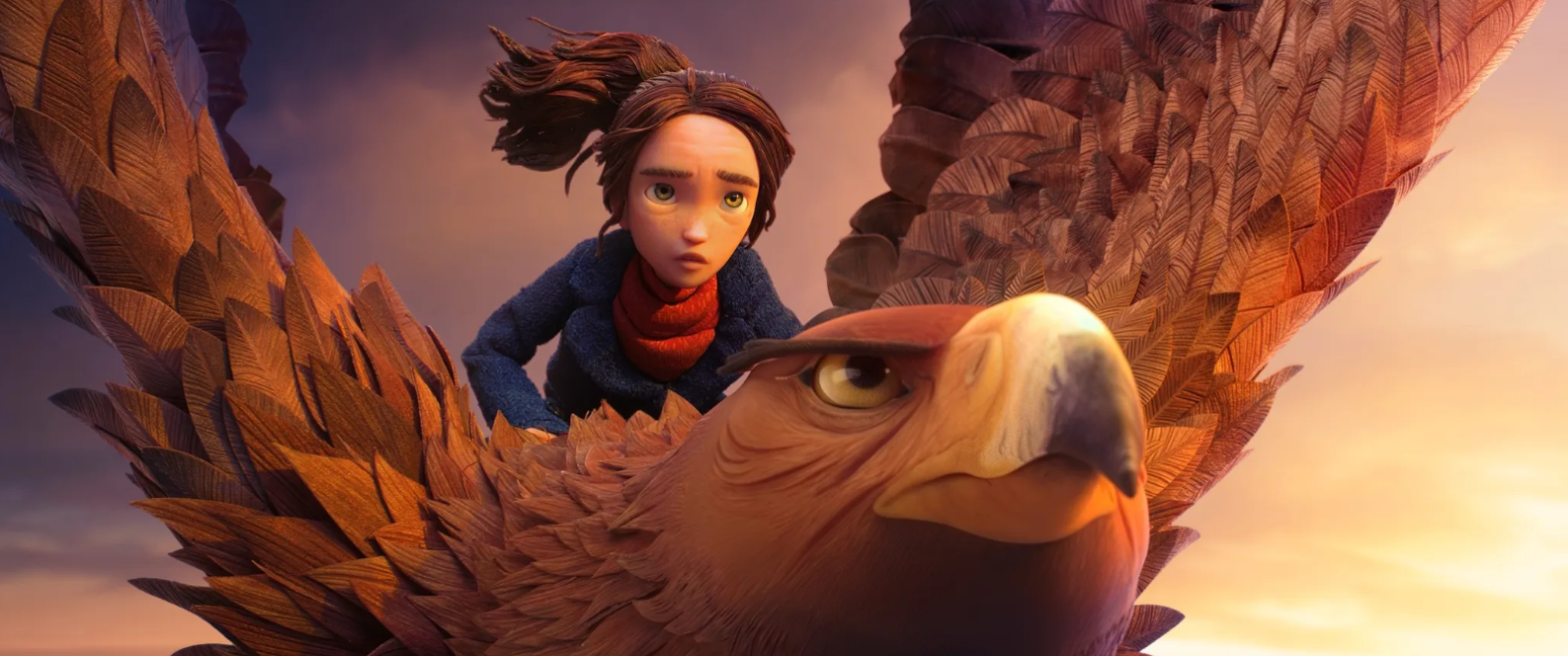
Image: Laika Studios
WILDWOOD– 3 STARS
One cinematic trait, among a great many, that the fine animation artists at the Portland-based Laika Studios consistently demonstrate is visual sweep. When you see one of their films, and with no slight to the great stop-motion work being done for multiple generations across the pond at Aardman Animation, it’s like no other filmgoing experience. The precision movement and jaw-dropping detail poured into the production house’s 17-year, six-film catalog, which began with Coraline, is beyond impressive, and with Wildwood, that sense of sweep only gets bigger.
Wildwood, at 131 minutes, stands as the longest stop-motion animated film of all time and carries Laika’s first PG-13 rating, showing a risky bump in maturity. Using new technologies in expanded studio space, the five-year production used 3D printers to build facial expressions, musculature, and armature frames for 231 practical puppets across 136 constructed sets. That’s nearly triple the sets built for the biggest Marvel-sized tentpoles. From the smallest scene to the largest, Wildwood surges with through-the-roof ambition. Make no mistake, director Travis Knight and his house are the tip of the spear when it comes to this branch of the art form.
Those aims are used to adapt the hefty best-selling 2011 fantasy novel of the same name by The Decemberists frontman Colin Meloy and illustrated by his wife and Caldecott Honor winner Carson Ellis. The headstrong teenager, Prue McKeel (the former Disney Channel Andi Mack star Peyton Elizabeth Lee, making her theatrical debut), is the oldest child of two belonging to a pair of granola Portland hipsters (voiced by mumblecore mainstay Jake Johnson and Mr. and Mrs. Smith Emmy nominee Maya Erskine). Prue’s pragmatic tendencies bemoan her parents nonconformist ways, especially when being the main body of help around the house for her toddler brother Mac. She does carry one tagalong peer in the form of her faint-hearted tabletop gamer classmate Curtis Mehlberg (Wonder and Unabomber star Jacob Tremblay).
One day, Prue breaks her parents’ orders to stay at home and watch Mac, instead towing him around town by wagon behind her bike and running into Curtis. Her defiant dalliance is going alright until a swarming murder of crows snatches Mac and carries him beyond city limits to the nearby forested countryside. In giving chase over the last bridge before the deep woods, Prue and Curtis are separated and begin to encounter entire classes of anthropomorphic animals spanning land and the air alongside different factions of humans. With a shock betraying her cynicism towards fantasy, Prue realizes she’s crossed over into the vaunted “Impassible Wilderness,” a massive magically-shielded realm her father warned her about for years in bedtime stories that floated the axiom, “There are places people were never meant to go.”
LESSON #1: YOU’RE NEVER TOO OLD FOR CAUTIONARY TALES— The top myth told by Mr. McKeel—and one of several sizable storytelling asides and remembrance-spreading exposition dumps scripted by ParaNorman and Missing Link director Chris Butler and presented across Wildwood—was the tragedy of Alexandra (Carey Mulligan, the perfect blend of fragility and menace), a former governess who used dark magic to enliven an automaton replacement for her dead son, Alexi. When the robotic boy rejected its existence and took its own life, community banishment befell Alexandra, which has caused division and strife over the wooded land and its rich demographics of flora and fauna. Alexandra has unrevealed connections and grand plans for Prue’s brother, leading our protagonist young lady on a quest to align herself with Alexandra’s opponents and rescue Mac, even if it triggers all-out war. Buyer beware, Wildwood earns its higher content rating with a substantial body count, numerous jarring tragedies, and a large uptick of on-screen violence compared to its studio’s previous offerings. Leave the less-than-teens at home.
LESSON #2: ADMIRE THE ARTISTRY— In a moviemaking landscape that is increasingly becoming dominated by computerized crutches and AI shortcuts, Laika proudly labels their films as “handmade.” Wildwood is teeming with IMAX-ready visual splendor—shot by the legendary cinematographer Caleb Deschanel—that will leave you gobsmacked. Your eyes simply cannot catch every detail. The infinite levels of care and prowess materialize in so many facets. Between blowing foliage, the volume of animal variety, and the massive coordination of flocking birds, the object volume and their speed settings within the simultaneously morphing layers of the foreground and background are an unreal achievement of visual sweep and something to deeply admire.
The greatest fantasy epics matching the scope that Wildwood wants to exude are special sagas that pair storytelling sweep with the visual grandeur. This is where Travis Knight’s film grows to be overwhelmed, even if it always looks pristine. The Meloy and Ellis novel requires enormous world-building that cannot help but feel rushed—even with an extended runtime from the norm—and overstuffed with colliding timelines, loosely-formed supporting characters, and wavering warring allegiances. Despite a deep voice cast of esteemed performers, including Mahershala Ali, Angela Bassett, Richard E. Grant, Charlie Day, the overused Awkwafina, and Tom Waits, good luck remembering anyone’s name or purpose that isn’t Prue’s, Curtis’s, or Alexandra’s. Even among that central trio, no one is punching your heart hard enough to give you pause or drop a lump in your throat with lasting emotionality. Maybe they’re too buried in all the striking leaves and feathers.
LESSON #3: TAKE THE LONG-FORM ROUTE— It’s one thing to be The Wizard of Oz, which greatly condenses its source novel to turn a long tale into a simple daydream to win the day, but another to squeeze all of the set pieces, internal myths, and thinly-veiled themes of social commentary found in a J. R. R. Tolkien or James Cameron epic into one opus lasting two hours and change. You’re either trimming with a machete to find (or lose) an essence or spreading (or bloating) the rich substance-over-spectacle out for maximum quality time. While asking Laika to lengthen this miraculous and tedious type of creative work would be maniacally selfish and greedy, Wildwood could have used the space of a prestige miniseries to cover the unskinny book’s three distinct parts better. More time would allow Dario Marinelli’s musical cues to steep longer and chapter-ending cliffhangers to lower the sprinted pace and heighten the drama. In doing so, maybe the wide supporting cast and central theme of the bravery to let go rise with the stakes, allowing Travis Knight to better flesh out the possible storytelling richness that feels, at times, lost in its own woods.

LOGO DESIGNED BY MEENTS ILLUSTRATED (#1439)
