
MOVIE REVIEW: Atropia
Images courtesy of Vertical Entertainment
ATROPIA— 2 STARS
Atropia, the feature-length directorial debut of actress/model/journalist Hailey Gates and the winner of the Grand Jury Prize at the 2025 Sundance Film Festival, is a war satire that pulls its heady ideals from some lofty places at times. For example, the opening credits plant the film’s tongue firmly in its cheek to cite Mark Twain with, “War is God’s way of teaching Americans geography.” That is Gates’s first of many pokes at domestic ignorance.
There’s an even better example later. At a key moment of pause, a third of the way into the film, a character reads this unattributed line from 19th-century Czech politician Konstantin Jireček:
“We, the unwilling, led by the unknowing, are doing the impossible for the ungrateful.”
That soul-rattling chestnut speaks to the foolish plight of a soldier fighting for a homeland’s questionable cause. With 20/20 hindsight shining at full blast, Jireček’s type of statement keenly matches the dire scope of 21st century warfare happening during the 2006 pseudo-military setting of Atropia, occurring during the peak of the Iraqi War.
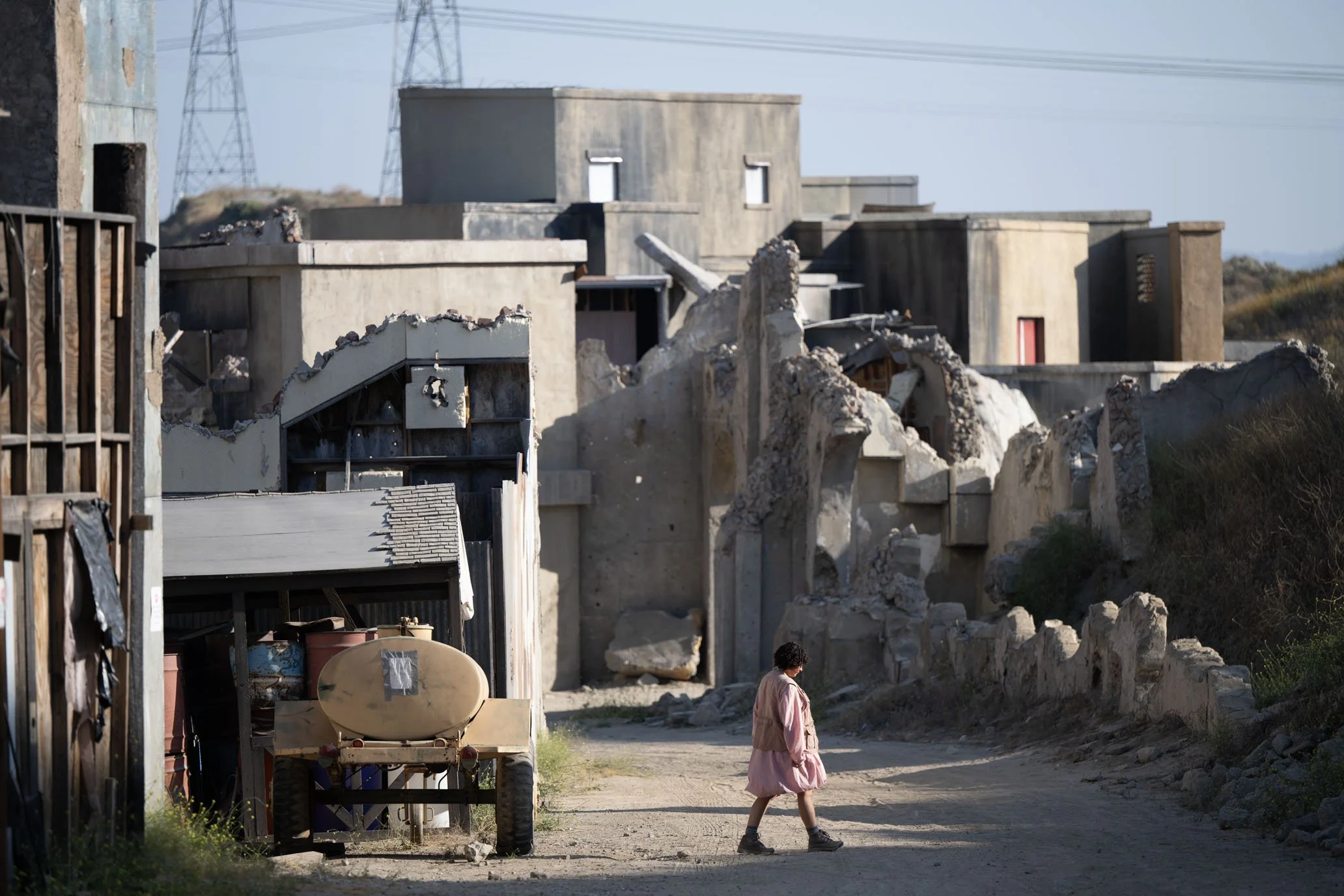
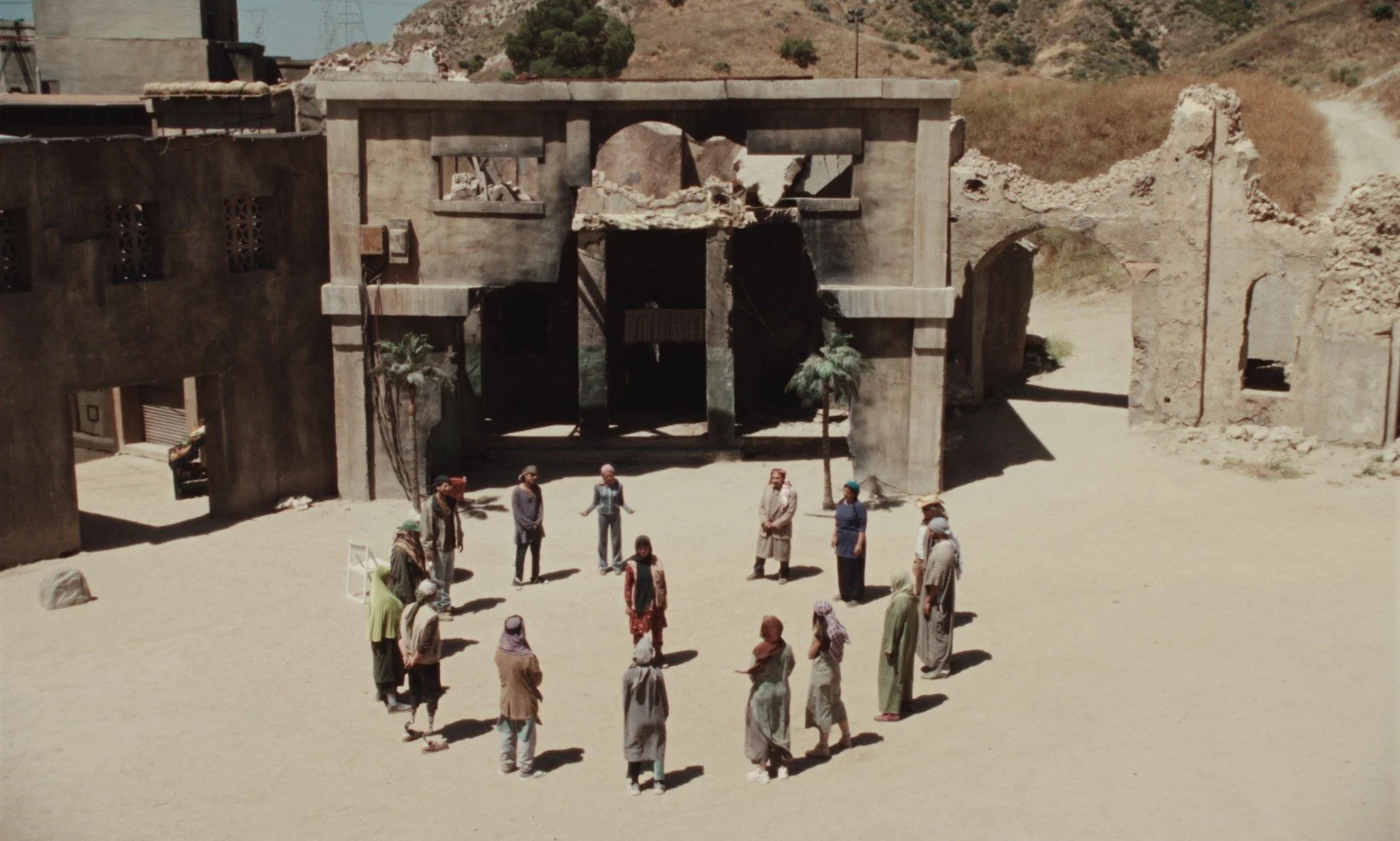
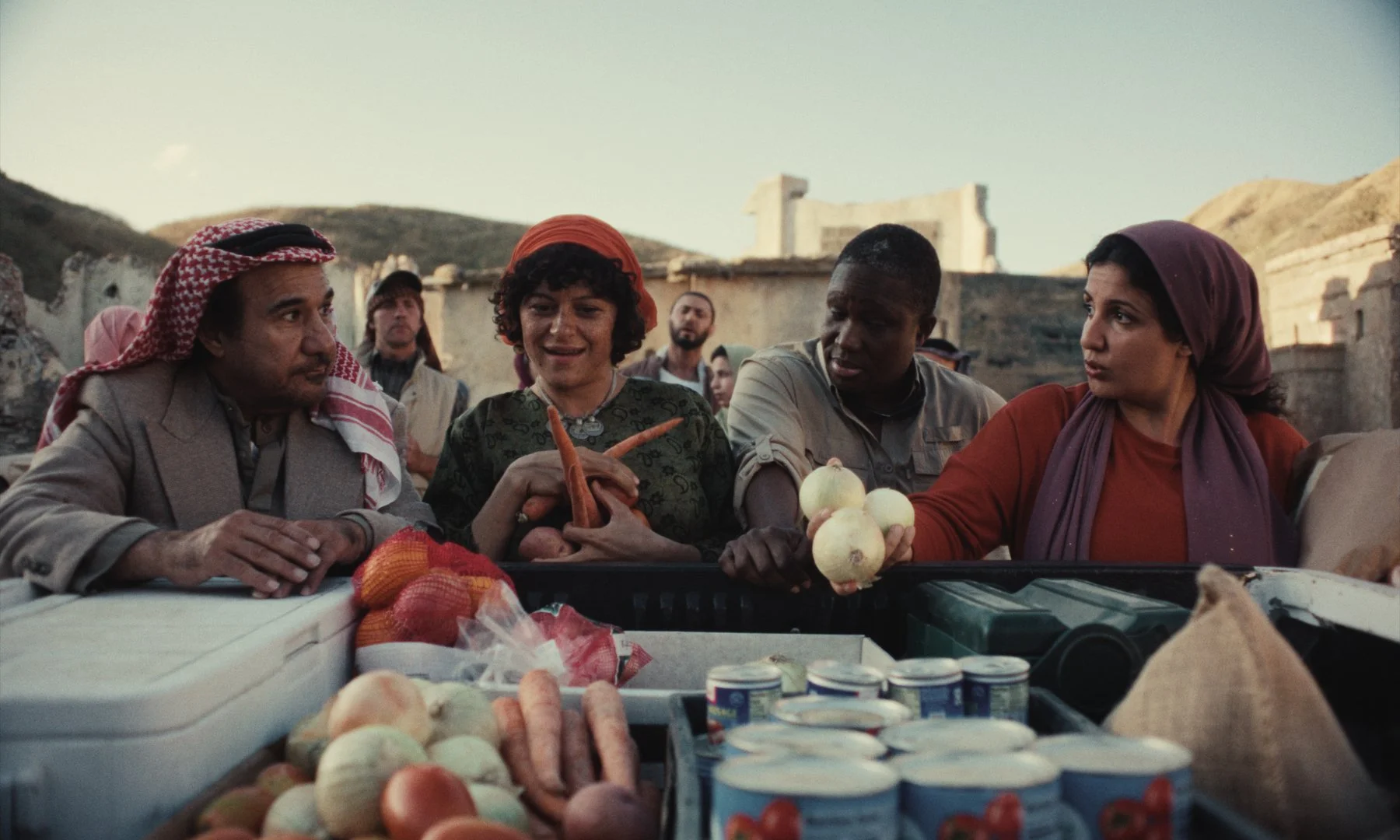
“Atropia” is the invented name of the nation governing a constructed fictional town named Medina Wasl. The term is “constructed” because Medina Wasl is part of “The Box,” a specialized training facility of the United States Army operating inside the boundaries of Fort Irwin in the Mojave Desert between Barstow and Las Vegas. As Atropia tells us, Medina Wasl is a real place still in use today and one of hundreds of mock cityscapes created by the U.S. military for training.
LESSON #1: THE LENGTHS IMMERSIVE REALISM IN MILITARY TRAINING— Medina Wasl is built like a movie set with observational cameras, adjustable conditions (like scented foggers flavored to burning flesh or the calming distraction of chai), various rigs for practical effects, and full departments for makeup and wardrobe. The Box hosts a full immersion program to train soldiers and journalists—and, in some cases, high-paying Hollywood actors (enjoy an Atropia cameo I will not dare spoil) getting ready for a big movie—-for urban warfare. To achieve the highest level of realism, the facility employs full-time, live-in civilian roleplayers trained to portray the scripted enemy. Once the Army unit steps into the simulation, they’re not done for three weeks, where plans can pivot like a living “Choose Your Own Adventure” novel.
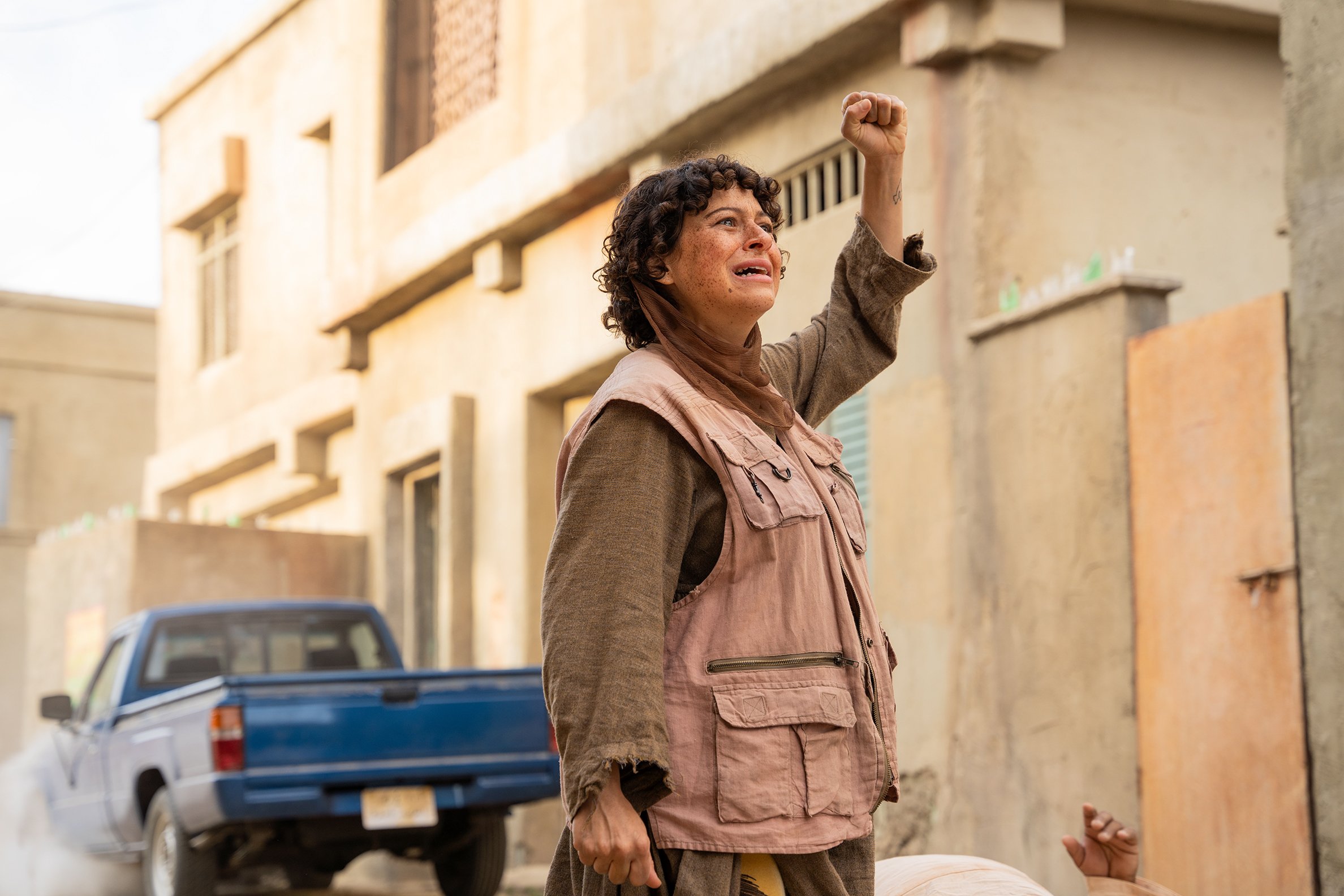
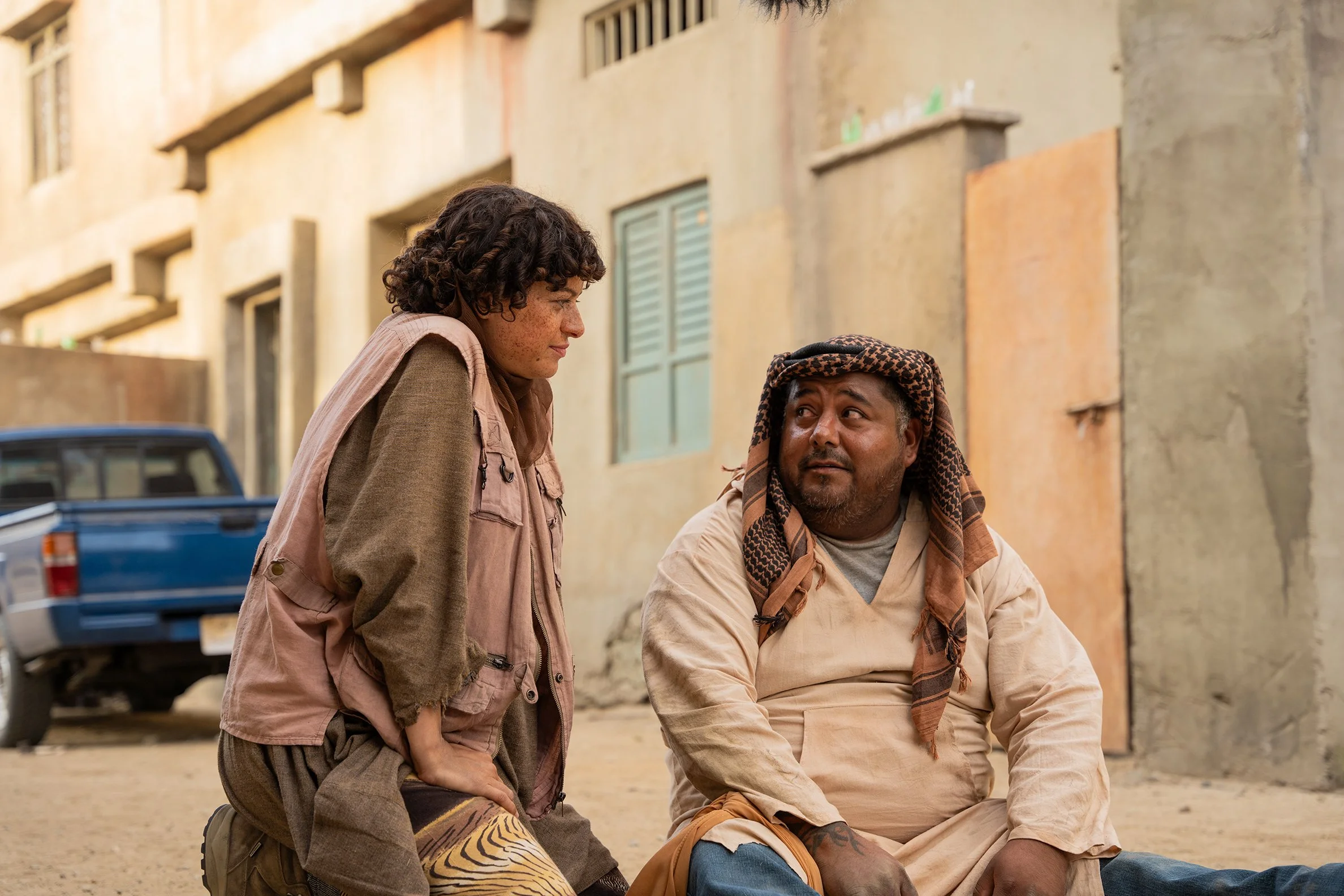
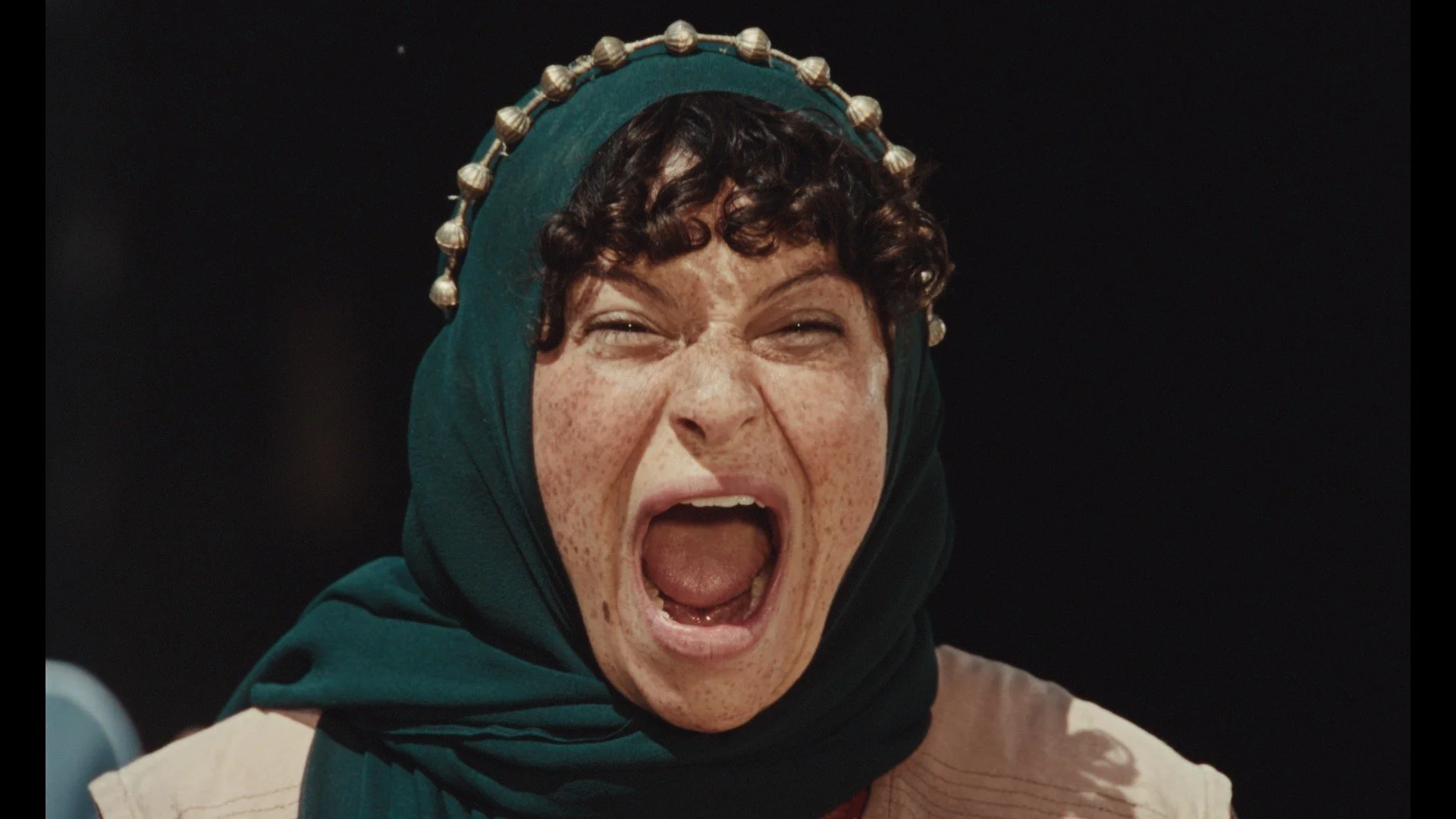
Just in concept alone, pulling back the curtain on this entire orchestrated production setting in Atropia is a fascinating proposition. Our de facto guide to the workings of Medina Wasl is a struggling actress named Fayruz, played by Arrested Development star and daughter of an Iraqi father Alia Shawkat. Despite being part of this program and troupe for years, she considers it a stepping stone to getting discovered and laments that her impassioned “performances” and committed craft are seen by no one of consequence. It counts as a steady gig, but how many times can someone play an infidel confronting U.S. soldiers on pretend streets under a barrage of semi-automatic blanks being fired before ambition longs for more?
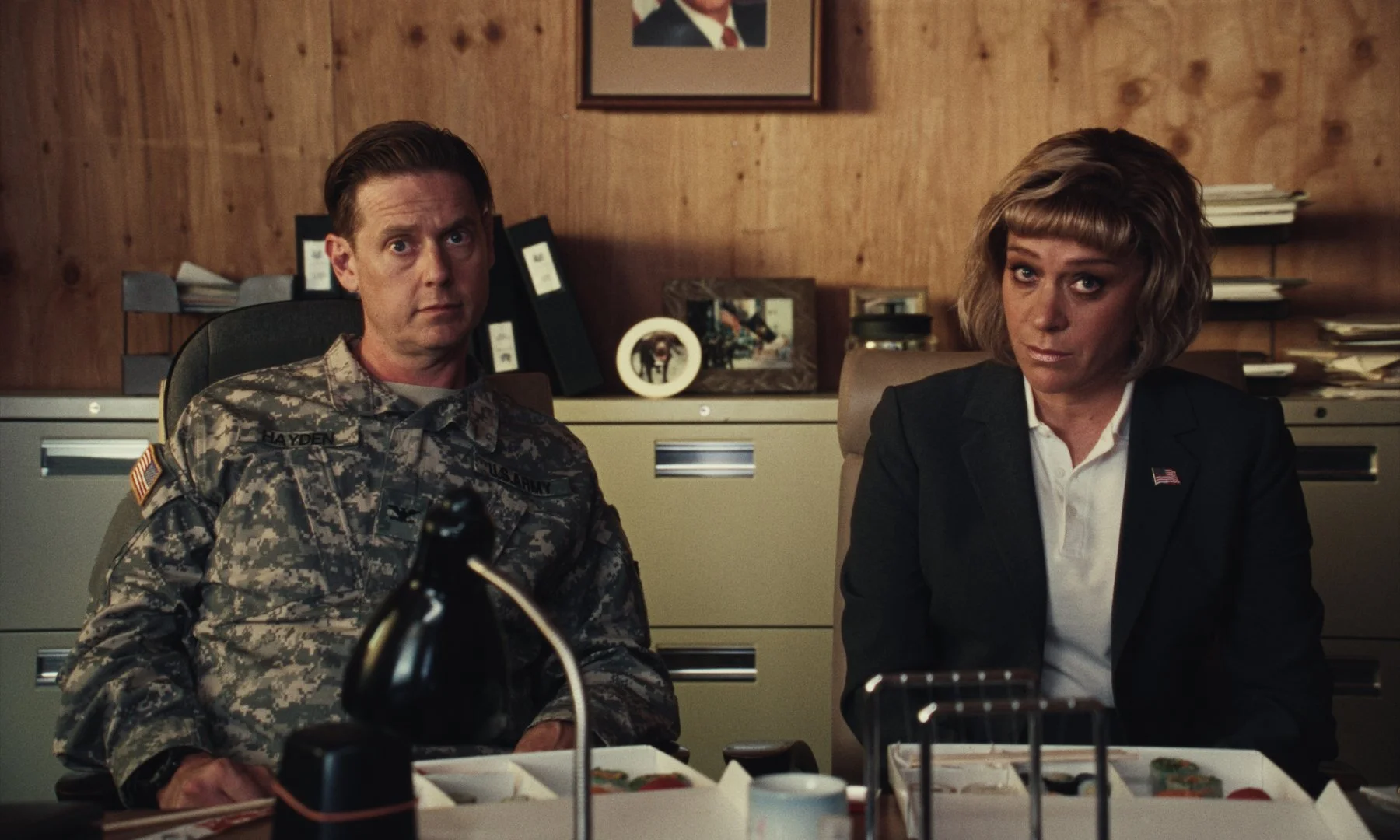
LESSON #2: WHERE SATIRE DILUTES SERIOUSNESS— This oddly placed aspiration runs smack into what is supposed to be a very formal exercise for our uniformed heroes preparing to enter unpredictable violence half a world away, yet every depiction of commanding officers and overworked participants on both sides in Atropia feigns boobish bravado and reckless incompetence. This adds to the film’s intentional slant for satire to dilute the seriousness.
To circle back to the lede, Atropia’s blurry edge for mordant commentary is hammered home even more by where that haunting Konstantin Jireček quote is found. Unlike being engraved on the lighters of Vietnam War soldiers, you’ll never guess where.
It’s scribbled on the inside wall of a Porta-Potty in all-caps by a Sharpie marker.
Nevermind that it’s missing it’s equally damning second half of “We have done so much, for so long, with so little, we are now qualified to do anything with nothing,” some inexplicable and well-read grunt got it on the shitter wall. When it’s shown to Atropia’s viewers by cinematographer Eric K. Yue, it’s being read by a plucky and currently constipated female TV journalist (steady TV actress Jane Levy of Zoey’s Extraordinary Playlist) stuck bunking with a squad of G.I.s.
Here’s the extra kicker. One headturn of gaze away from Jireček’s axiom is a jagged opening in the plastic wall that looks suspiciously like an invasive peephole. Around it is written this charming divination:
“Anything is a pussy if you’re brave enough.”
Forgive the crudeness, but I guess that’s more gloryhole than peephole! The purposeful dichotomy of these adjacent quotes is precisely the aim of Atropia’s sense of irony. The finger-wagging being attempted by writer-director Hailey Gates with what transpires in Medina Wasl’s has the capacity to be sharp and biting. Mistakes were made with the War on Terror, and there’s room to rub our noses in it. However, the boldness of that task gets tangled and ultimately lost by—what normally doesn’t sink this sort of thing straightaway—a love story.
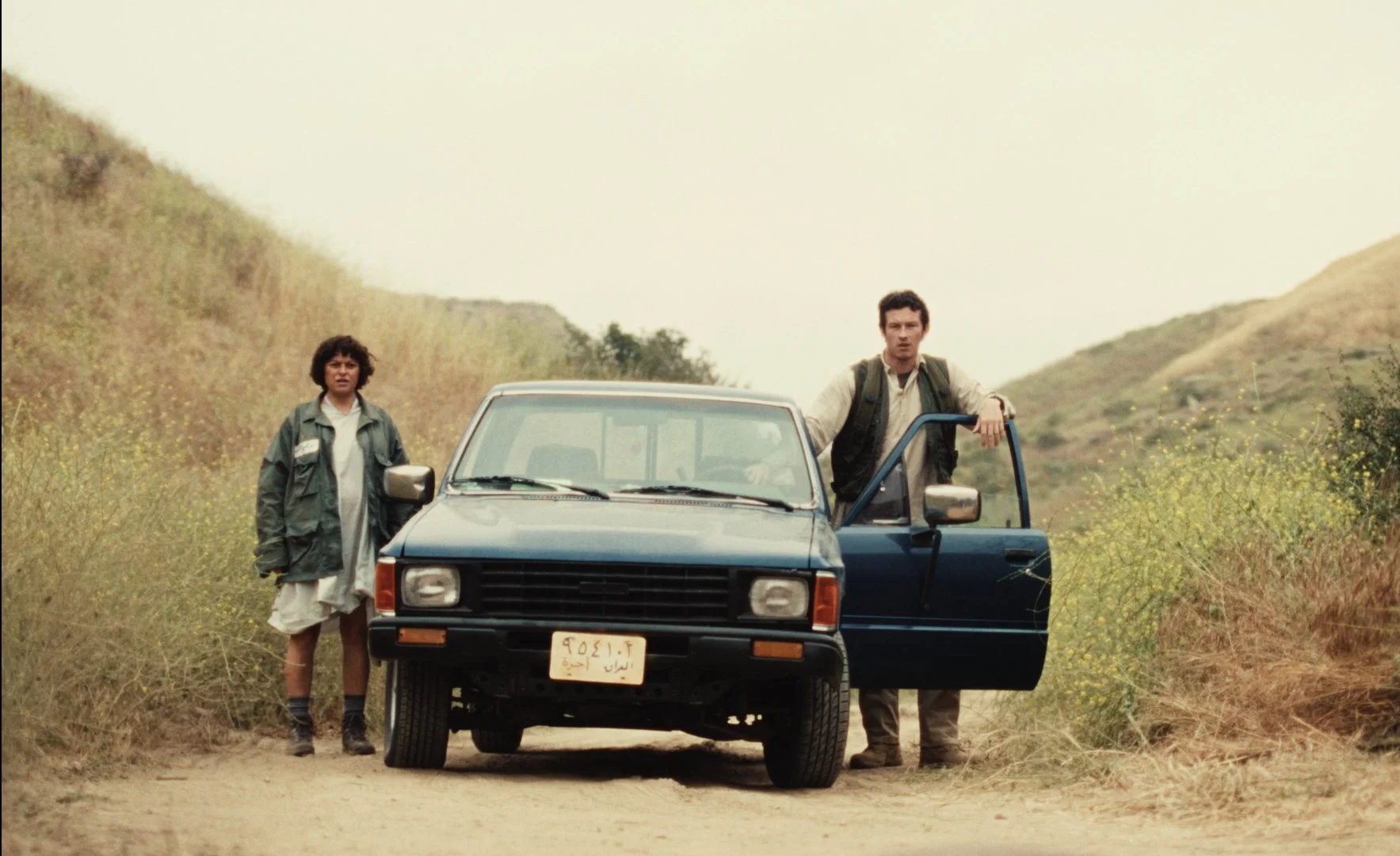
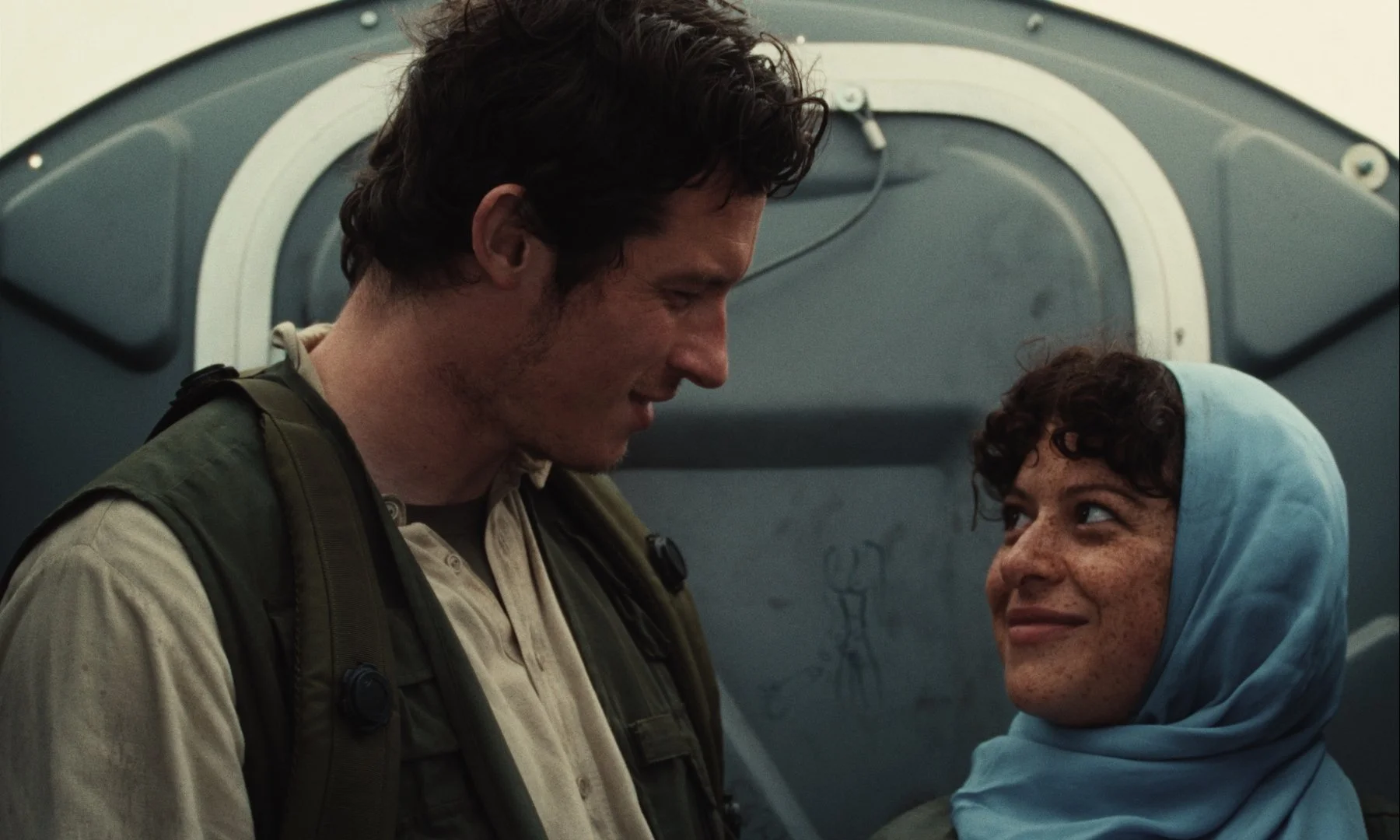
Eternity’s Callum Turner enters Atropia as “Abu Dice,” an experienced soldier returning from tours in Iraq to play the lead insurgent on the actor’s side, pitted against the Army trainees. His role has him working closely with Fayruz as his character’s wife. When the two get “captured” together—not far from those aforementioned Porta-Potties— and fall for each other outside their roles, they set themselves on a course to flip the script of the simulation and run away together. She’s found someone who sees her worth, and he finds a homefront hope to avoid another deployment overseas.
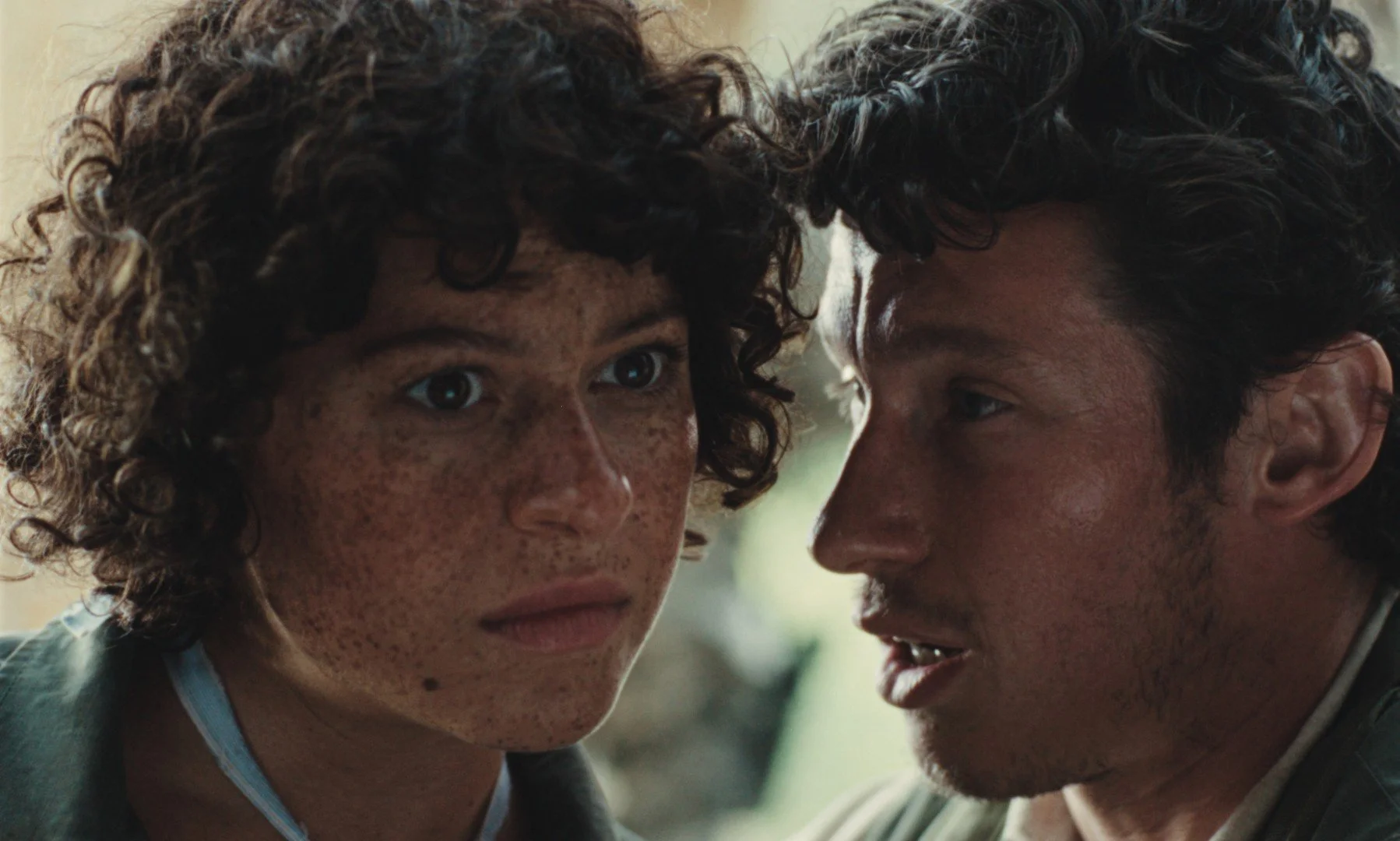
There’s unpredictability at play with this often comical conundrum in Atropia. Alia Shawkat’s passion and panache shine very well amid the occasional moments of small-scale spectacle. She fits this weird little backstage world well, but a way-too-fast and improbable workplace romance does not. By the same token, it’s Callum Turner who cannot keep up with the material.
Despite his showy good looks, which Hollywood keeps trying to convince us are leading man worthy, Callum has very anemic chemistry with Shawkat, and he is not compelling as the man of consequence this film needs stand taller and talk louder. In Atropia’s type of satire, where war—and all its ugly realities—is being practiced as a performance for misplaced dominance, more than one mouthpiece is needed. Shawkat’s oppositional firebrand is not enough.

LOGO DESIGNED BY MEENTS ILLUSTRATED (#1368)
