
MOVIE REVIEW: Michael
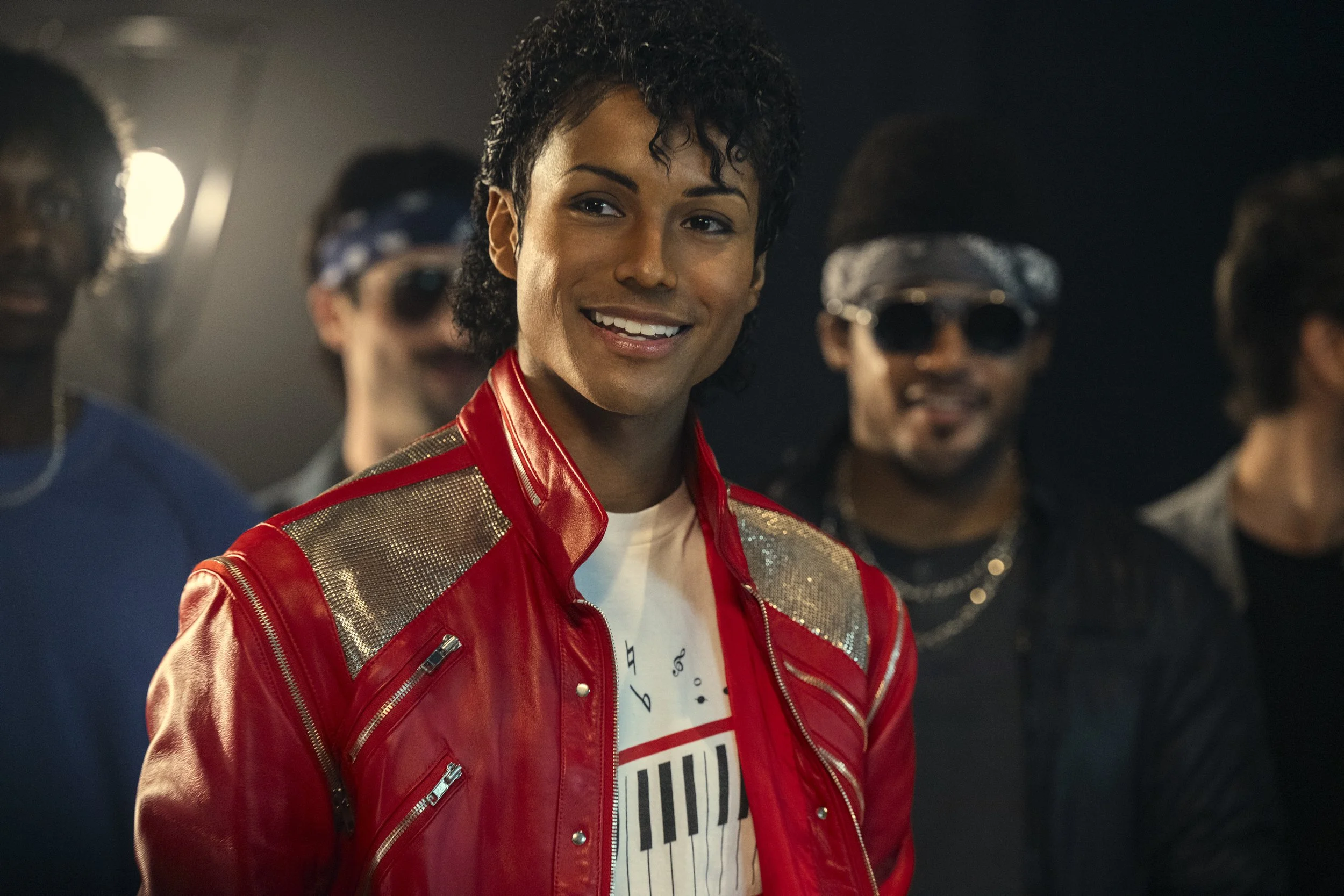
Images courtesy of Lionsgate
MICHAEL— 3 STARS
LESSON #1: EVERY ICON CARRIES A CLOUD— Every historical figure worthy of the grand Hollywood biopic movie treatment carries, for lack of a better term, clouds to go with all the sunny success celebrated in their direction. If the subjects’ lives were so easy and perfect, there wouldn’t be much of a movie. Needless to say, the life of the late Michael Jackson has all sorts, shapes, and sizes of questionable clouds. Yet, when the King of Pop was at his peak, the sheer force of his talent, creativity, and connection with audiences could push back the biggest hurricanes.
The filmmakers who make those biopics have to choose what to do about that potential weather. Like Andrew Dominik, for example, they can fly right into it and explore the dangerous turbulence, or they can leave the perceived heavy thunderstorms on the peripheral horizon and decide to spend their time enjoying the more pleasant climate. Playing against or leaning into positive or negative sentiment, there are times and places to take either of those cinematic meteorological routes. With Michael, Training Day director Antoine Fuqua and James Bond series writer John Logan made the latter choice, and, to its credit and to the likely delight of most of the eager audiences, there’s a welcome place for that.
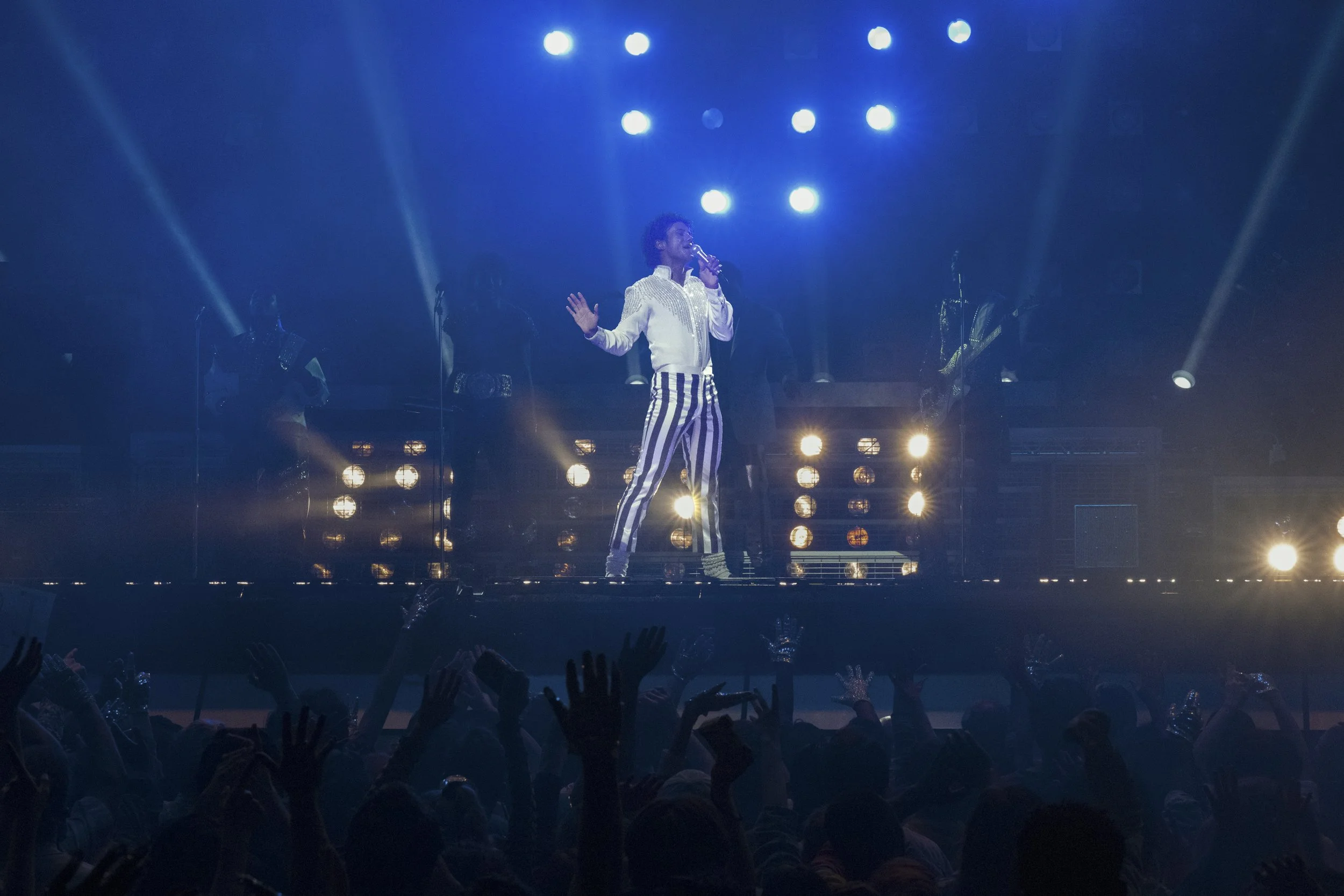
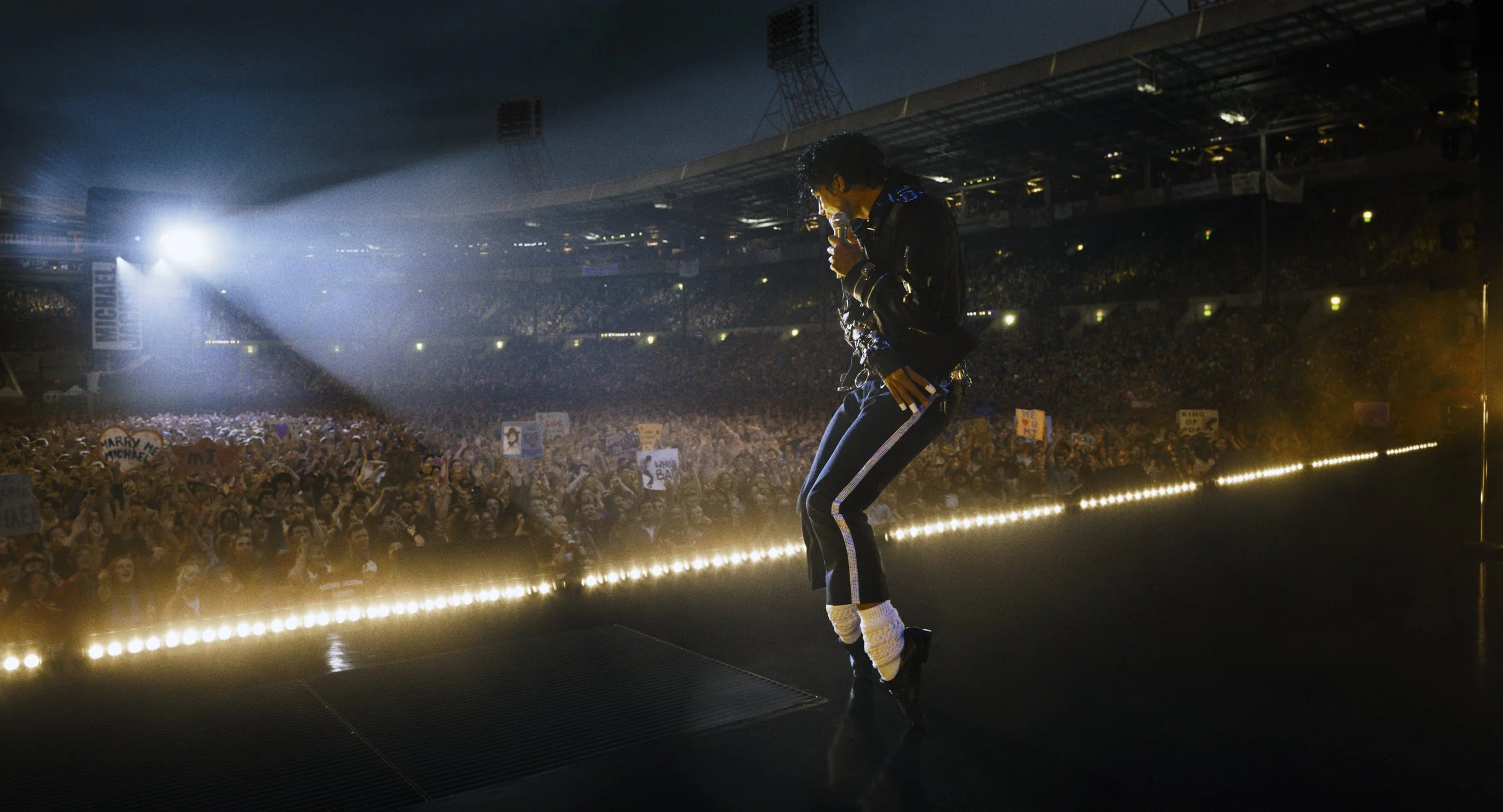
The presence of music is immediate in Michael, opening with a bookending tease of the titular figure—unrevealed to us with his back to the camera, but unmistakable in silhouette and fashion accoutrements—preparing to take the stage in front of roaring crowds at London’s fabled Wembley Stadium for one of his Bad World Tour residency performances in 1988. Logan’s script declares its future exit point right there before shifting to snowy Gary, Indiana, in 1966. Narrowing smaller than a birth-to-death course, any details and depth in Michael unfurl in the two decades between those timestamps.
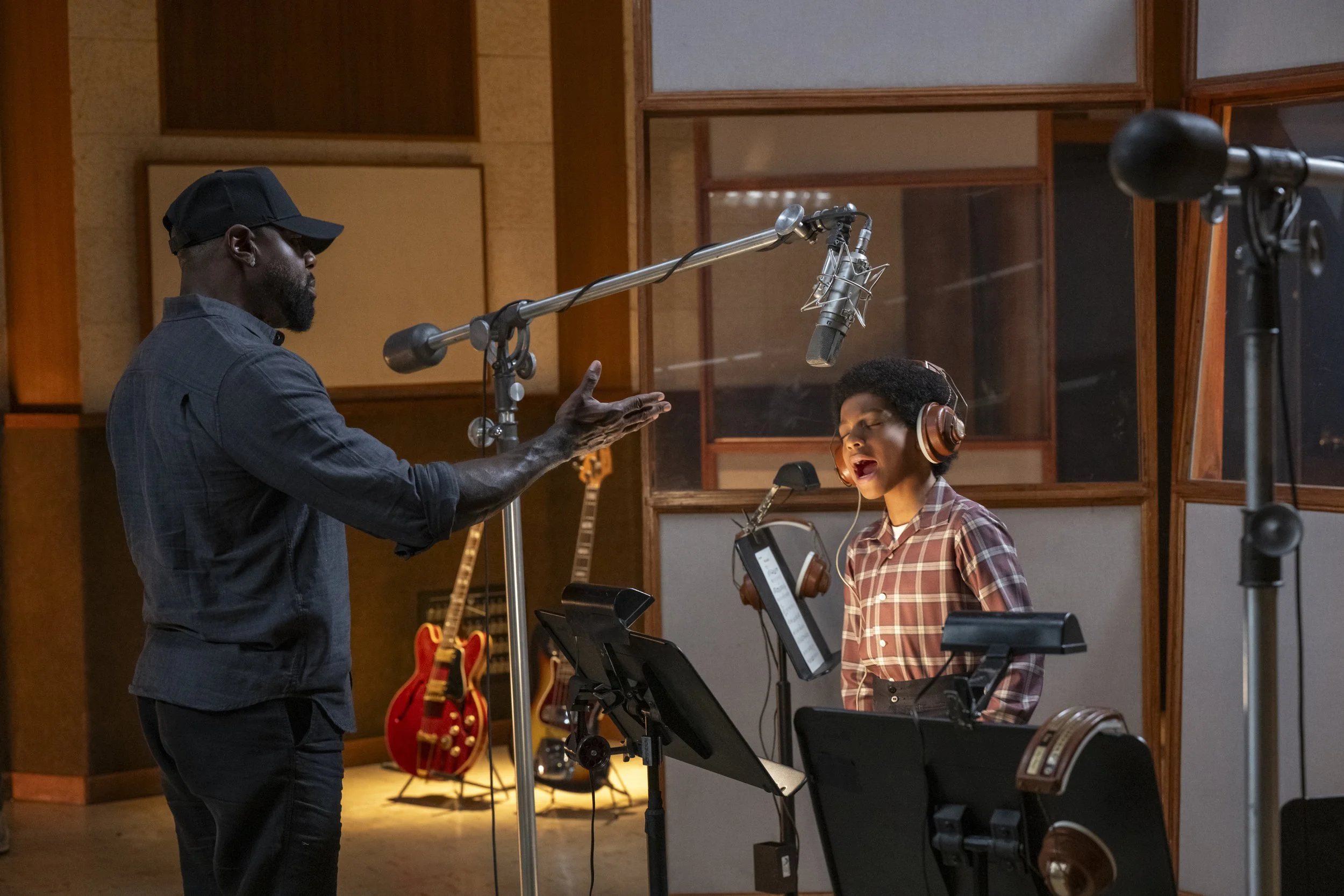
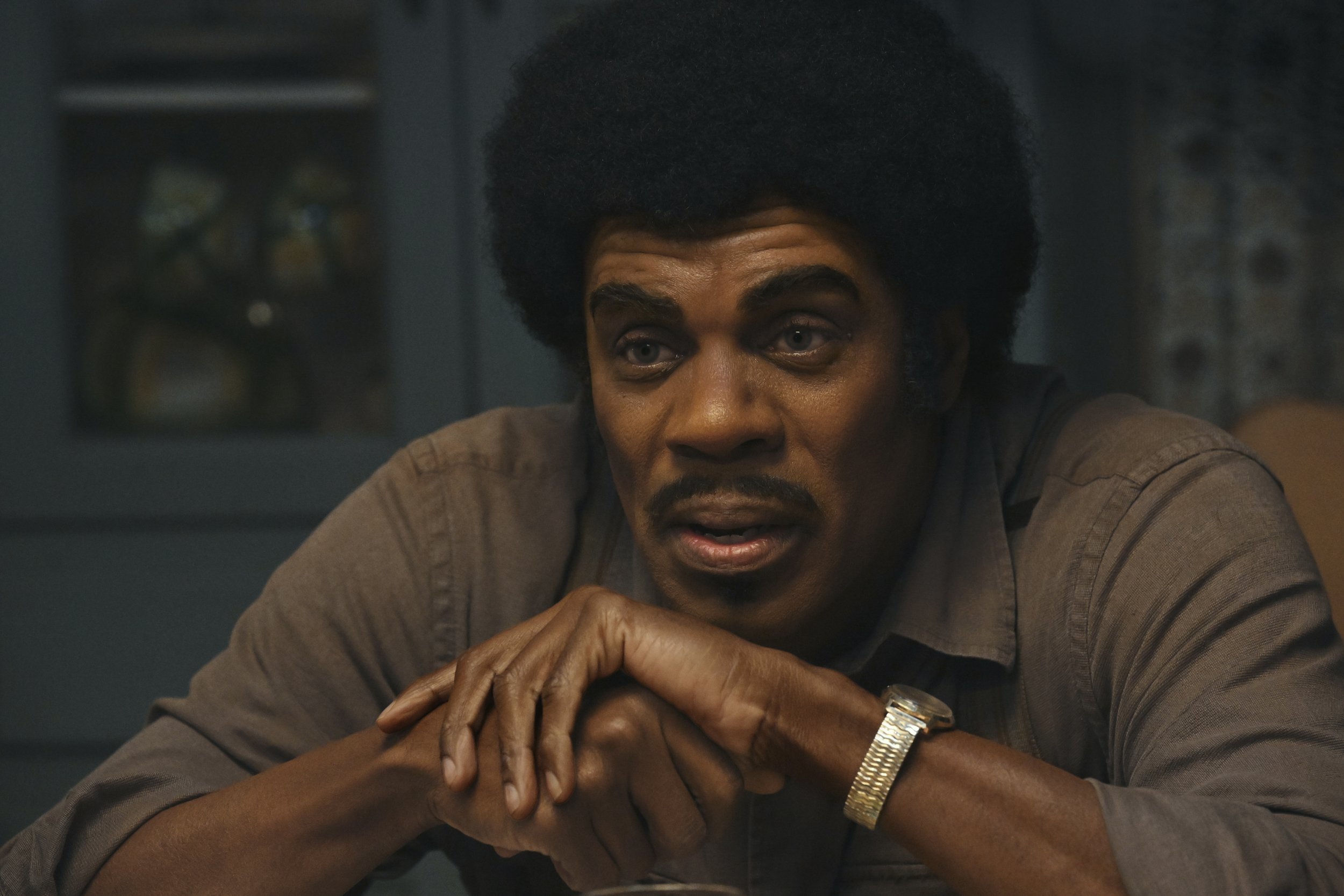
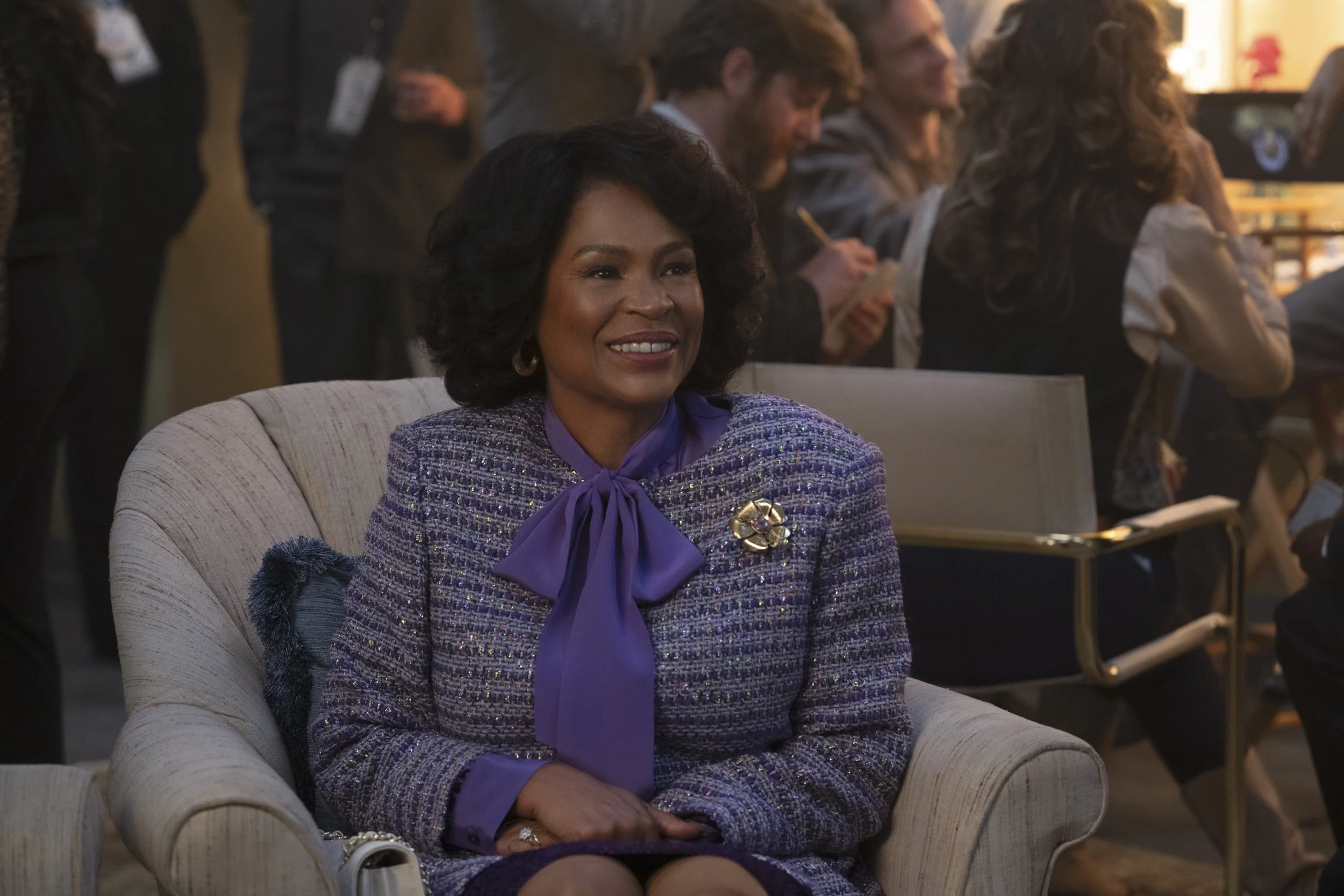
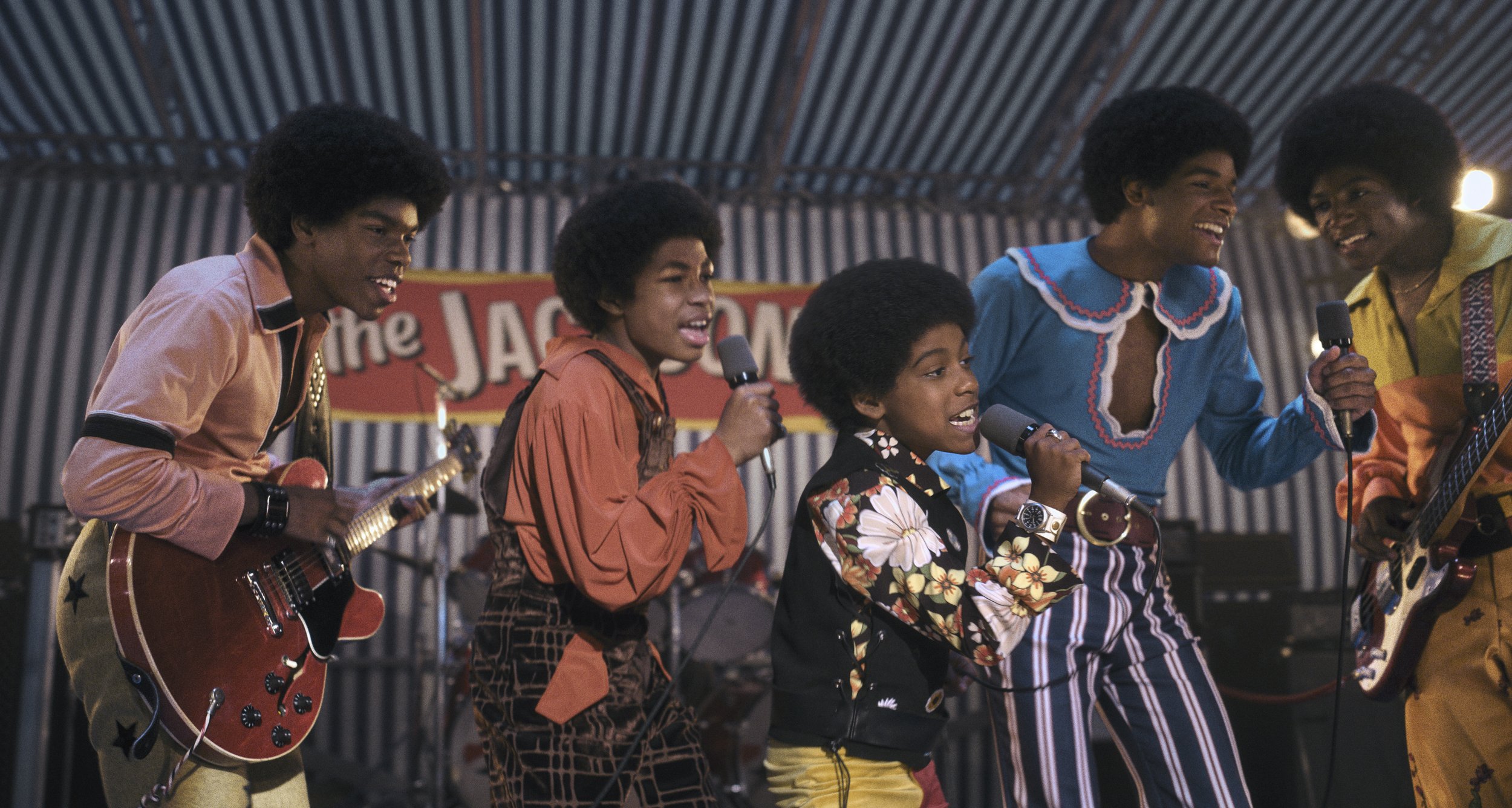
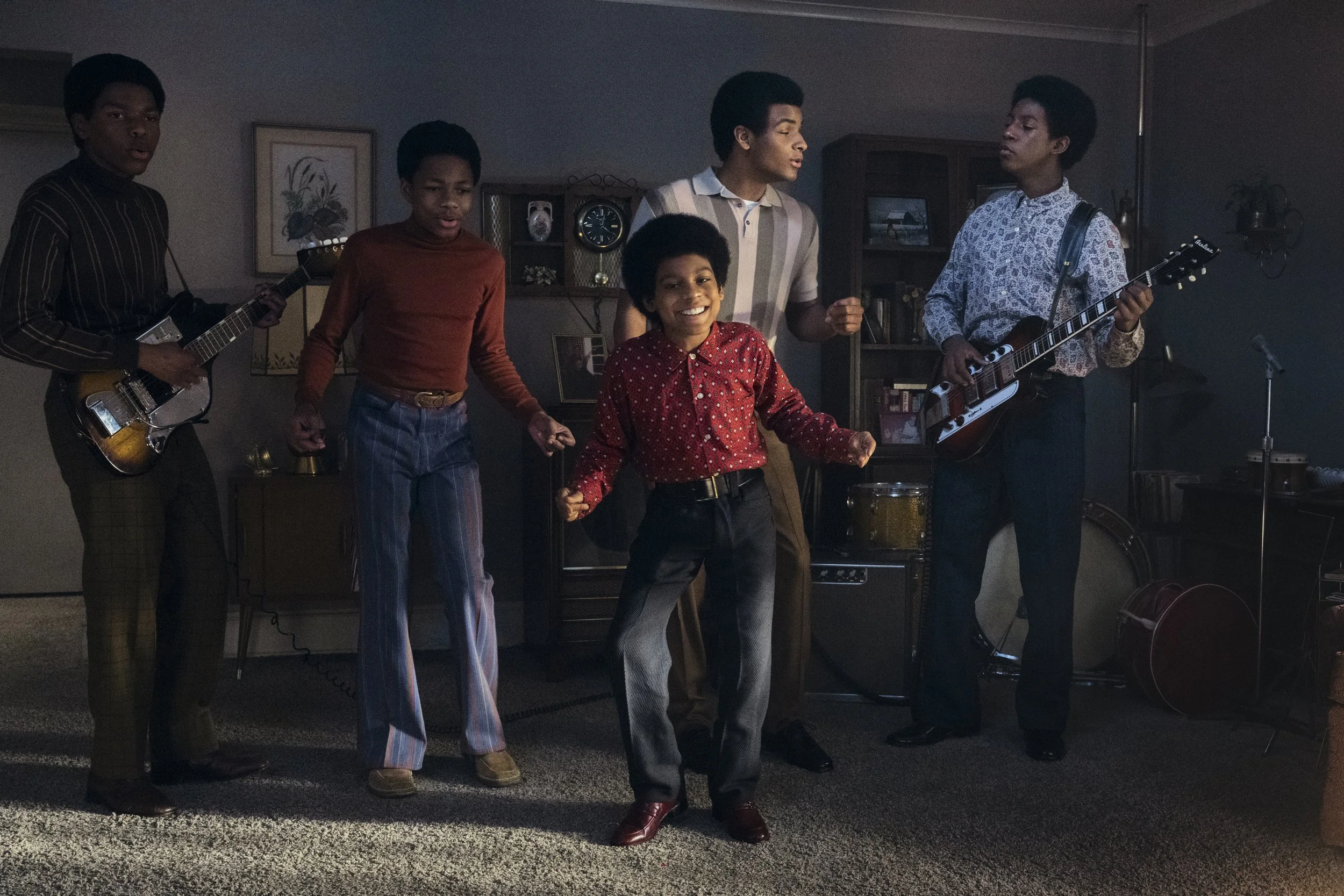
Led by a wondrous performance by newcomer Juliano Krue Valdi, in his feature film debut, as young Michael, the first act fleshes out the formation of the Jackson 5 in the house of Joe and Katherine Jackson (Two-time Academy Award nominee Colman Domingo and the ageless Love Jones treasure Nia Long, respectively). Managed by their father, Jackie, Tito, Jermaine, Marlon, and Michael are catching quarters at gymnasiums, dance halls, and theater venues on the Chitlin’ Circuit in the Midwest before being recruited to the Motown label by Suzanne de Passe (Laura Harrier of BlacKkKlansman) and Berry Gordy (the long-lost Larenz Tate, who’s no stranger to adolescent musical biopics after playing Frankie Lymon once upon a time in Why Do Fools Fall in Love 28 years ago).
LESSON #2: DESIRING FREEDOM FROM ABUSIVE CONTROL— Matching the well-documented and estranged family history, Michael, at a PG-13 level, presents the disdain between an abusive and avaricious father and his youngest and most talented son. The former steelworker patriarch is looking to separate winners from losers with endless rehearsals and, if necessary, the crack of his belt. Everyone outside of Joe recognizes and urges the fully grown Michael (Jaafar Jackson, Michael’s nephew and son of Jermaine Jackson) to begin a solo career as the path to the freedom that will allow his god-given talent and vision to blossom unencumbered. When hurting, Michael finds an oasis of fantasy and love in, at first, his mother, Katherine, who instills an Old Hollywood soul into her son by fostering inspirations from J. M. Barrie, James Brown, Charlie Chaplin, Gene Kelly, and the Three Stooges. Later, Michael’s exotic animal pets and trusted members of his inner circle, particularly security guard Bill Bray (TV star KeiLyn Durrel Jones of Succession and How to Die Alone in a crucial witness role) and lawyer/manager John Branca (Miles Teller, on cruise control), will become his closest, albeit nontraditional, confidantes.
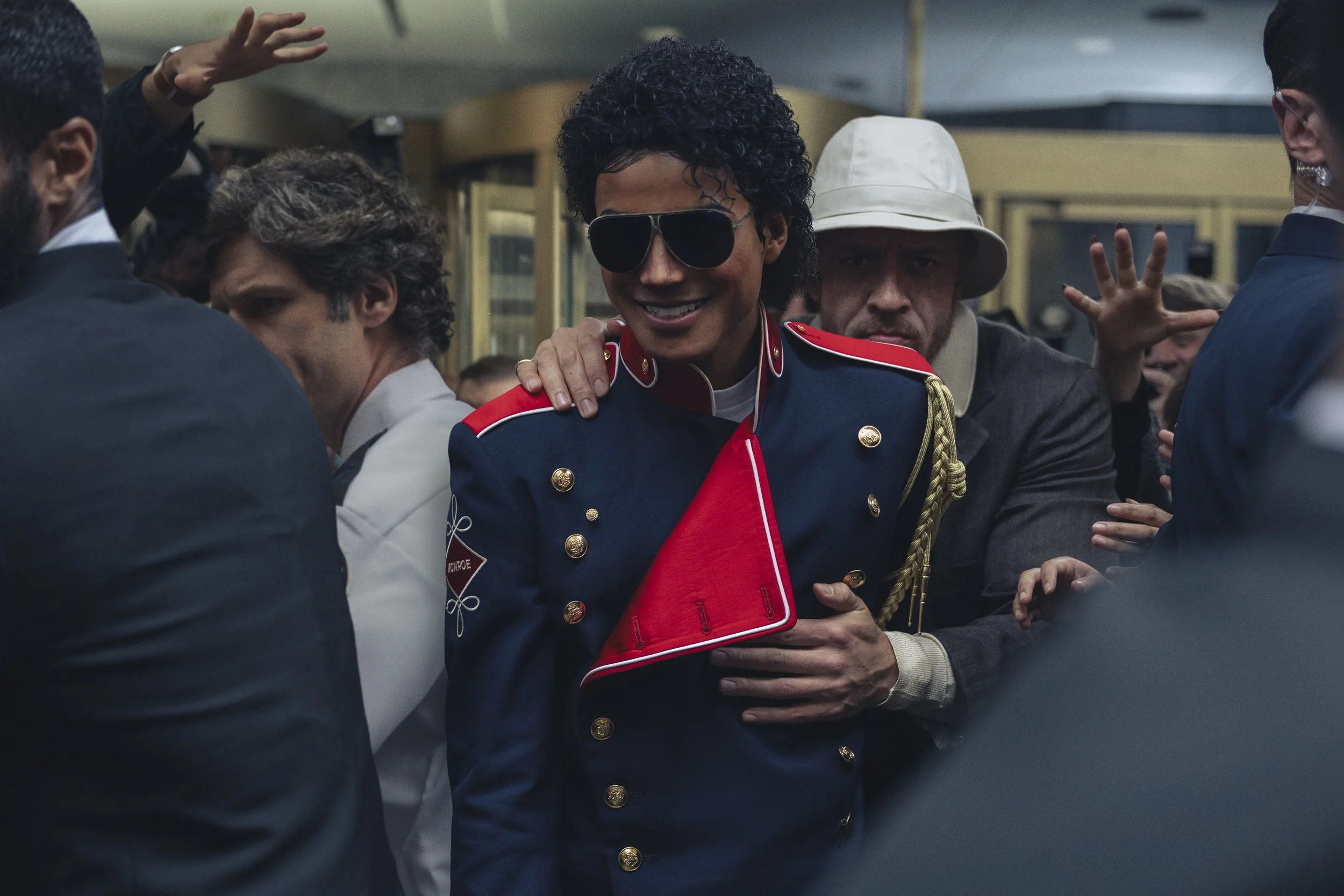
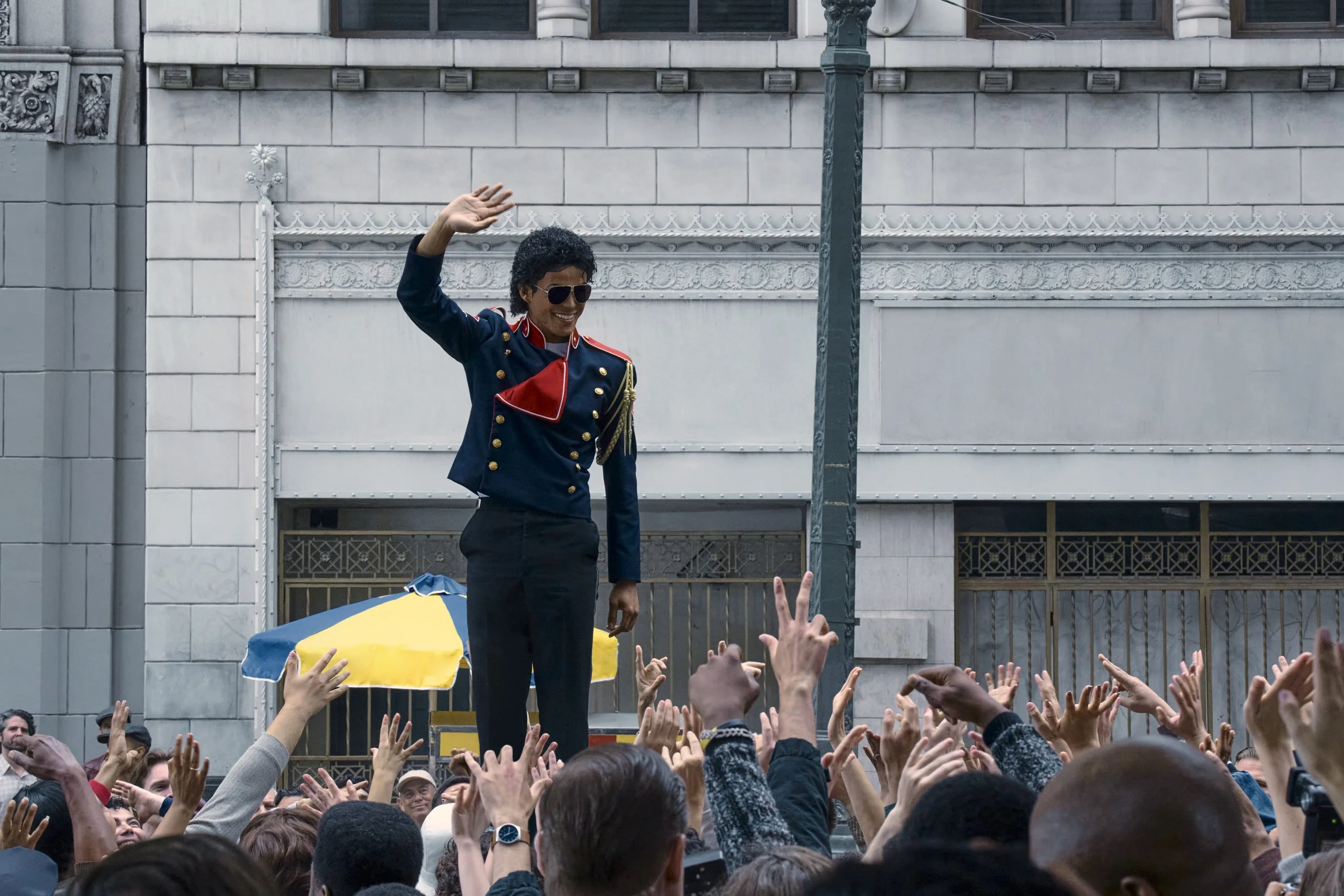
LESSON #3: THE RAPPORT AND POWER OF EYE CONTACT— When it comes to interpersonal interactions in Michael, when it's not rattling rafters with stirring musical sequences, Antoine Fuqua embeds and pontificates a clear character tell right out of the sport of poker. The rapport and power of eye contact are huge in the film’s storytelling through body language. It is firmly established how Michael—younger and older—often will not answer Joe’s frequent demands to look him in the eye, either to practice performing or say things to his father’s face. In contrast, Michael Jackson, through Jaafar’s charisma and the selective removal of those signature sunglasses, grants eye contact only to those who appreciate him, be that front-row fans overcome by his music, autograph seekers at toy stores, the needy children he visits at hospitals, and others who have shown him care. Under Joe’s thumb, stardom isolates Michael in his created fantasies, and people, including much of his own family, unfortunately, come to see him differently.
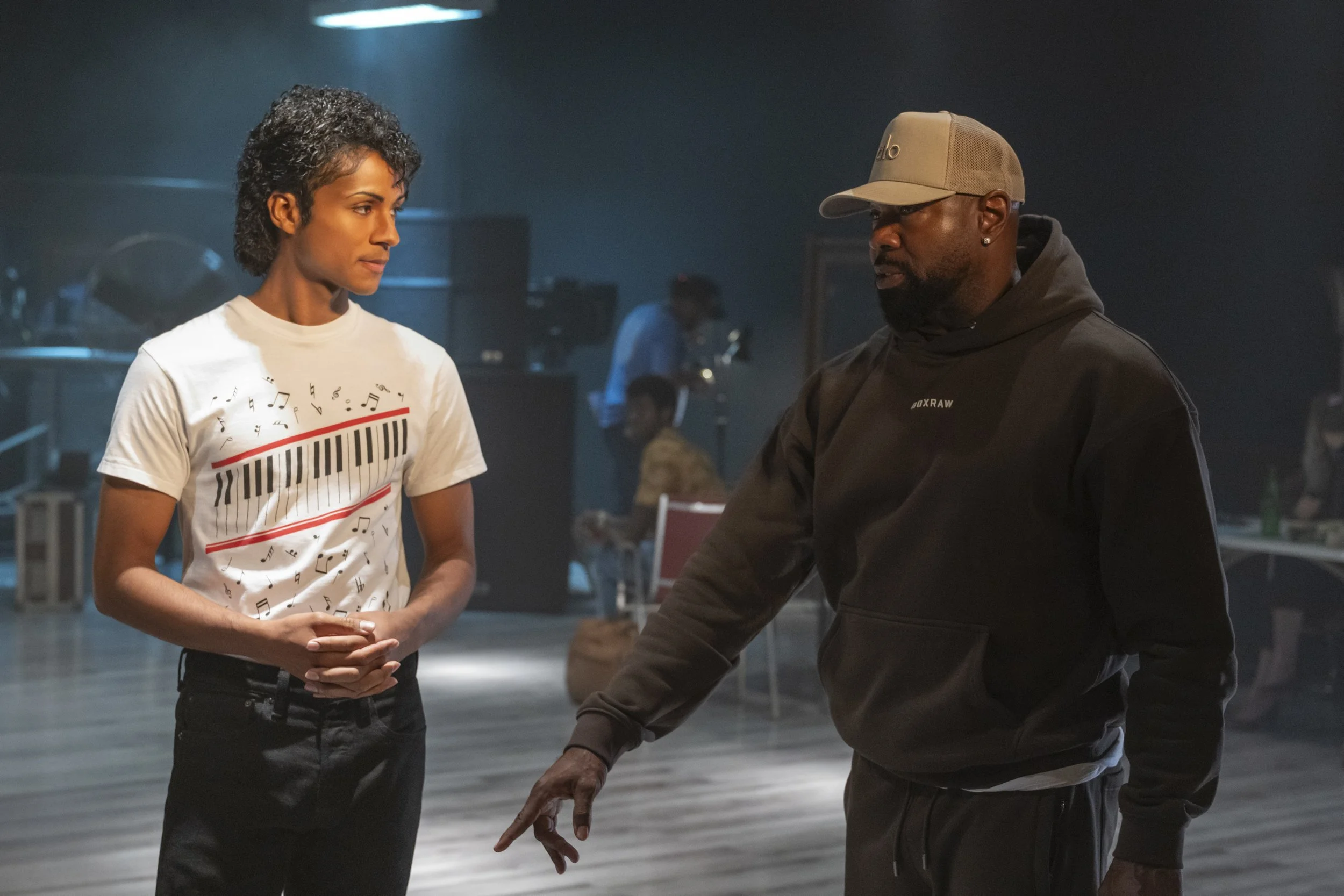
This, undoubtedly, had to be an intimidating role for Jaafar Jackson as a first-time star and legacy family member. The dramatic side of Michael requires as much exactness for portraying convincing vulnerability as it does on the physical side to hit marks and nail dance moves choreographed by movement specialists Rich and Tone Talauega. It’s almost scary how good Jaafar looks, how perfectly he moves, and how invested he is in imbuing as many genuine, non-caricature traits as possible to play his departed uncle. Moreover, the young man holds his own against Colman Domingo’s fitting monster, who also dissolves brilliantly behind his own gaudy makeup and broadened frame. He’s as magnetic and soul-rattling as he always is.
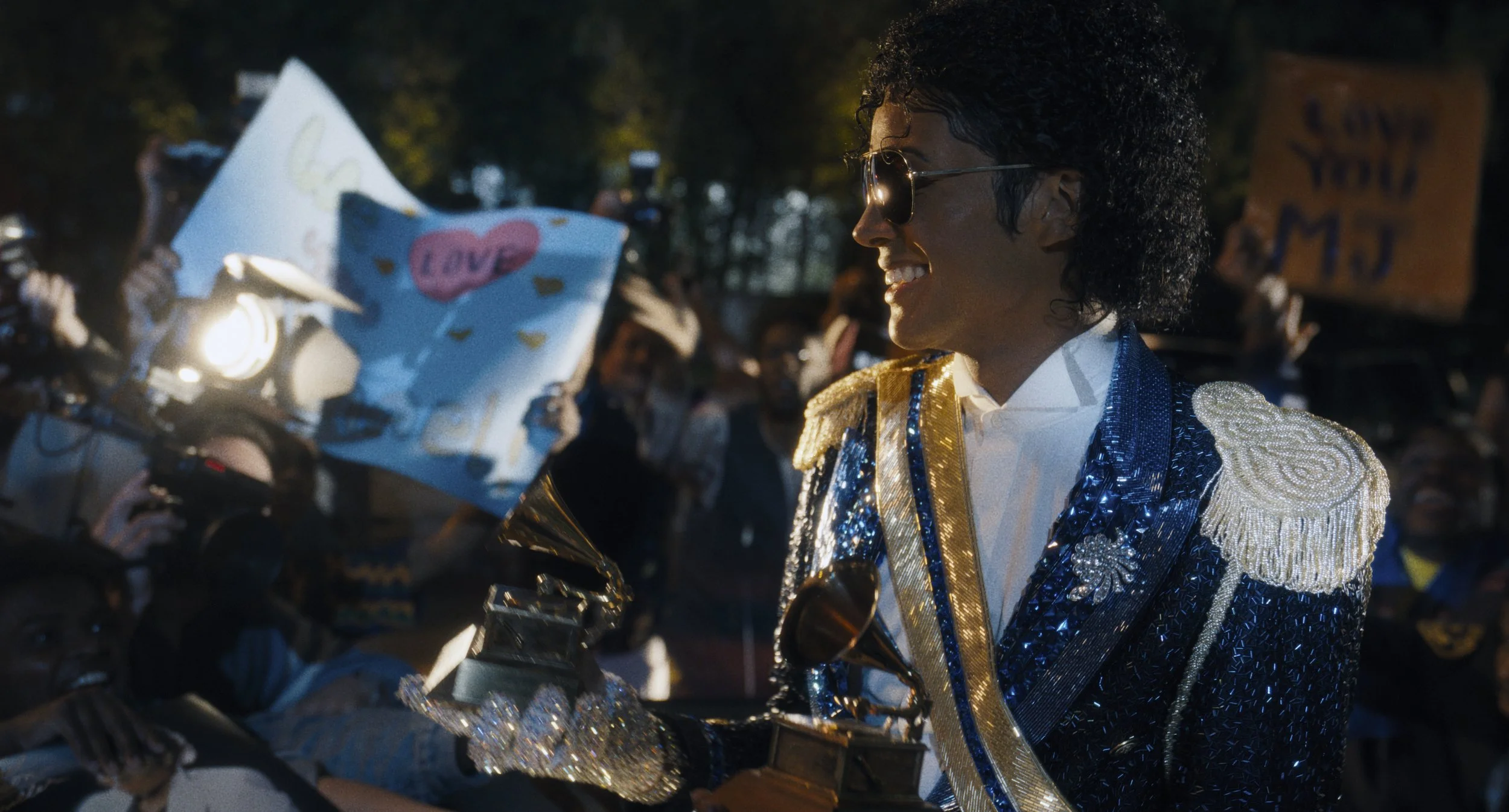
The heights where eye contact does not matter are when Michael is extruded like Play-Doh through the biopic formula mold to satiate those gathered for Jackson’s deep catalog of hits. In that same vein, the production values spared no expense on attention-getting appeal. The impeccable costume designs and makeup/hairstyling creations are immediately award-worthy efforts. The playlist-ready movie, steered by Oscar-winning cinematographer Dion Beebe (Memoirs of a Geisha) orbiting with frequent crane shots and a four-person editing team, headed by fellow Oscar winners Conrad Buff IV (Titanic) and John Ottman (Bohemian Rhapsody), is very montage dependent in its progression through career highlights and the occasional key lowlight. With solid artists like them in the fold, the radiant recreations—boasting frame-by-frame accuracy—of historical performances leap off the screen when boosted by IMAX-level picture and sound tuning. Folks looking for a toe-tapping and seat-dancing party will get it.
LESSON #4: THE BIOPIC FORMULA SUCCEEDS FOR A REASON— For better or worse, the biopic formula repeatedly succeeds for a reason. People want a show, and the professional grade precision and pace of it here in Michael play towards generating excitement and sympathy for the prime of Michael Jackson. Those looking for something more sordid or for their own incensed pound of flesh for whatever spiteful reason are coming to the wrong movie, though rumors of a sequel venturing into the celebrity roller coaster years of the 1990s might have their impatience tantalized slightly down the road. Once again, Fuqua and Logan—and the Jackson family estate endorsing and bankrolling this blockbuster—made their artistic (and commercial) decision to, like Michael’s later 1992 hit lyrics, remember the time the world fell in love with a child star elevating to become a one-of-a-kind legend. If that tabloid-fueled follow-up never comes, this film should be allowed to shine on its own merits and entertainment value in recapturing the performing art and lasting influences that still captivate the masses 17 years after the icon’s passing.

LOGO DESIGNED BY MEENTS ILLUSTRATED (#1388)
