
MOVIE REVIEW: The Housemaid
Images courtesy of Lionsgate
THE HOUSEMAID— 4 STARS
Timing is a key trait of a proper pot-boiling thriller like The Housemaid from hitmaker director Paul Feig. We might naturally sense that a swerve is coming. Peak too early and the proverbial denouement clean-up takes too long, leading to the buzz wearing off. Wait too long, and you’re M. Night Shyamalan, where the jolt of a last-minute twist can land so illogically and, selfishly, for the sake of a twist, that it smears and betrays what came before it. When done right, as it is here in The Housemaid, a solid script economically builds the simmering frenzy while fleshing out character development and hiding the overall mystery to a precise tipping point.
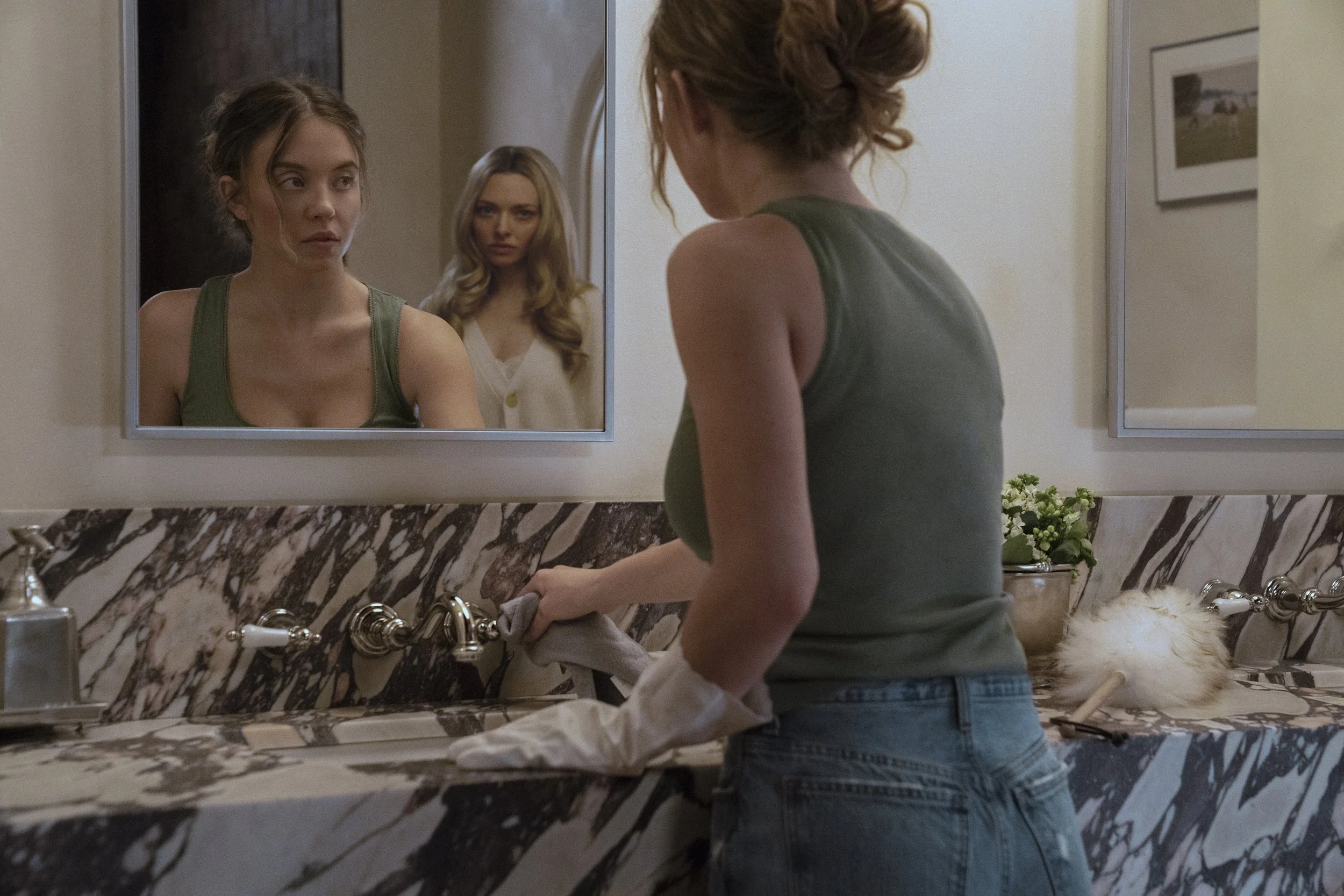
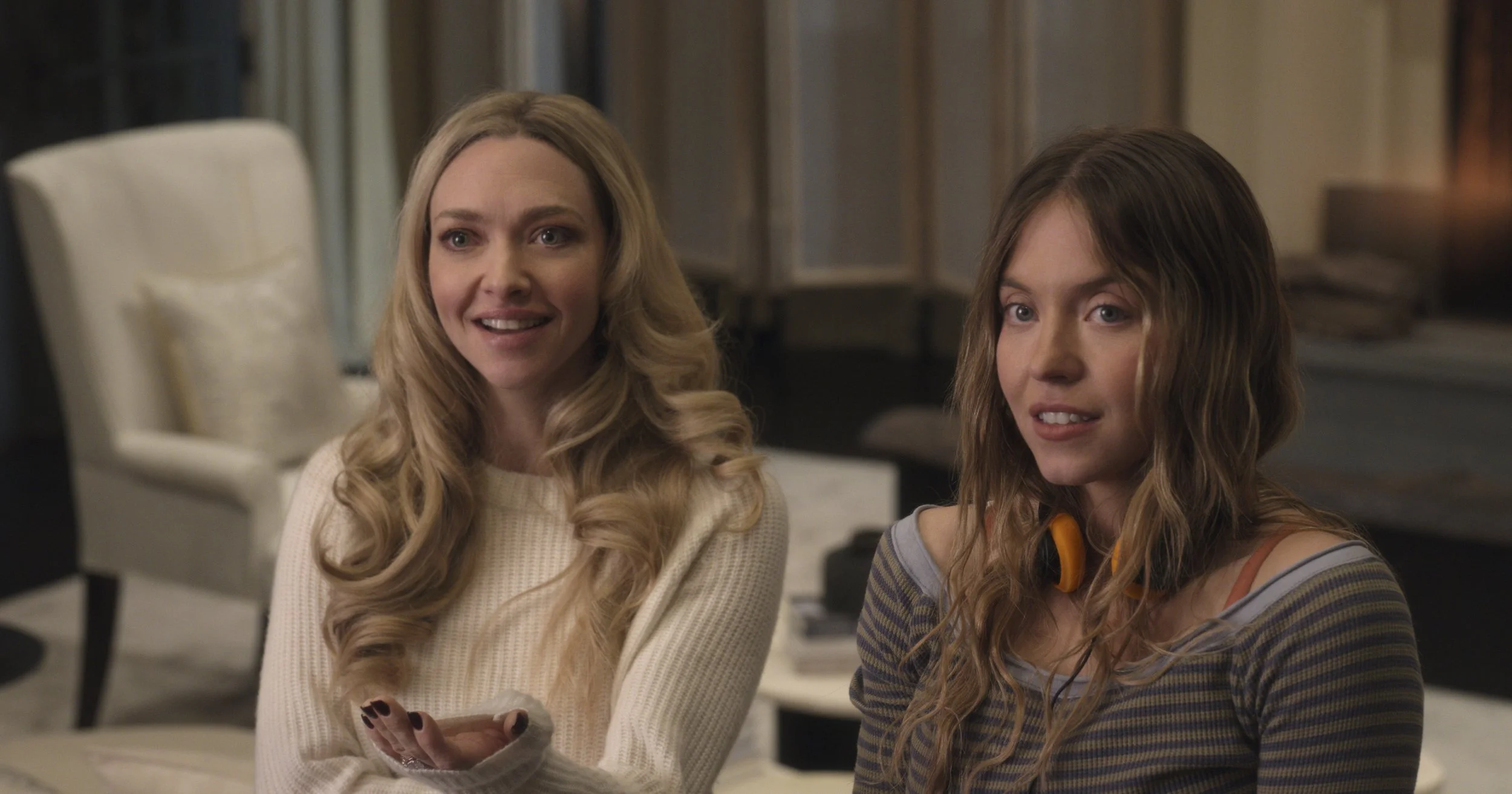
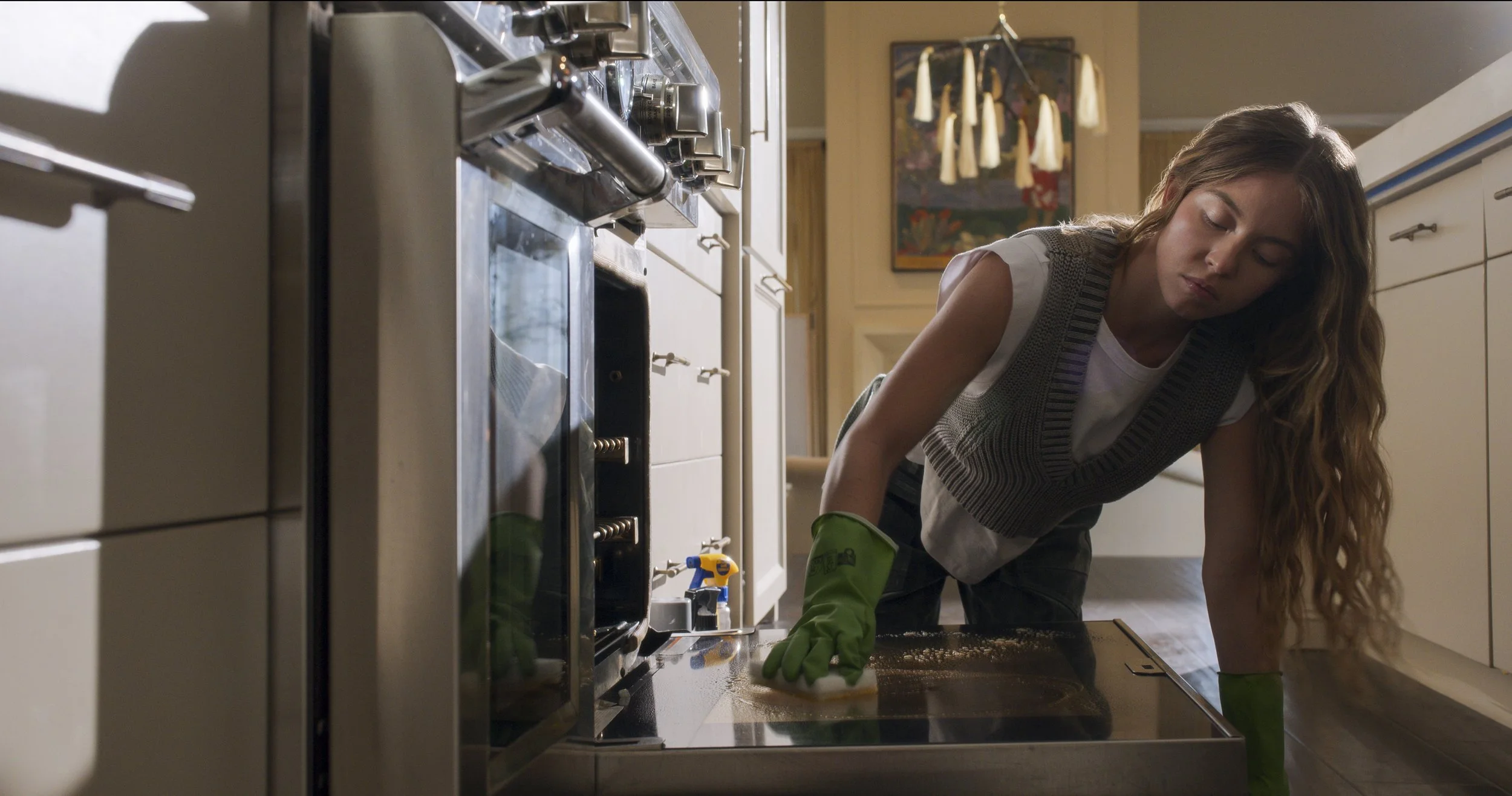
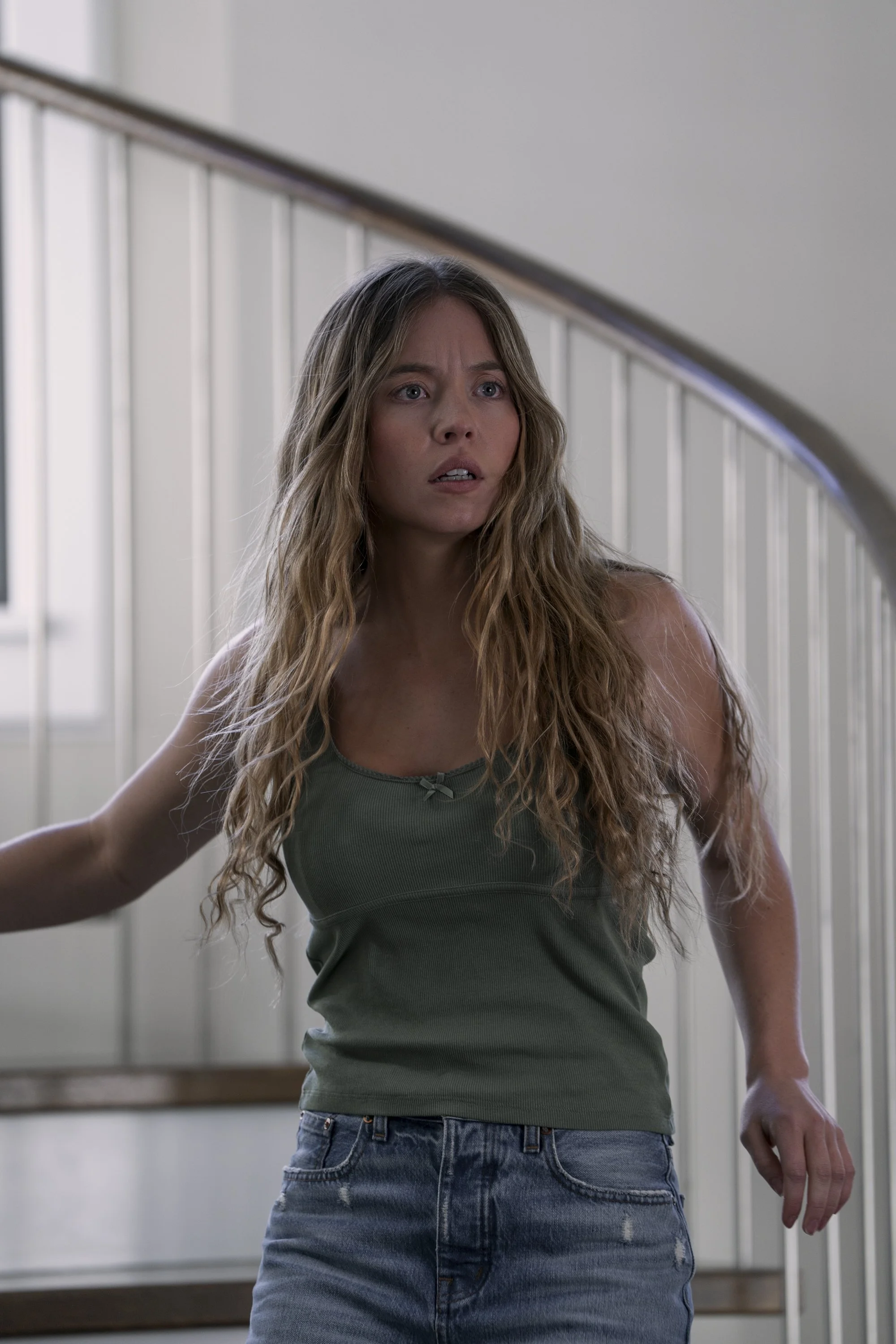
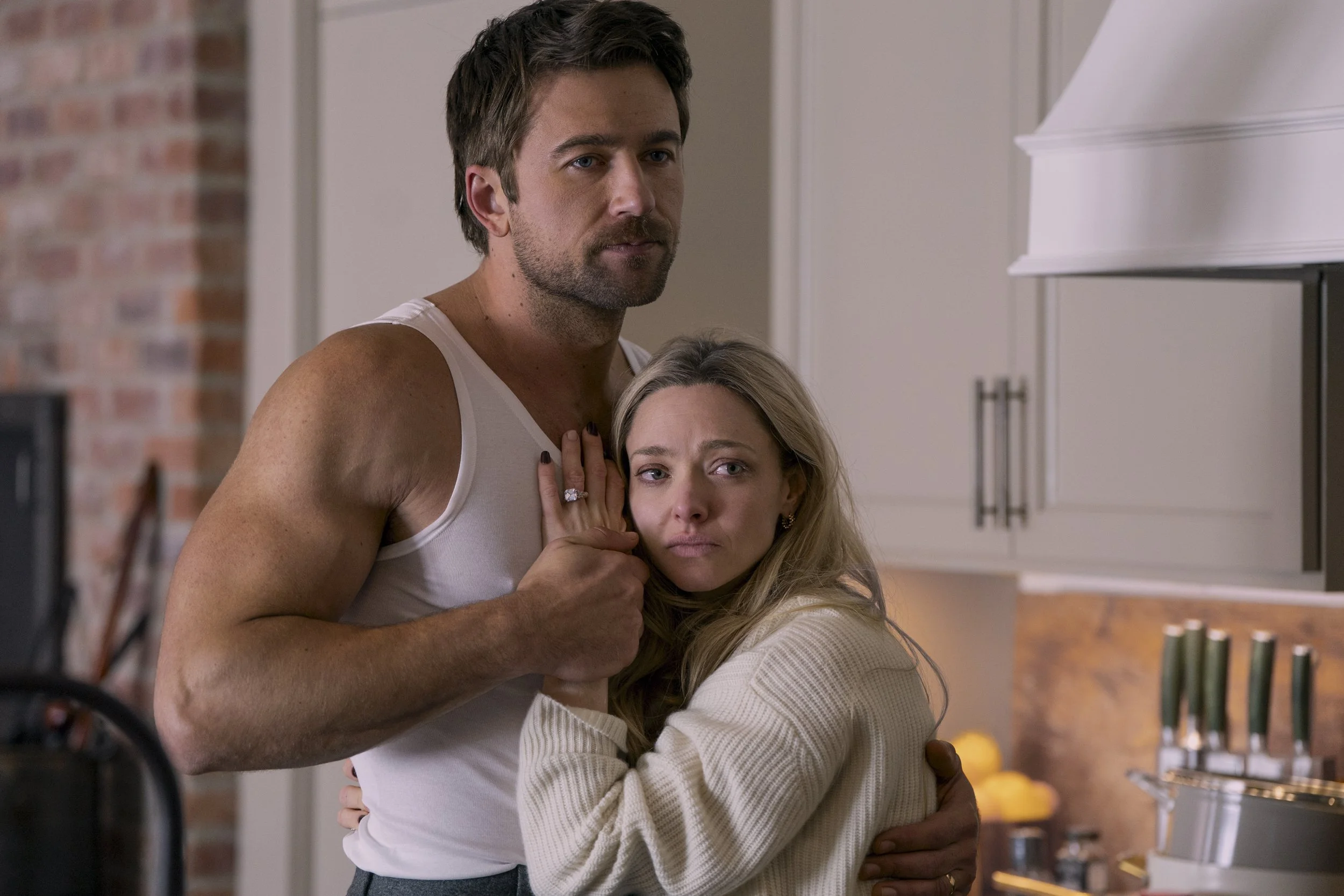
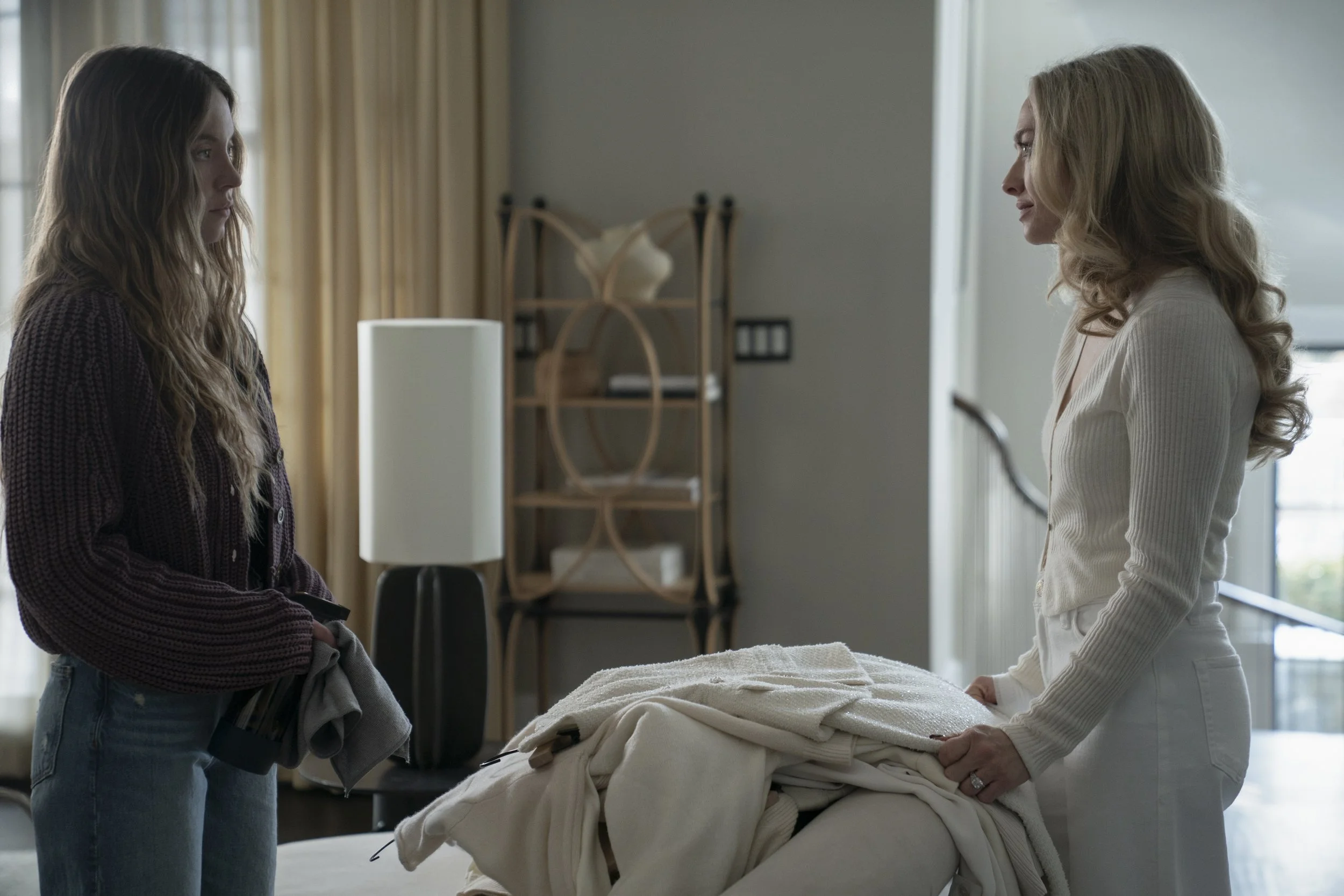
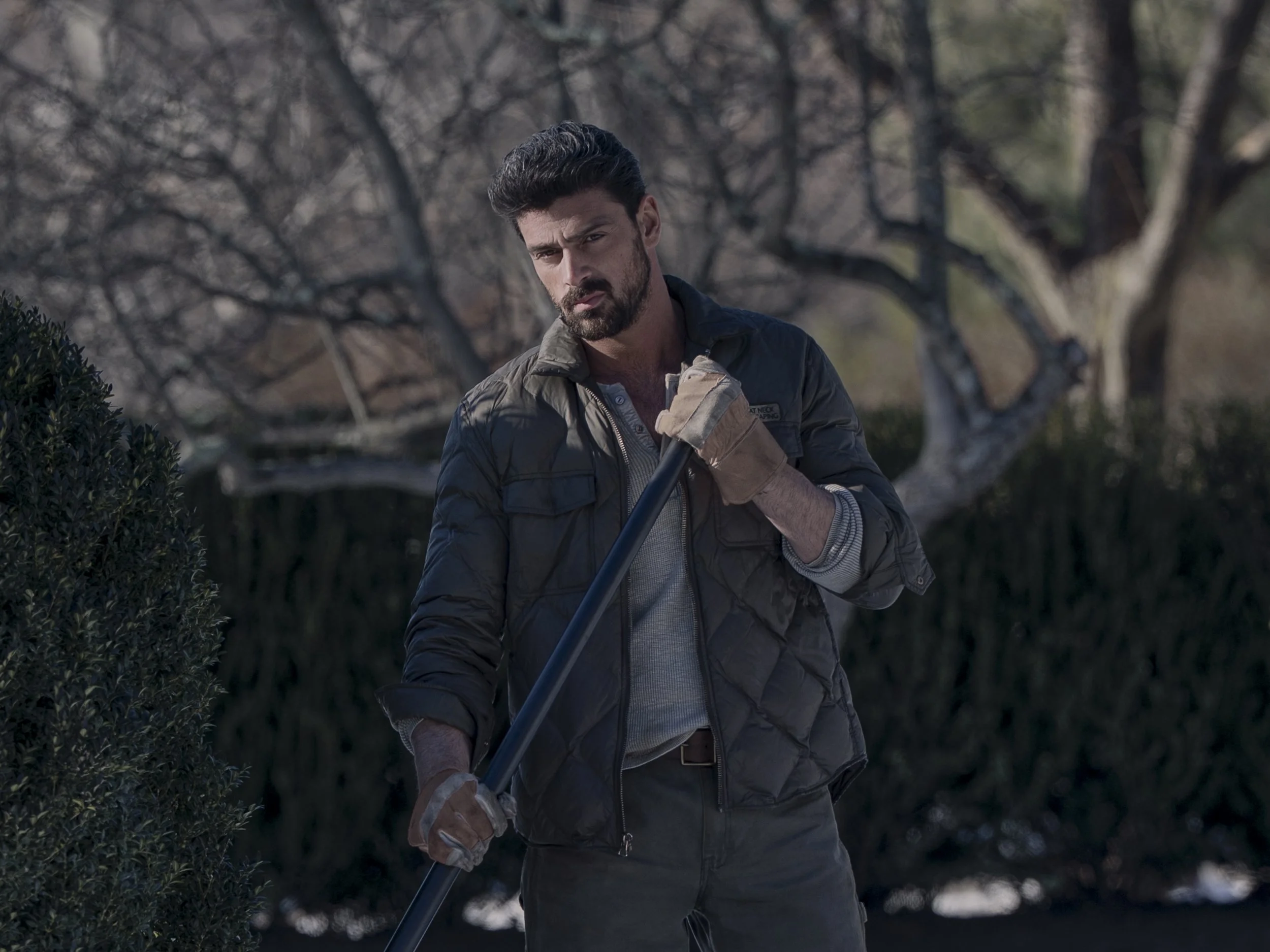
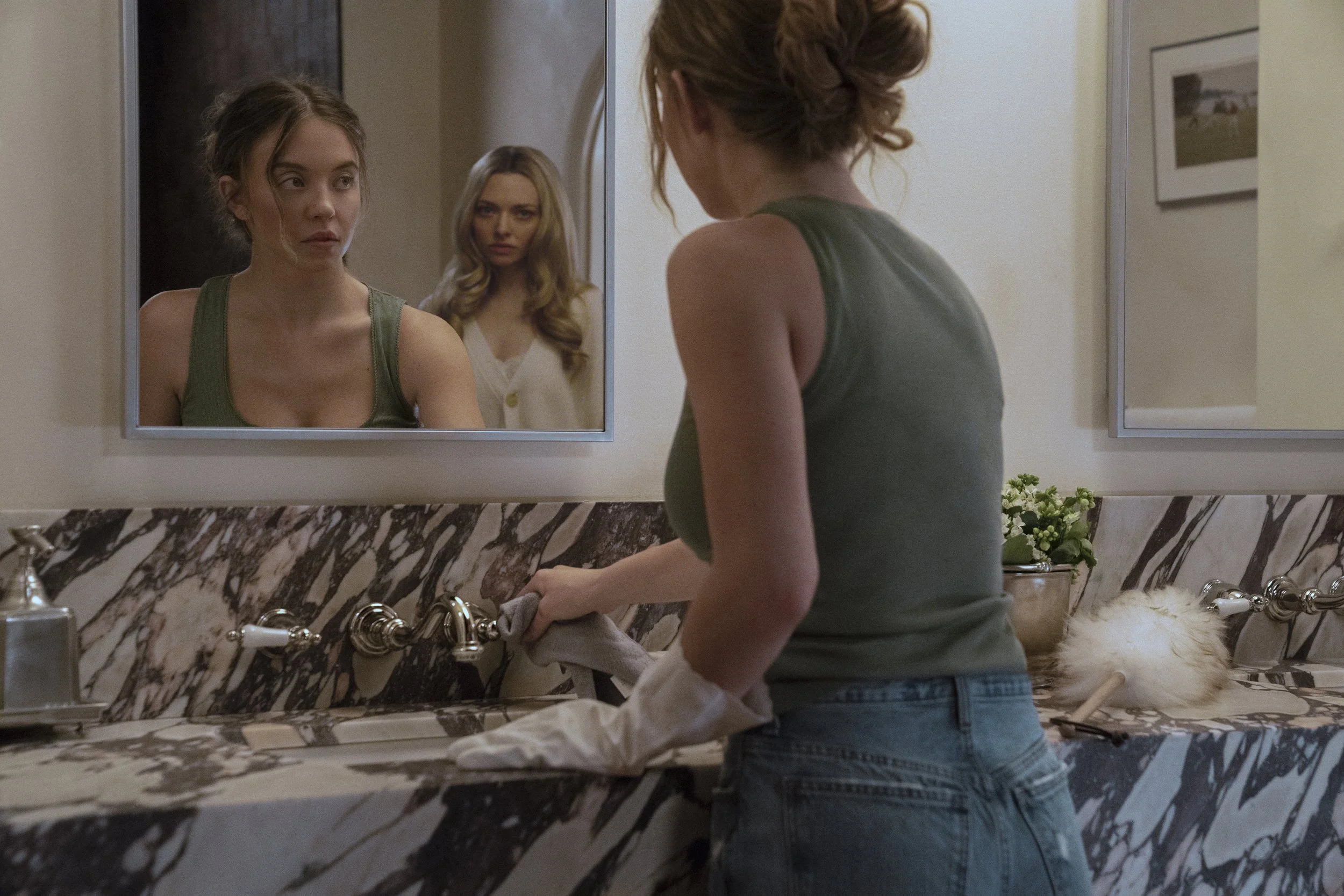
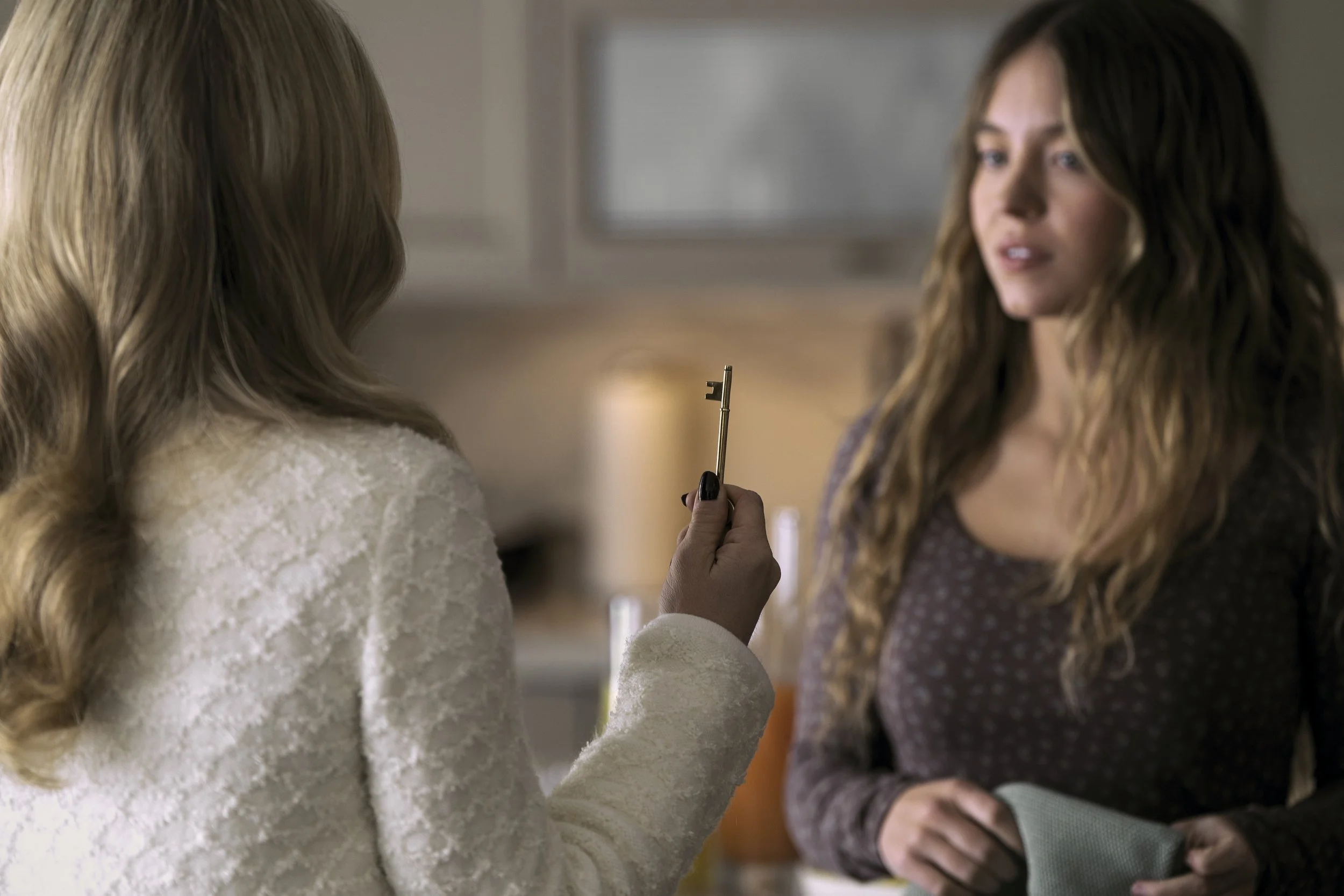
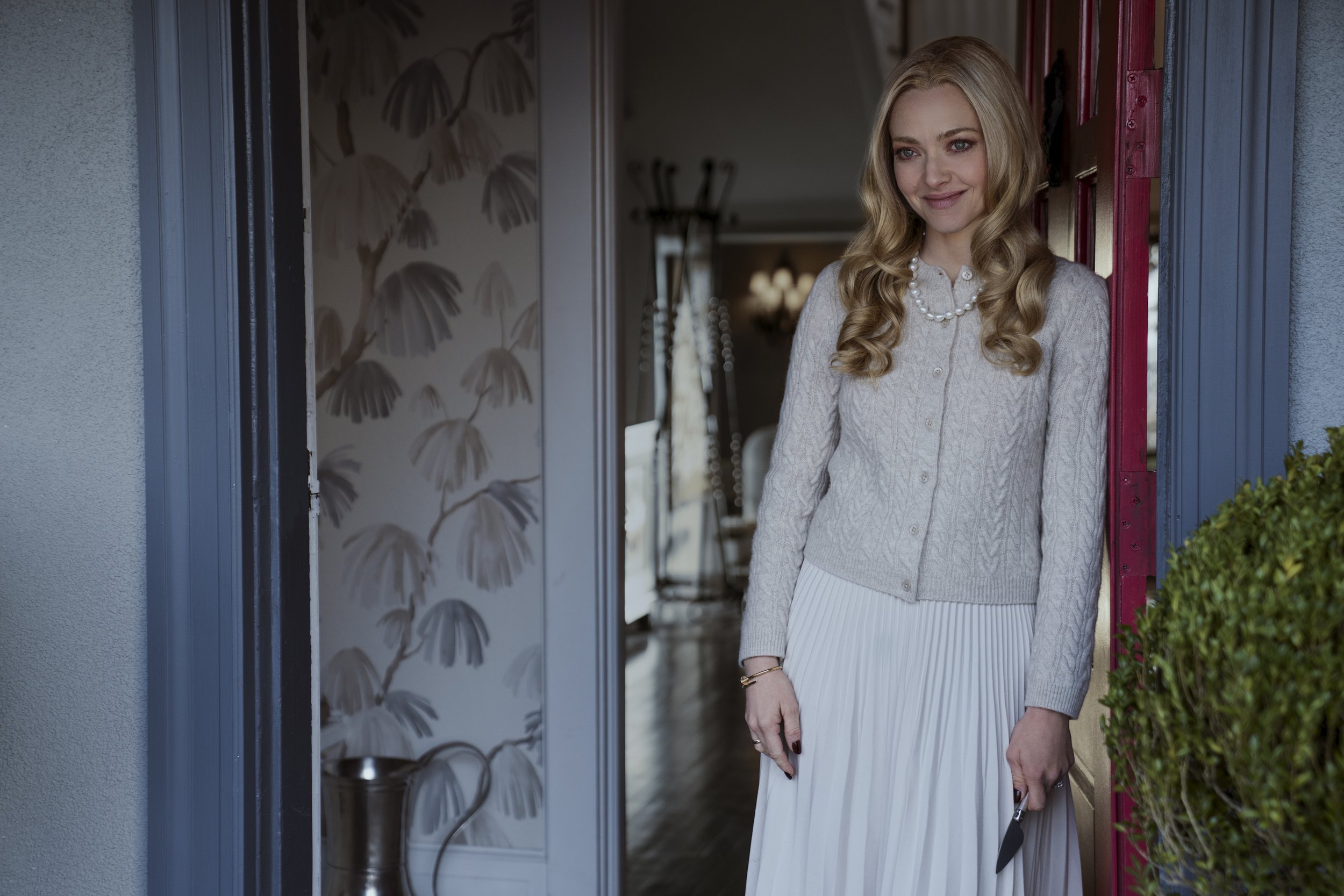
Based on the international bestseller of the same name by Freida McFadden, the catalyst premise of The Housemaid is simple enough. A rich Long Island trophy wife, Nina Winchester (Amanda Seyfried, slaying 2025 with The Testament of Ann Lee and now this), is looking to hire a live-in housekeeper for a family that her bread-winning tech exec husband Andrew (burgeoning heartthrob Brendan Sklenar of TV’s 1923) and her daughter, Cecelia (TV kiddo Indiana Elle). From the applicants, Nina finds Millie Calloway, a desperate woman in her late 20s living out of her car in the parking lot of a rundown diner, played by A-lister Sydney Sweeney.
LESSON #1: TIMING IS EVERYTHING FOR A THRILLER— Now, here’s a sample of The Housemaid’s sense of timing. Pearls—those of Nina’s—are clutched symbolically in the first two minutes while Millie visits for an in-home interview. The house tour Millie receives, complete with a note about one set of unusually designed stairs, feels like a seed-planting preview of future hazards. Either way, a declaration of becoming “part of the family” is espoused in the first ten minutes when Millie gets the job and seals the gig with a too-soon and too-good-to-be-true hug from Nina Winchester.
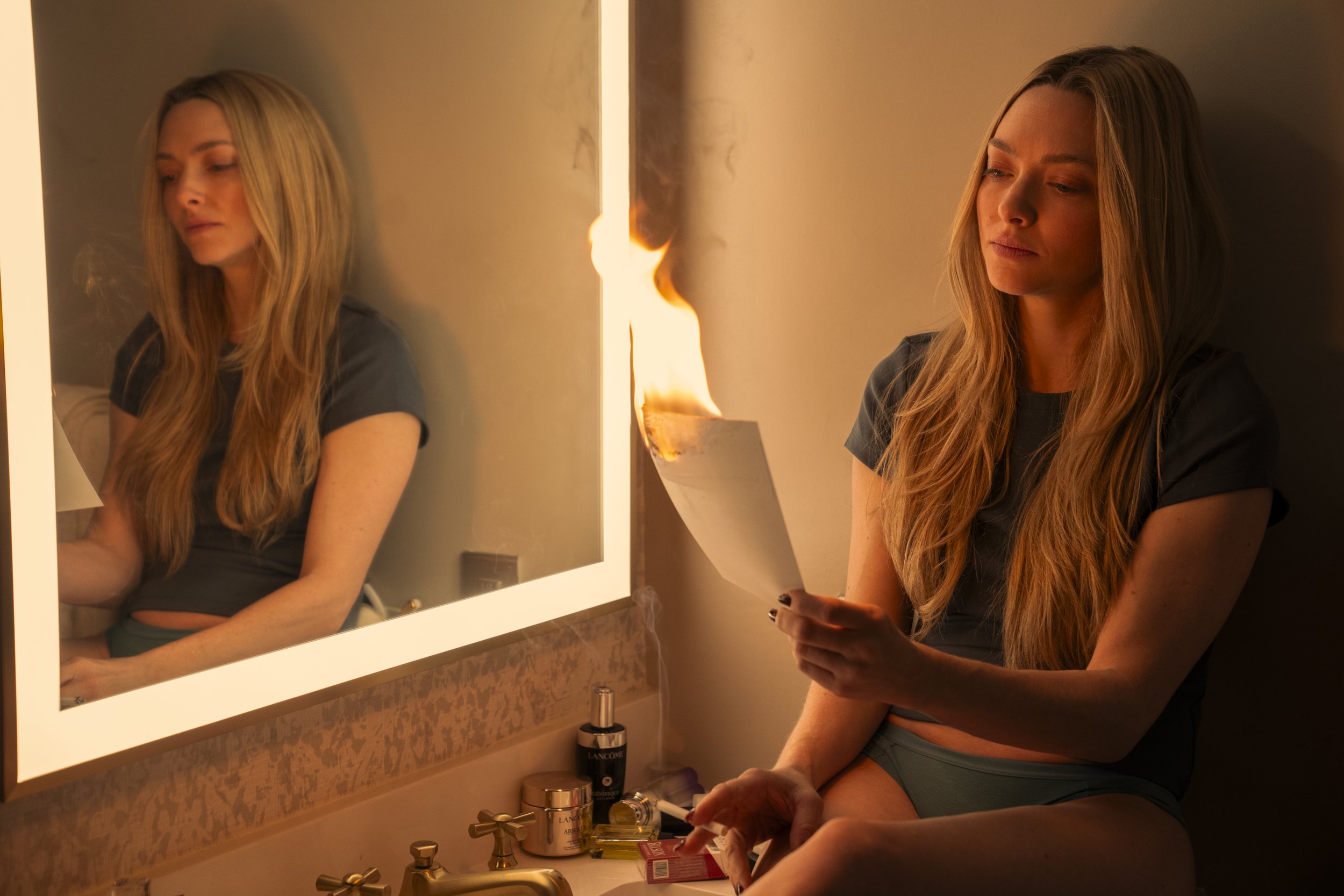
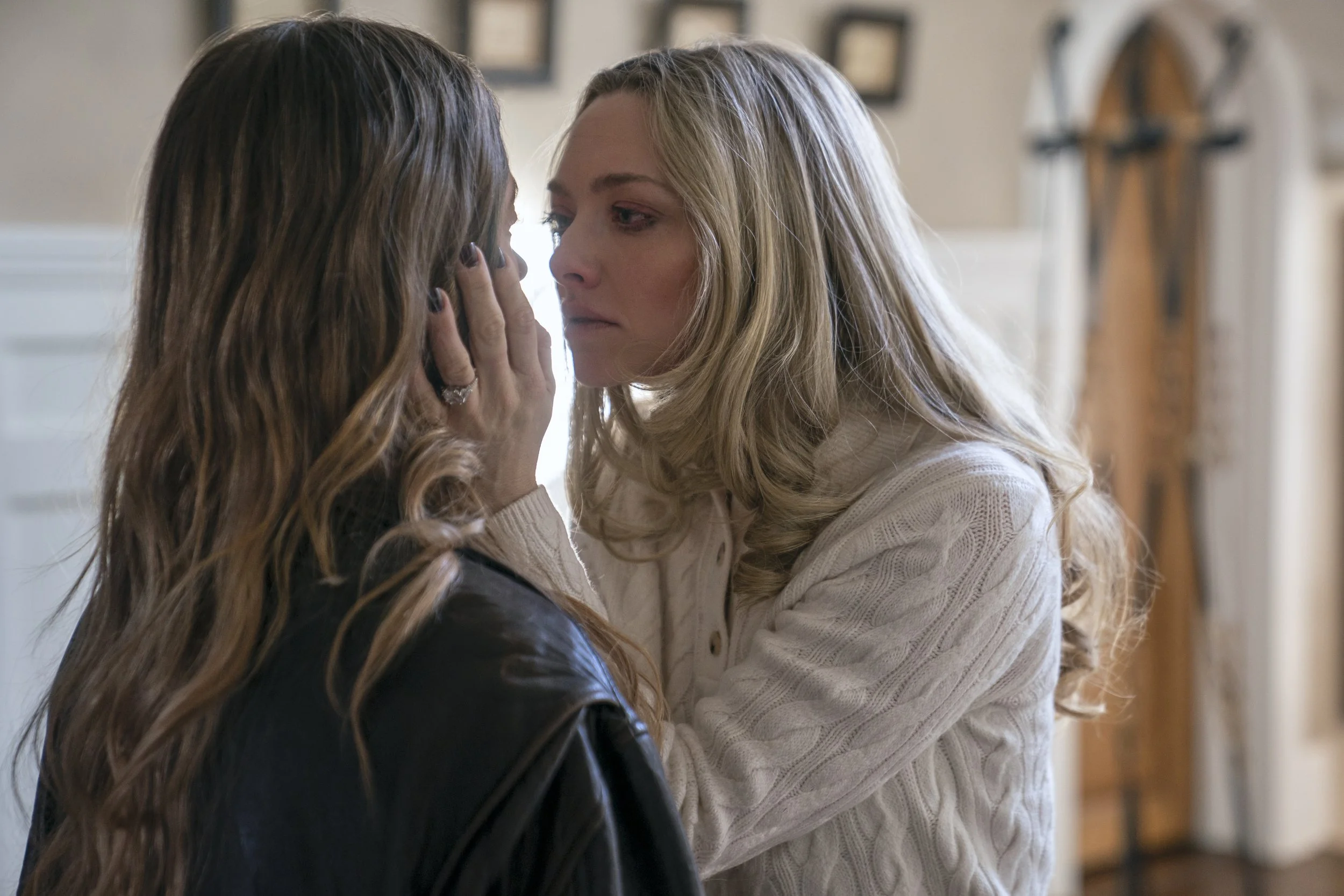
LESSON #2: IS THERE SUCH A THING AS JUSTIFIABLE ADULTERY?— As Millie settles into the job duties during The Housemaid, cracks of mental instability percolate in Nina and become little fires that her even-keeled, sympathetic husband tries to extinguish without blaming Millie. Still, when Millie Calloway looks like Sidney Sweeney and Andrew Winchester looks like Brendan Sklenar, the bombshell line from Amanda Seyfried of “Stay the fuck away from my husband” delivered at the 32-minute mark rings true and feels right on time for a setting increasing in steamy pressure. By the time literal tea is poured among Nina’s fellow upper-crust housewives and scandalous past details and snide judgments are aired about the Winchester family in earshot of a suspicious Millie, the movie has achieved its first boil at 42 minutes.
During this same timespan, The Housemaid reveals sketchy past details about Millie as well, casting doubt on which female lead between Seyfried and Sweeney is the ticking time bomb of either violence, titillation, or—best of all—both. This frothy and compact escalation of risk and the risque pops thermometers, blood vessels, and clothes buttons. By the end of the first hour, the entertaining embers have reached a brown-chicken-brown-cow level, melting the sparking wires and our nerves in the audience.
LESSON #3: DELIVERING THE SWERVE– Lo and behold, even while reaching this white hot heat, Paul and screenwriter Rebecca Sonnenshine (TV’s The Vampire Diaries) were just getting warmed up with their mayhem marinade. The big swerve of The Housemaid comes after the one-hour checkpoint with a Tarantino-esque POV-switch and massive rewind of events. That kind of transition—like the unnecessary over-explanation done in The Hateful Eight, for example—is a risky move that threatens to deflate the momentum created with the aforementioned temperature and timing. Luckily, and with a rip-roaring new vigor to shock and awe, The Housemaid tints character shades, shifts stakes, and completely flips the dramatic irony in a very spicy way during this momentous hinge point. The new trajectory created is both scintillating and cartoonish, but that’s what makes it a crowd-pleasing gas. The less known, the better.
Both before and after the big swerve, the three primary cast members had us eating out of their sleazy and sweaty hands. Over the last few years, Sidney Sweeney has become an established sexpot, yet sharpens a robustly different edge when the thriller switch is flipped. Likewise, Brendan Sklenar, submitting his Bruce Wayne audtion tape, finds a route to smear the perfections of his handsomeness and runs with it unabashedly as the final third picks up speed. Last but certainly not least, just when you figured this was Sidney Sweeney’s movie (and it still, on many levels, is) served on a celebratory platter, Amanda Seyfried simultaneously loosens certain screws to play a delicious loon while tightening other ones to take over The Housemaid as the master manipulator when necessary.
This soaring and sexy success comes back to Paul Feig’s direction and feel for The Housemaid’s salacious beach-read material. Working in his A Simple Favor mode to be R-rated but never grim, Paul shows a command for pacing the entertainment in front of him. By patiently unfurling extra story depth out of what could have been a cocktail napkin story idea that rolled from one set of dirty bedsheets to another with little further development than fulfilling horny kicks. When things get harsh and dicey, and the roasting commentary on privilege becomes more apparent, Feig still varnishes with a suave coolness that is undeniably appealing.





LOGO DESIGNED BY MEENTS ILLUSTRATED (#1362)
