
Carrying a Heavy Pallet Safely Comes Down to How a Set of Pallet Forks Bends, Balances, and Sets Its Own Limits
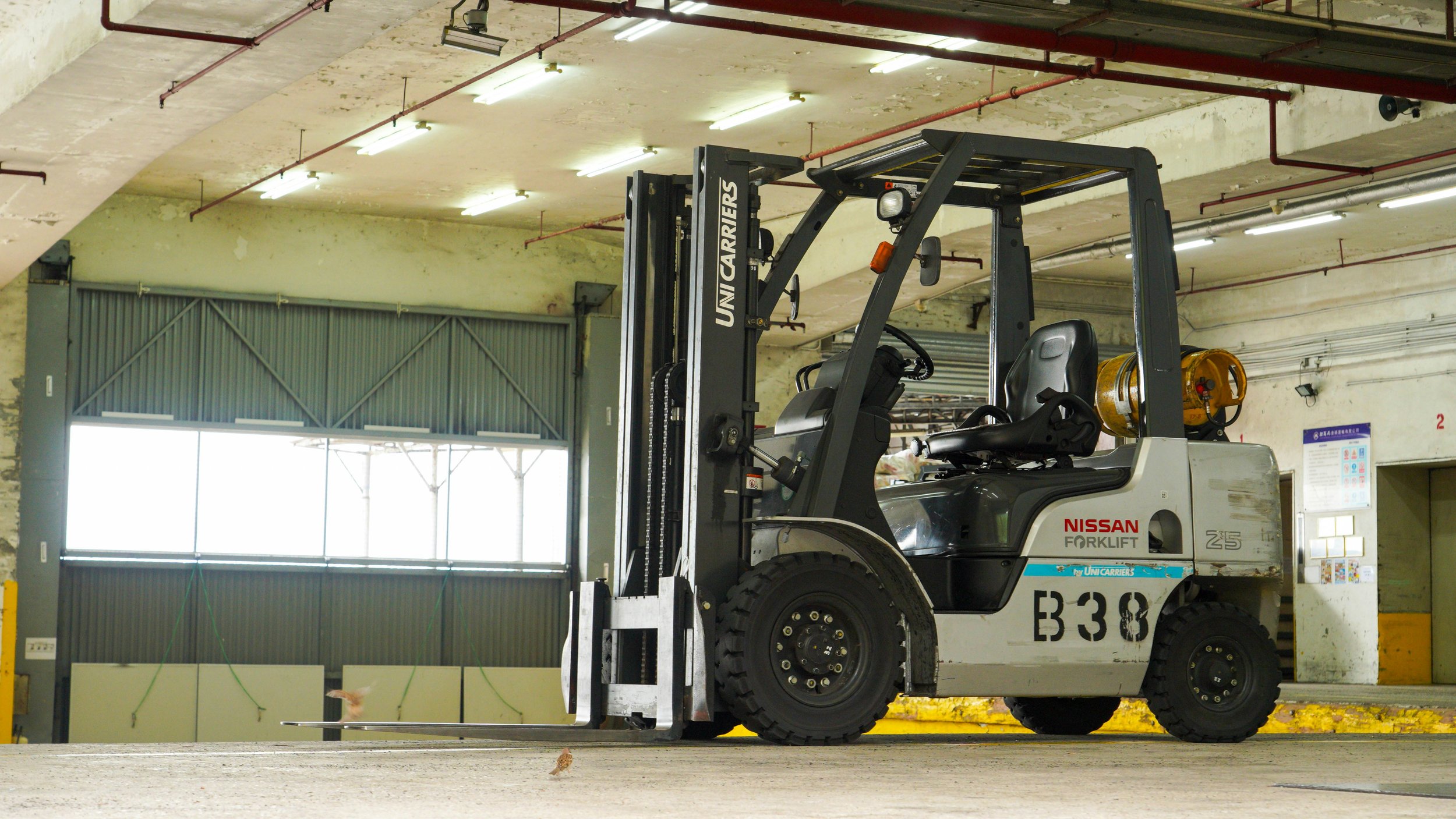
Summer on a Canadian farm or lumberyard means pallets of feed, block, and fencing arriving faster than hands can move them. A loader fitted with forks turns those stacked loads into a one-person job.
The tool for that work is a set of pallet forks, and using them safely starts with how the tines carry weight rather than with the loader behind them.
Each tine works as a cantilever beam
A fork tine is fixed at the heel and free at the tip, which makes it a cantilever. The whole load hangs off a beam supported at only one end.
That is why the bending stress runs highest at the heel, where the vertical shank meets the horizontal blade. Tines are forged thick at that corner for exactly that reason, tapering toward the tip where the load moment is smaller.
Not every set of pallet forks is forged the same, and the heel section is where the difference shows. A thin heel flexes and eventually cracks under repeated heavy lifts, so rated capacity is fixed by the steel at that corner rather than by the length of the blade.
Load center decides how close tipping gets
Rated capacity is quoted at a stated load center, the distance from the heel out to the middle of the weight. Push the load farther out and the same weight swings a longer lever against the machine.
That longer lever is what lifts the rear wheels. A pallet carried tight against the heel stays within reach of the counterweight, while the same pallet slid to the tips can tip a loader that raised it easily when the weight sat closer to the machine.
This is why a rating on a set of pallet forks always travels with a load center figure beside it. The bare number means little until it is paired with how far out the weight is meant to sit.
Spacing the tines to fit the load
Most forks slide along a top bar so the gap between them can be set to the pallet. Matching the spread to the load is what keeps a pallet from racking or sliding off sideways.
•Wide spread: steadies broad pallets and crates
•Narrow spread: suits bins and small bundles
•Even gap: keeps the load balanced left to right
Working inside the rated limit
The number stamped on a set of pallet forks is a ceiling reached only when everything else is right. Staying under it, and carrying low, is how the load reaches the stack without incident.
•Carry low: keeps the center of gravity down
•Level tines: stops the load creeping forward
•Even loading: shares weight across both tines
A yard worker unloading a delivery truck sets the tines wide for the block pallets, slides each load back to the heel, and keeps the mast tilted back on the drive to the stack. None of those habits reads as dramatic, yet together they keep a heavy summer load from ever getting away.
Handled this way, the forks are less a lifting hook than a pair of balanced beams that reward a load kept close and low. The physics is unforgiving, but it is also simple and repeatable.
For summer material handling on Canadian ground, a well-matched set of pallet forks turns a heavy delivery into steady, predictable work one pallet at a time.
