
Architectural Design as a Long-Term Real Estate Investment
Architectural Design as a Long-Term Real Estate Investment
In the upper echelons of the global property market, a building is far more than a collection of square footage; it is a sophisticated financial asset and a profound statement of lifestyle. For high-net-worth individuals, institutional investors, and discerning developers across the United States, Europe, and the UAE, the true value of a property is determined long before the foundation is poured. It is established during the conceptual phase. High-end architectural design is not merely an aesthetic endeavor or a superficial veneer applied to a structure; it is the fundamental framework that dictates a property’s market trajectory, functional longevity, and financial appreciation.
As global real estate markets evolve, the intersection of bespoke architecture and rigorous construction execution has become the definitive benchmark for premium developments. Investing in professional architectural design services is increasingly recognized not as a front-end expense, but as a strategic, long-term wealth maximization tool.
The Economics of Custom Architecture vs. Standardized Solutions
In premium real estate markets from Miami to Dubai, standardized, cookie-cutter structures suffer from rapid intellectual and financial depreciation. Standardized blueprints fail to account for the unique micro-conditions of a site, the evolving demands of affluent buyers, or the nuanced integration of modern technology. Conversely, custom architecture treats a property as a unique ecosystem. A bespoke design optimizes the specific topography, sun orientation, and panoramic views of a plot, transforming geographical constraints into distinct architectural advantages.
|
Standardized Frameworks |
Financial Dynamics | Rapid Depreciation: Capital depreciates quickly due to functional and aesthetic obsolescence. Building loses edge against modern custom estates. |
| Layout Flexibility | Rigid Adaptability: Template designs fail to adapt to evolving market trends, future technology integrations, or modern family living paradigms. | |
| Aesthetics & Context | Homogeneous Aesthetics: Lack of unique identity severely limits resale premium and reduces market liquidity on global platforms. | |
|
Bespoke Architectural Design |
Financial Dynamics | Compounding Asset Value: Unique design assets appreciate faster than regional real estate averages, breaking regional price-per-square-foot records. |
| Layout Flexibility | Lifestyle-Driven Layout: Spaces are systematically optimized around contemporary high-end living (e.g., indoor-outdoor flow, wellness wings). | |
| Aesthetics & Context | Site-Specific Synergy: Maximizes site advantages (topography, panoramic views, light tracking), converting geographical constraints into tangible value. |
By prioritizing a lifestyle-driven design, custom architecture creates highly personalized living spaces that resonate emotionally and practically with the end user. When an estate is tailored to the exact rhythm of contemporary high-end living—incorporating seamless indoor-outdoor transitions, dedicated wellness quarters, and discreet service circulation—it transcends the commodity market, establishing a unique niche that commands a significant premium.
Architectural Design as a Catalyst for Real Estate Value
The correlation between luxury architectural design in the USA and elevated real estate value is well-documented. Sophisticated buyers are willing to pay a premium for properties that exhibit timeless design concepts. This financial premium manifests in several distinct ways:
-
Accelerated Market Liquidity: Architecturally significant homes consistently spend fewer days on the market compared to their conventional counterparts.
-
Premium Price Per Square Foot: Properties featuring visionary residential architecture regularly break local neighborhood records, decoupling their valuation from standard regional averages.
-
Mitigated Obsolescence: A thoughtfully conceived structure anticipates future lifestyle shifts, ensuring the property remains highly desirable decades after its completion.
"True architectural luxury is realized when form, function, and execution exist in perfect equilibrium," notes Tetiana Oliinyk, Founder and Lead Architect at OLT DESIGN. "A masterful architectural concept must not only captivate visually but must also be designed with buildability and long-term asset appreciation at its core. When we approach a project, we are designing a legacy, ensuring that every spatial sequence adds tangible value to the investor’s portfolio."
The Synergy of Architectural Design and General Contracting
A brilliant architectural blueprint is only as good as its physical execution. Historically, the traditional design-bid-build model often created friction between architects and builders, resulting in budget overruns, compromised details, and extended timelines. To safeguard a real estate investment, the modern industry has shifted toward a unified approach: integrating architectural design and general contracting.
Integrated Design & Construction Pipeline:

[ Concept & Architecture ] ──> [ Engineering & Documentation ] ──> [ Unified Construction Management ] ──> [ Handover ]
When architectural design services are paired under a single umbrella with general contractor services, the benefits to the investor are multi-faceted:
1. Cost Predictability and Value Engineering
From the initial sketches, the construction management team collaborates with the design architects. This allows for real-time cost estimation and proactive value engineering. Materials, structural systems, and complex architectural geometries are vetted for financial feasibility before the design is finalized, preventing costly revisions later on.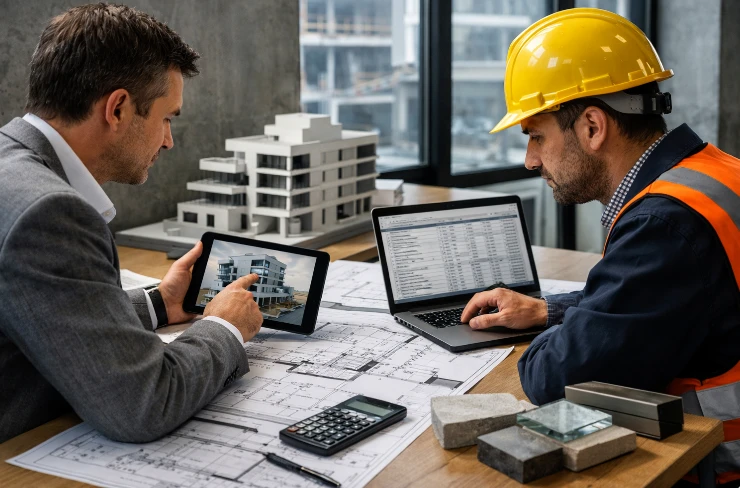
2. Single Point of Accountability
Navigating a luxury build involves managing dozens of specialized subcontractors, artisans, and engineers. An integrated approach provides the client with a single entity responsible for both design fidelity and construction quality. This eliminates the adversarial dynamics that often arise between separate design and construction teams.
3. Execution of Intricate Details
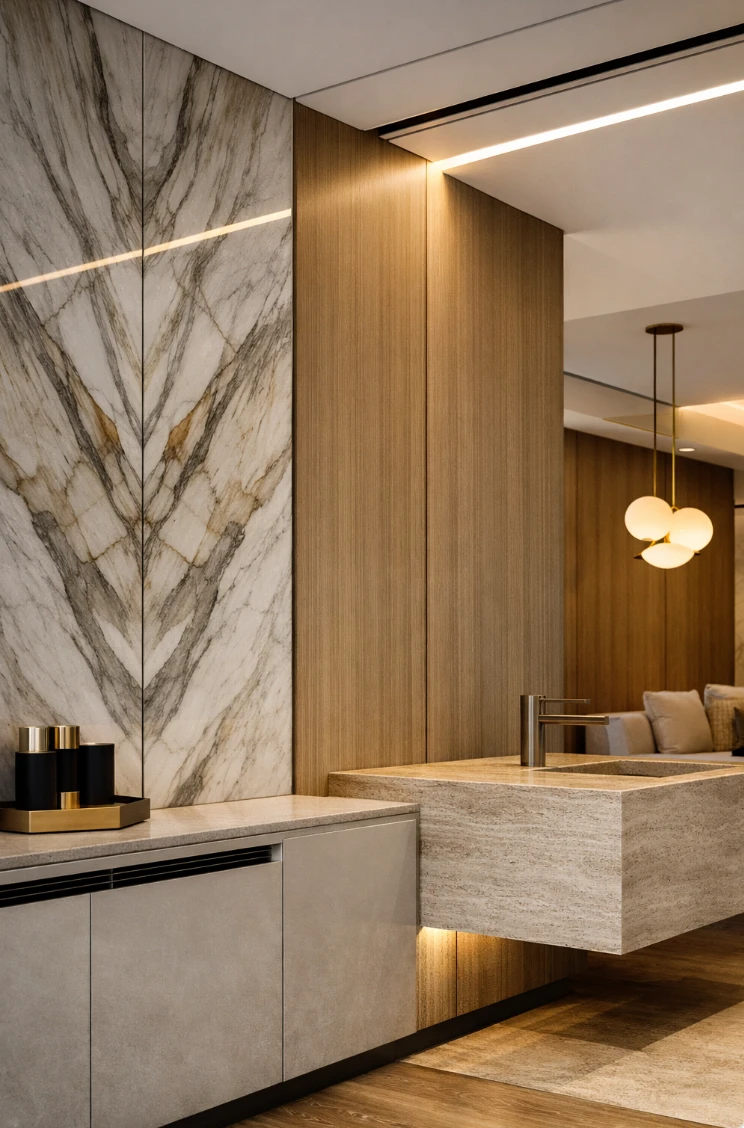
Luxury architectural design relies heavily on precision—flush transitions, concealed mechanical systems, shadow-gap profiles, and book-matched stone installations. Without a unified team where the construction management professionals understand the architectural intent implicitly, these sophisticated details are frequently lost in translation during the build phase.
The Full Lifecycle of a Premium Real Estate Project
A successful real estate asset is realized through a rigorous, linear progression of specialized phases. Skipping or rushing any step compromises the integrity, budget, and ultimate market value of the building.
Phase 1: Conceptual Design & Spatial Strategy
This foundational phase defines the architectural vision, spatial relationships, and orientation. The architect translates the client’s brief and lifestyle requirements into preliminary zoning diagrams, massing studies, and artistic renderings, ensuring the project aligns with the unique characteristics of the site.
Phase 2: Detailed Architectural & Technical Documentation
Once the concept is approved, the project transitions into comprehensive technical drafting. This involves producing highly detailed architectural sets, structural engineering coordinates, MEP (Mechanical, Electrical, Plumbing) layouts, and precise interior detailing. This documentation serves as the definitive manual for the entire construction process.
Phase 3: Construction & Site Management
With permits secured, the general contracting division takes control of the site. This phase encompasses procurement, subcontractor scheduling, rigorous quality control, and adherence to strict safety standards.
Phase 4: Final Fit-Out & Delivery
The final phase bridges the gap between construction and turnkey occupancy. It includes the installation of custom millwork, specialized lighting scenes, smart automation programming, and meticulous finishing touches, culminating in a flawless handover to the investor.
Modern Imperatives: Sustainability and Smart Infrastructure
In today's global market, long-term asset value is inextricably linked to technological and environmental performance. Affluent buyers increasingly demand sustainable architecture that minimizes environmental impact while maximizing operational efficiency.
| Architectural Element | Long-Term Investment Benefit |
| High-Performance Building Envelopes | Substantially reduces thermal transfer, lowering heating and cooling costs while enhancing acoustic comfort. |
| Smart Automation Integration | Unifies lighting, climate, security, and entertainment systems into a scalable framework that adapts to future technological upgrades. |
| Renewable Energy Systems | Solar arrays, geothermal HVAC systems, and energy storage options safeguard the property against fluctuating utility markets. |
| Biophilic Design Elements | Incorporates natural light, advanced ventilation, and indoor nature to improve the health, well-being, and cognitive function of occupants. |
By embedding these forward-thinking solutions into the initial custom home design, architects protect the property against future regulatory changes, carbon taxes, and utility inflation, keeping the asset at the cutting edge of the market for the long term.
Navigating the Nuances of International Luxury Real Estate
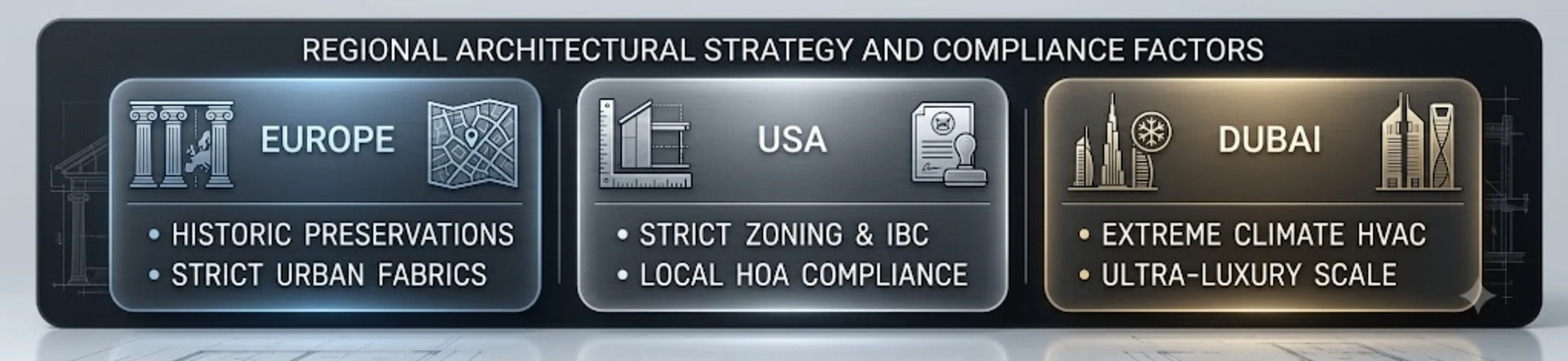
The execution of a high-end architectural project varies significantly depending on the geographic jurisdiction. A world-class architectural and contracting firm must possess the agility to navigate the distinct regulatory, cultural, and climatic realities of diverse global regions.
-
The United States: Projects across North America demand a deep understanding of local zoning ordinances, strict adherence to the International Building Code (IBC), and navigating complex Homeowners Association (HOA) guidelines in exclusive enclaves.
-
Europe: Designing in European capitals often requires a delicate balance between historic preservation and contemporary intervention. Architects must integrate modern residential architecture within protected urban fabrics, respecting historical heritage while providing ultra-luxury amenities.
-
Dubai & The Middle East: The UAE market demands grand scale, rapid execution, and exceptional thermal performance. Architectural design in this region must withstand extreme desert climates through advanced glazing and specialized HVAC engineering, all while delivering the uncompromising opulence expected in the luxury sector.
Conclusion: Securing the Investment Blueprint
Architectural design should never be viewed as an isolated aesthetic discipline. It is the core economic engine of a property development. By investing in comprehensive, professionally managed integrated architectural solutions, property owners and investors do not simply build structures—they curate appreciating assets.
The seamless union of visionary architectural design and precision general contracting ensures that every square meter of a property is optimized for functionality, longevity, and market dominance. In a world where luxury is defined by the flawless execution of bespoke ideas, the collaboration between an elite architectural vision and master construction management remains the ultimate strategy for securing long-term real estate returns.
