
After the Movie Ended, the Hardest Question Came in the Lobby
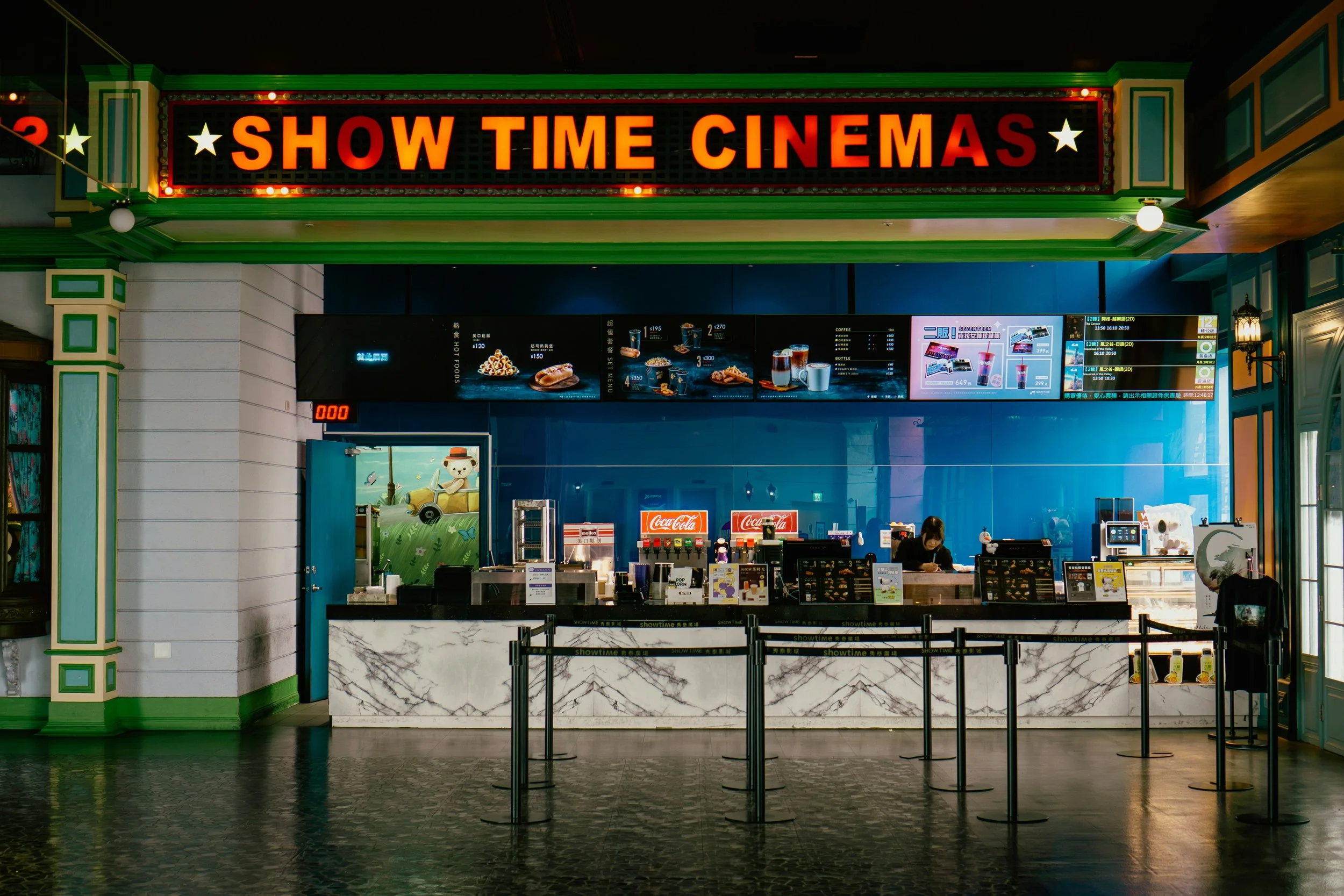
Photo by Raymond Yeung on Unsplash
Last Thursday, on the coldest night Madison has had this winter, we screened Daddio to a full house, ninety seats, every one of them filled by people who had walked in out of eleven-degree air carrying the smell of wool and cold pavement. I stood by the door tearing tickets and watching the line stretch past the popcorn machine, and I remember thinking that this is what the job is for. I have hosted the Thursday Q&A at this little repertory cinema two blocks off State Street for eleven years. I am forty-four. If you have seen the film, you know it is almost entirely two people talking in a taxi from JFK to midtown, which makes it either the best possible choice for a discussion night or the worst, because after ninety minutes of watching two strangers learn how to talk to each other, an audience has a great deal it wants to say.
The discussion went as well as any I have ever hosted. A man in the fourth row raised his hand and said he had driven a cab in Chicago for thirty-one years, and that the thing the movie got right was the distribution of silence, which silences the passenger controls and which ones the driver does. The room went quiet in the good way. A young woman in the back corner, the kind of seat I always save my last question for, asked whether the driver would have said any of it if the passenger had been a man, and I watched ninety people lean forward at once. A retired teacher wanted to know why the film never lets them exchange names until the end. Forty-five minutes passed without a single dead spot. I opened with the easy question, I interrupted kindly, I passed the microphone to the quiet corner on purpose, and from behind it all I remember thinking that this was the job at its best.
Afterward, when the lobby had emptied and I was stacking the comment cards, Ruth came down from the projection booth. Ruth is seventy-one and was our projectionist for thirty years, through the end of 35mm, and she still comes on Thursdays to sit in the back and keep score. She helped me turn off the lobby lights, and then, with her coat half on, she asked, "How are you doing, though? Not the show. You."
I want to tell you that I answered her. What I actually did was say, "Honestly, nights like this are why we do it," which is a sentence about the show, and she knew it, and she nodded in a way that let me off the hook, and we said goodnight. I stood on State Street in the cold and tried to find the true answer to her question. I could tell you the running time of every film we have shown since October. I could tell you which donor paid for the new projector and why the second reel of the print we retired in 2019 had a scratch at the forty-minute mark. I could not tell Ruth how I was doing. I had spent the whole evening guiding ninety strangers through the most personal conversation a public room can have, and I had done it entirely from behind a role, and the role had no exit door.
At home I found a text from my brother, sent that afternoon. He installs garage doors in Minneapolis, and all he had written was, "what've you been up to." I typed three replies and deleted all three. The first began, "Busy week, we had a sold-out Thursday," which is a box office report, not an answer. The second began, "Honestly, nights like this are why we do it," and I had to put the phone down for a minute after that one. The third was a perfectly shaped little paragraph about the cab driver in the fourth row, with a setup and a payoff and a button at the end, and I deleted it because my brother is not an audience. He was asking for the clumsy version, the one with no shape, and I understood, standing in my own kitchen, that I had been rehearsing structured talk for so long that the clumsy version no longer came out of me on command.
Here is the part I did not say to Ruth or to him. For about two months I have been practicing that first, shapeless minute somewhere with no stakes at all, on Knotchat, a random one-on-one exchange you can keep to text or open up to video if both people want to. There is no room to work there, no name to maintain, no one expecting the programmer. When a conversation stalls, nothing has to be rescued; the silence just sits between two people until one of them finds the next true sentence. I still do not have a tidy explanation for why an hour of one-on-one chat with a stranger occasionally does what a whole season of receptions cannot, but I suspect it is the only place in my life where nobody, including me, is hosting. It is not therapy, and I would not ask it to be. It is practice at beginning.
On Friday morning I sent my brother a voice message. It rambled. I told him about the man from Chicago and the distribution of silence, and that Ruth had asked me how I was and I had answered like a press release, and that our boiler had once screamed during a silent film and Ruth had left the booth to kick it twice, on the beat. I did not edit it. Two hours later he sent back a voice message of his own, forty-seven seconds long, about his furnace, which is making the noise again, and about nothing else at all. It had no shape whatsoever. I listened to it twice.
