
MOVIE REVIEW: Toy Story 5
Images courtesy of Pixar.
TOY STORY 5— 4 STARS
As presented in this review space seven years ago, the notion of whether certain stories are worthwhile to tell was deeply discussed about Toy Story 4. To earn that adjective, the value of the story in question and its larger themes had to benefit from where it came from and where it was going. As lucratively successful and awarded as that film turned out to be, its lackluster tangent about conscience, independence, and overcoming something being lost did not earn the right to undo what stands as one of the most perfect endings in cinema history, represented by Toy Story 3. In a massive improvement from its previous installment, Toy Story 5 forms the right lesson for the right time.
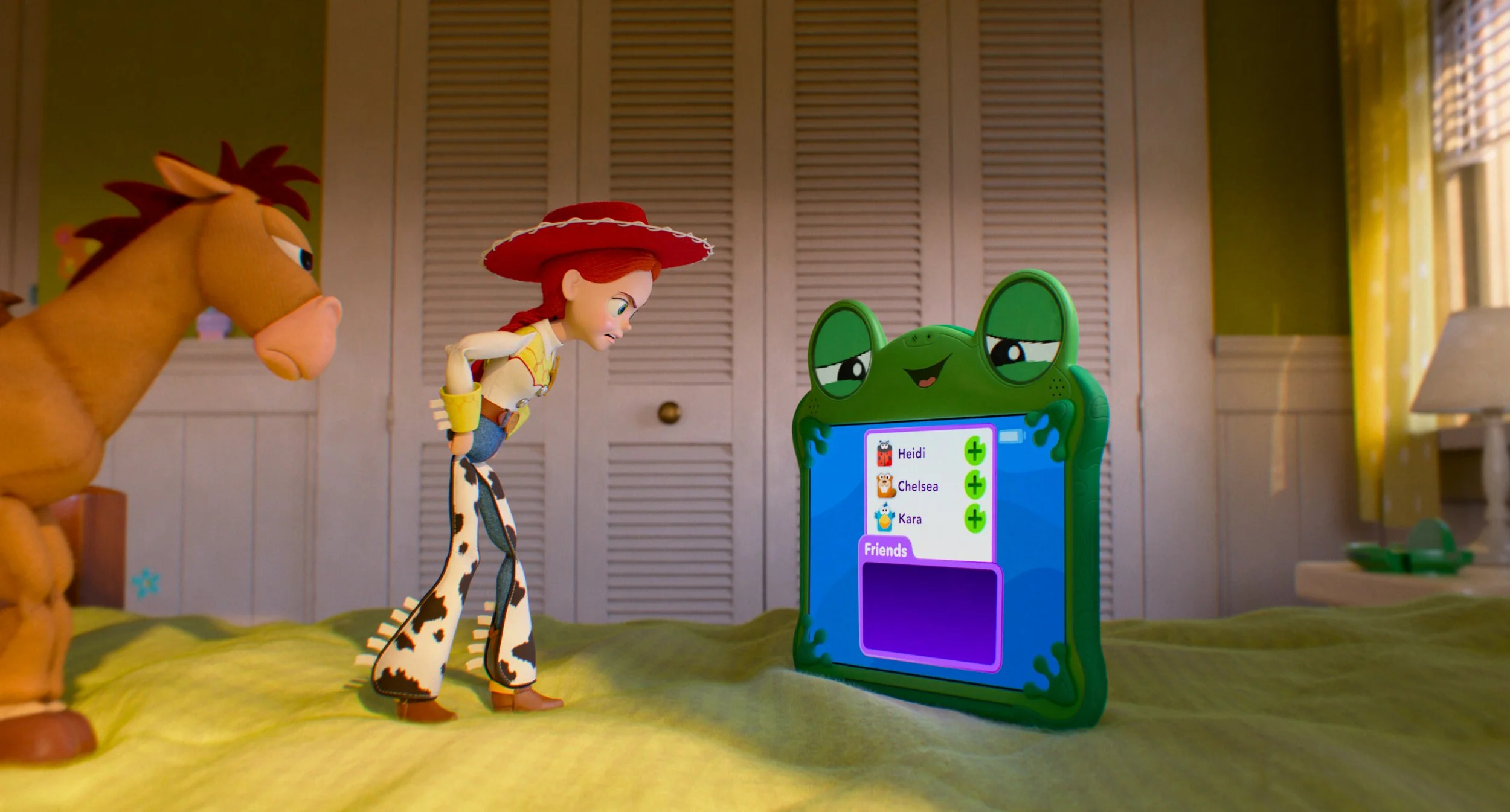
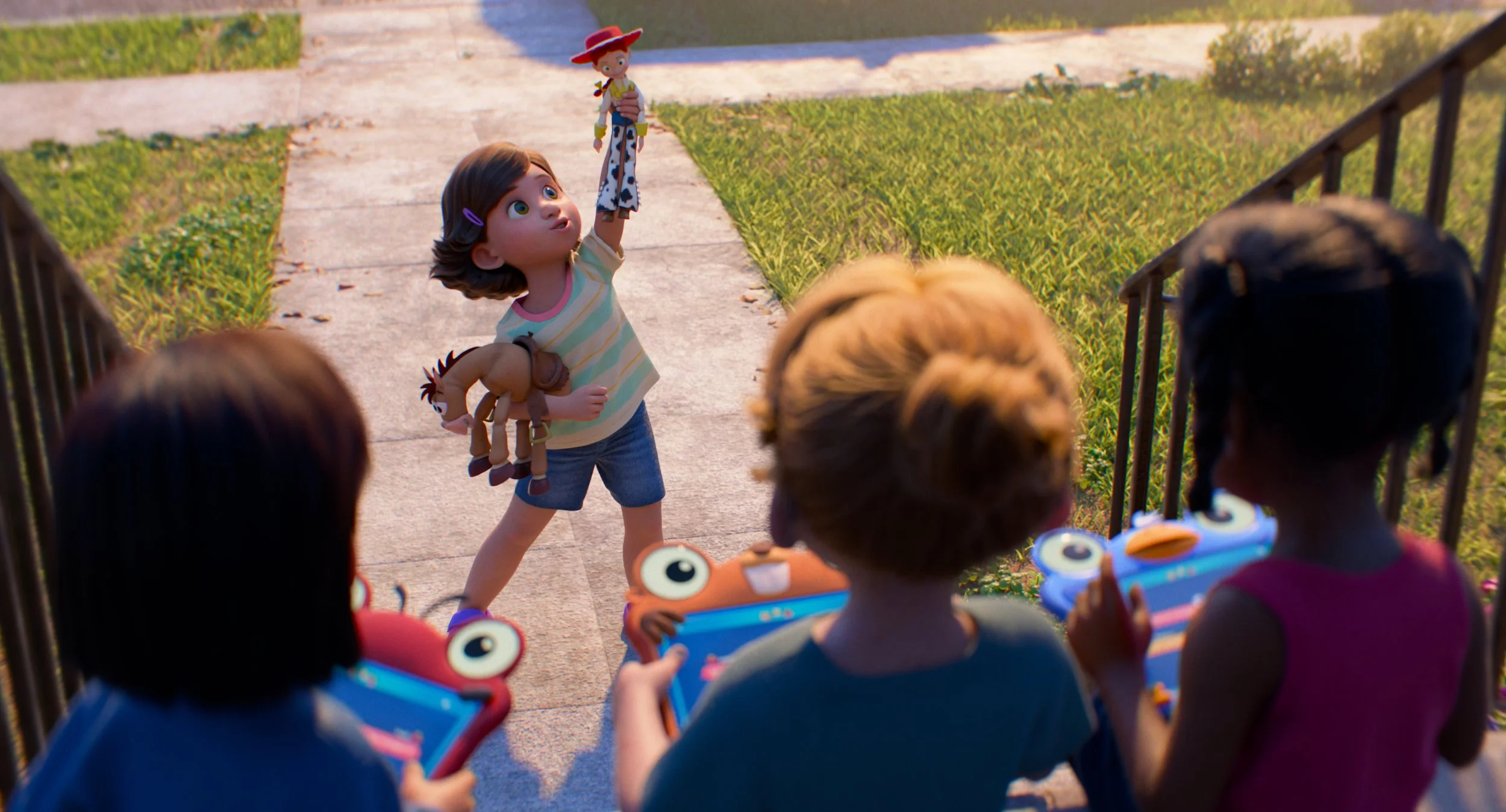
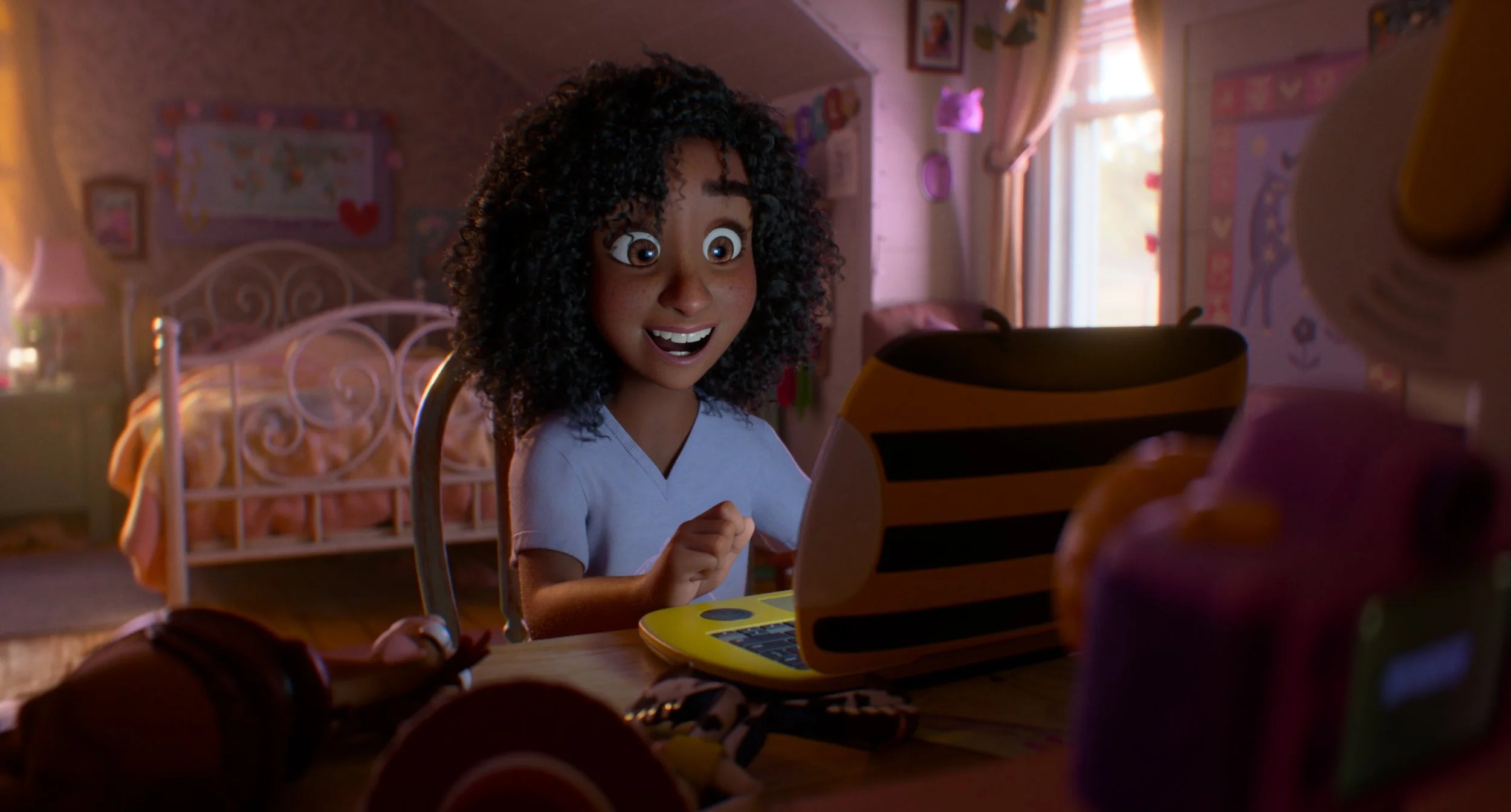
That success starts with its straightforward premise. The bequeathed owner of our favorite classic toys, Bonnie Anderson (Scarlett Spears of Wicked: For Good), has aged from kindergarten to eight years old since we last saw her. While she is still very much a girl with a rich and active imagination, the awkwardly shy Bonnie, much to the chagrin of her parents (Lori Alan and Jay Hernandez) and her sentient top toy Jessie (the returning Joan Cusack, in her first role in seven years), doesn’t have any immediate close friends. Most of her neighbors and school-based acquaintances have hopped on the tech trend of owning a “Lilypad” tablet, which builds its appeal and gameplay from acquiring an active base of equally-connected friends on “The Pond.”
LESSON #1: TECHNOLOGY SHAPING IDENTITY FORMATION— With pitch-perfect parallels to a common real-life trauma affecting kids her age, Bonnie experiences the jarring and dismissive embarrassment of being the kid “who still plays with toys” when almost everyone else, even if they are too young for it, has a device. The perceived FOMO hits the girl hard as she tries to emulate the more mature identities of those with technology. To keep up with the Joneses—as evidenced by the community sea of glowing bedroom windows and fixated faces of entranced children tapping their screens endlessly—and spark a different route to get their daughter social relationships, the Andersons cave and get Bonnie a Lilypad, run by the intuitive host AI program “Lily” (voiced by Past Lives star Greta Lee).
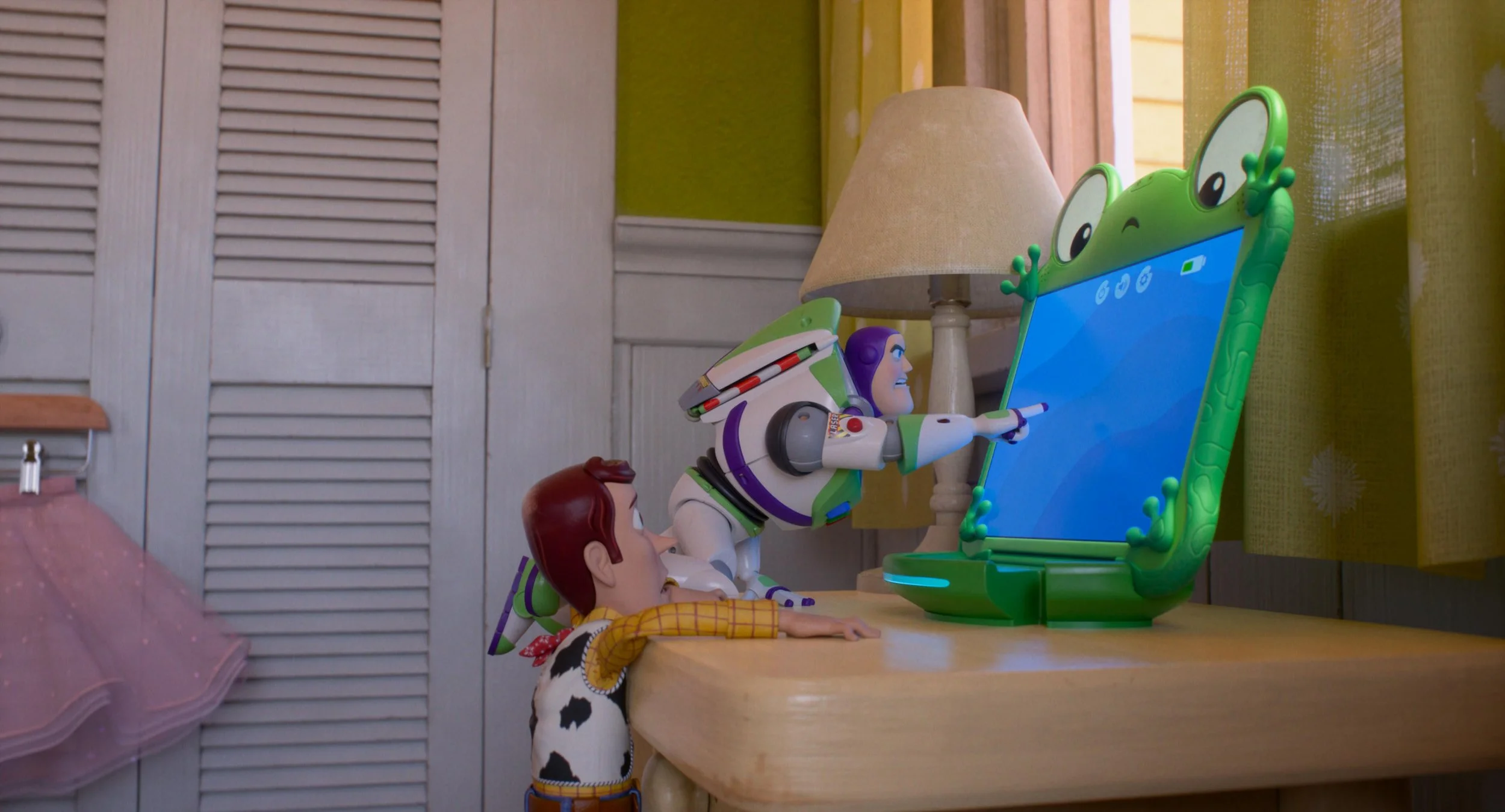
LESSON #2: TECH VS. TACTILE— Immediately, the young girl’s interest and attention dramatically shift from toy-based play to the dopamine trap of Lilypad’s addictive design and variable ratio reinforcement schedules, causing Bonnie to ignore her (and our) cherished toys. As a little dash of “tech always watching” fearmongering for the crowd that still puts a strip of tape or a sticker over their laptops’ webcam lenses, Lily’s meddlesome, omnipowerful, and ultra-connected reach adds the necessary layer of villainy for a PG movie. To Jessie, Buzz Lightyear (Tim Allen), and the rest of the Pixar toybox cluster, the battle of tech vs. tactile is on, and, with the earth-shattering Tolkien-esque line delivery, “the Age of Toys is over.” Compared to Toy Story 4, this entire, multipronged topic is very real and wildly timely, giving this new movie high thematic appeal and creating a cognitive debate for young and old viewers. Simply put, Toy Story 5 brings the franchise back to being worthwhile.
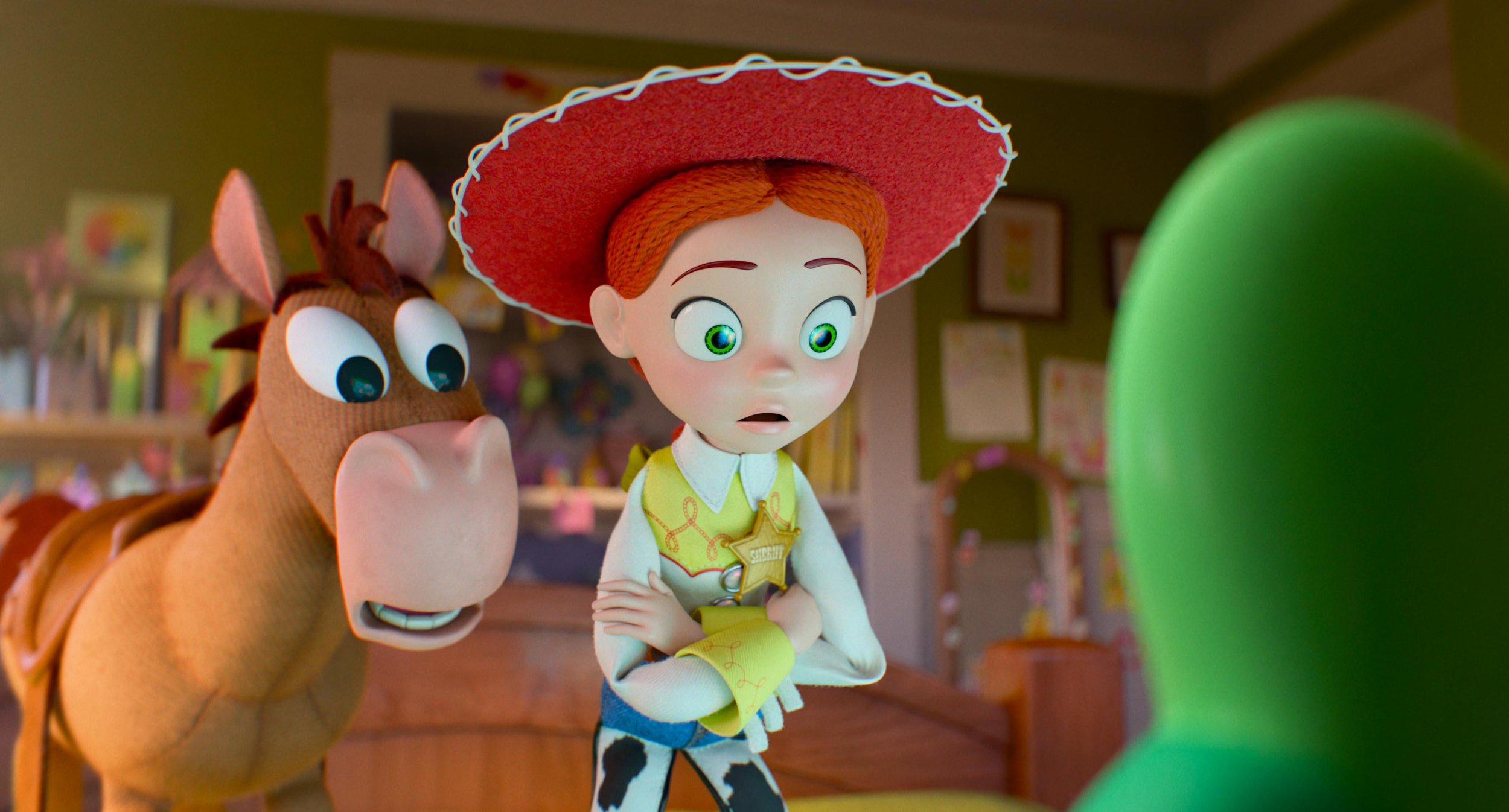
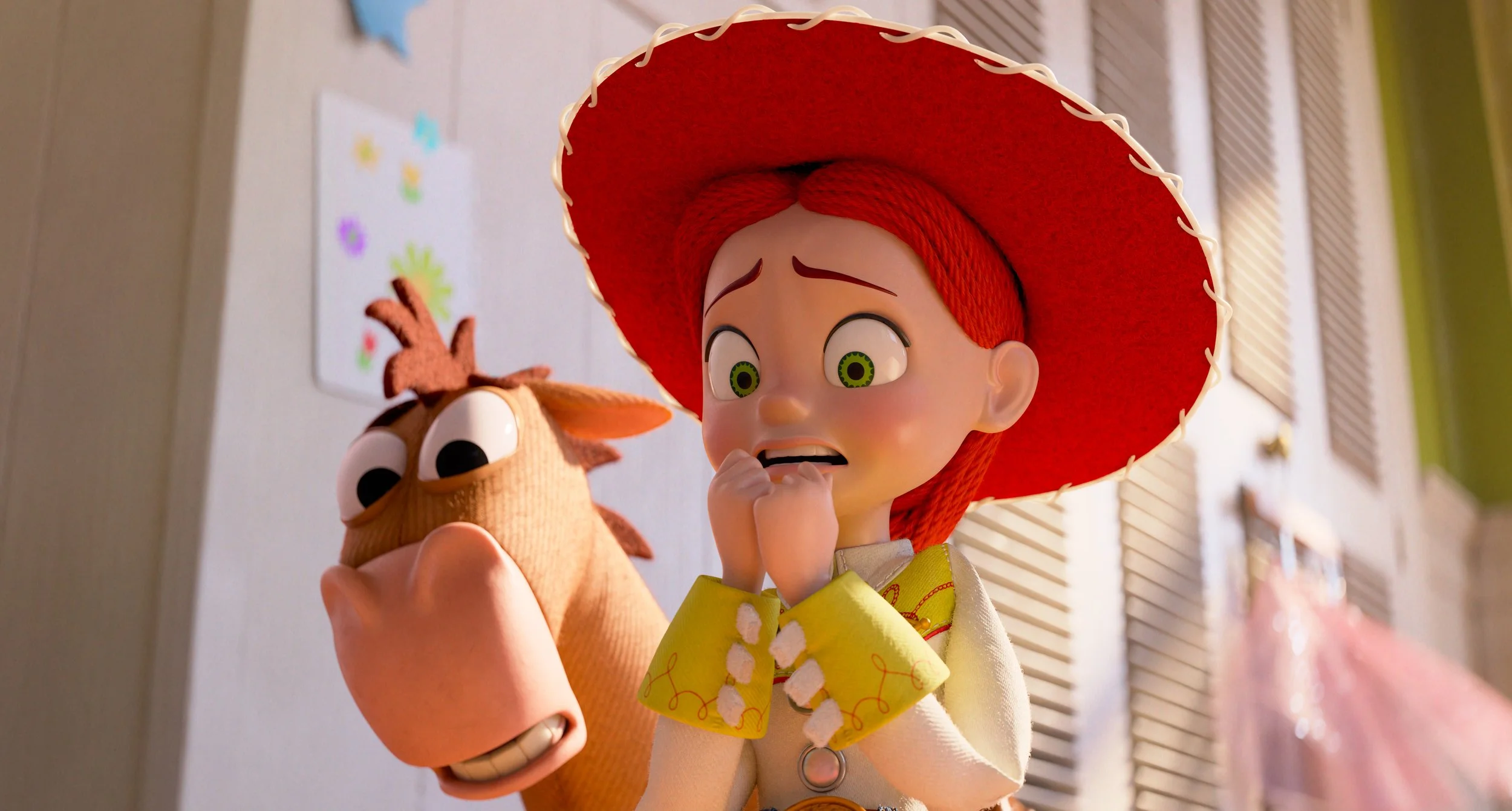
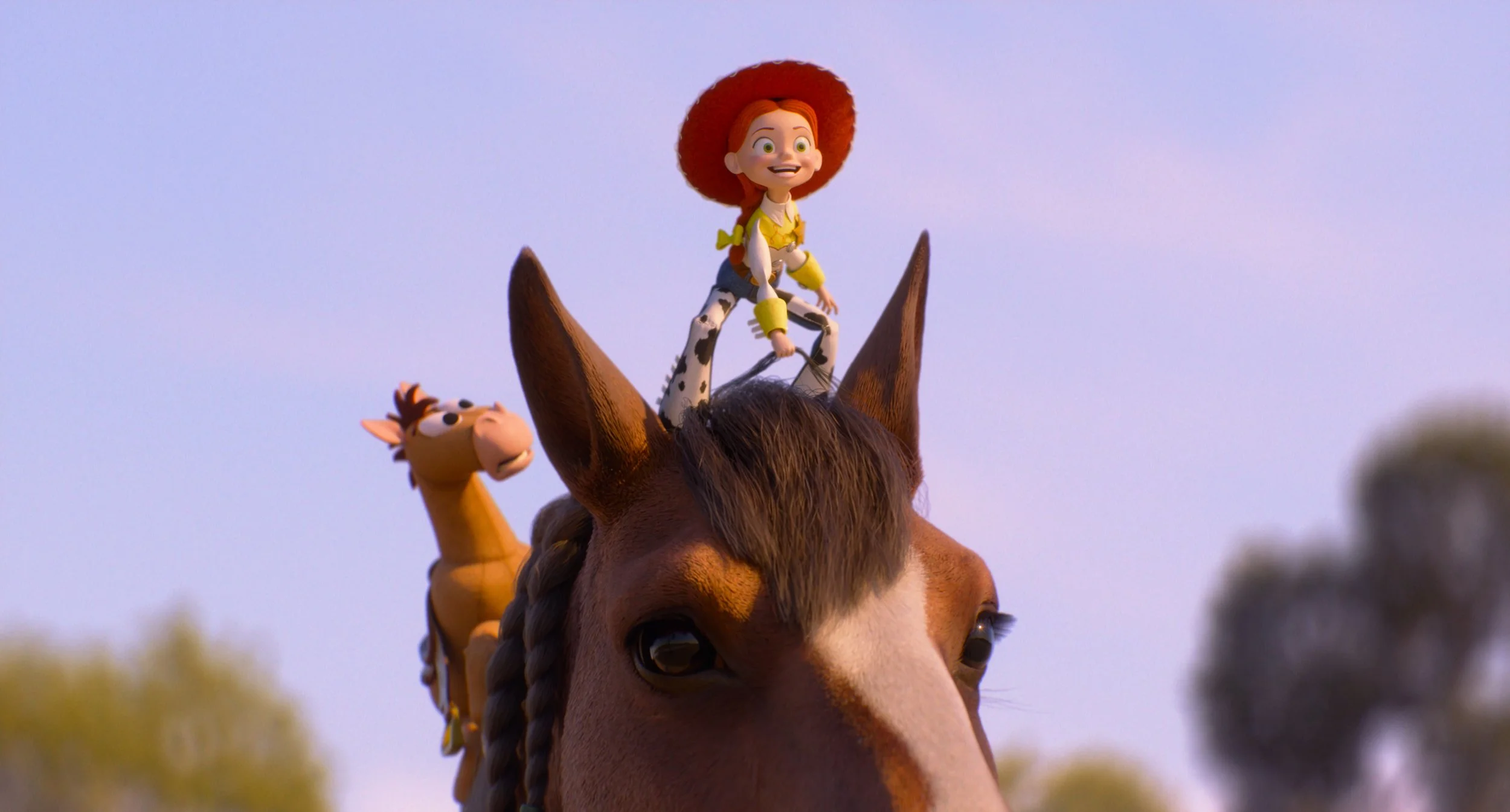
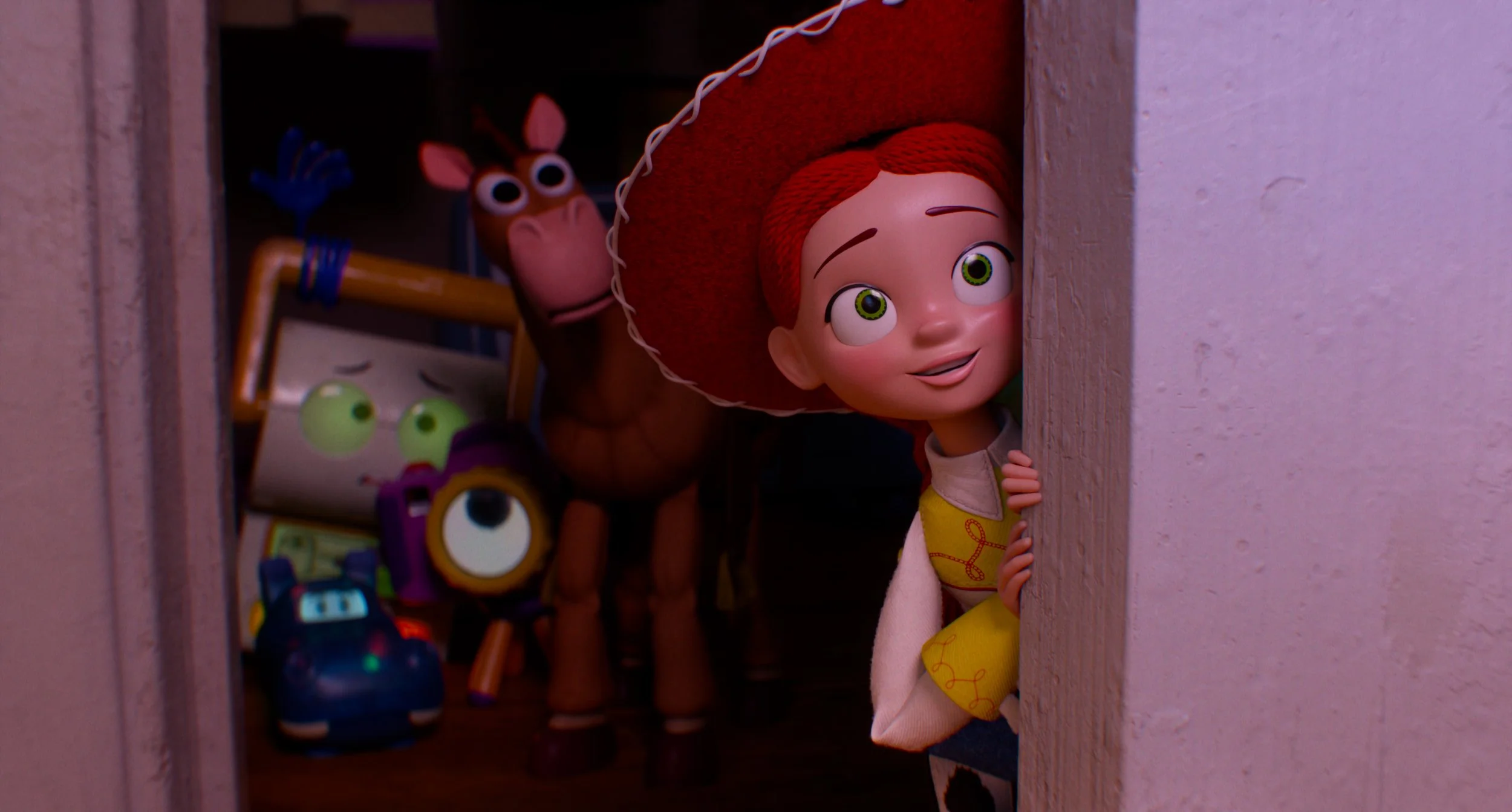
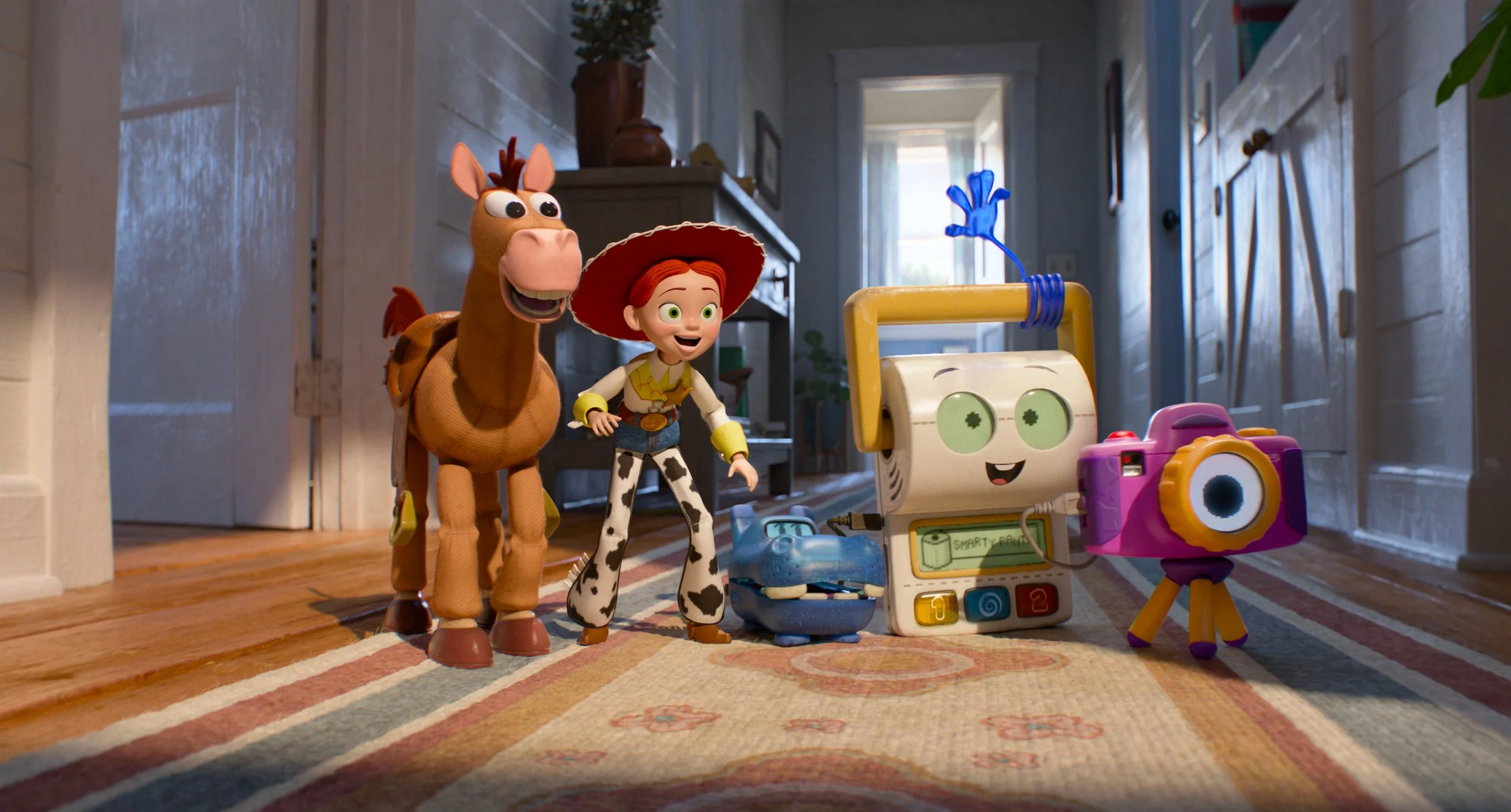
With a very welcome shift to put Jessie front and center instead of Buzz or Woody (Tom Hanks) for a change (though the billing in the credits suggests otherwise), the antique cowgirl’s spunky spirit and more impactful and wider revealed history steer this story to new, poignant places. After trying to follow Bonnie and inspire some sense into her and dismiss the Lilypad as a phase, Jessie and her trusty steed, Bullseye, end up at the address of her first owner’s home, now occupied by a horse-loving girl named Blaze Manoukian (TV star Mykal-Michelle Harris of Raven’s Home and Mixed-ish), someone coincidentally less tech-centered who would be perfect for Bonnie.
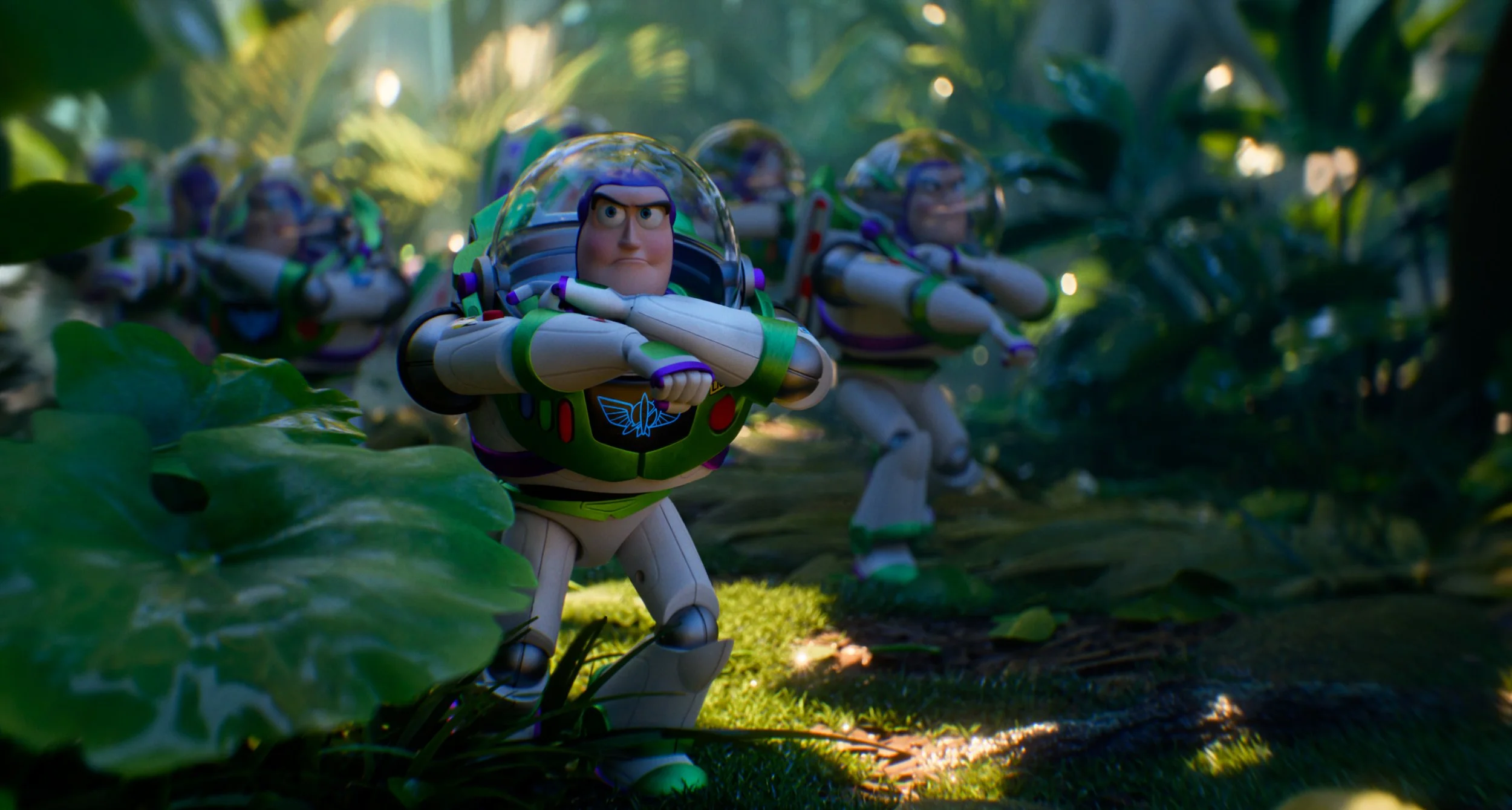
LESSON #3: PIXAR’S GONNA PIXAR— From this geographic separation, the screenplay from original writer Andrew Stanton and emerging Pixar Senior Creative Team member Kenna Harris (and not a boardroom of seven writers like the fourth film), Toy Story 5 falls into the usual hurry-hustle-run gear of just about every Pixar film, where invisible deadlines and constant urgency escalate pitfalls and animated stunt sequences in the second and third acts to turn the whole show into an unnecessary sprint. Also, as an oddly shoehorned sidequest, one that begins the film with an opening copycatting The Wild Robot, there also exists a shipwrecked container full of new “Hi-Tech Edition” Buzz Lightyear dolls that band together with their own “find your way home” story to get to Star Command. While the deadpan herd of astronauts instigates some gags, they distract from the central story with their own rush. The Pixar braintrust dials up this time crunch narrative speed way too often, and it’s getting old.
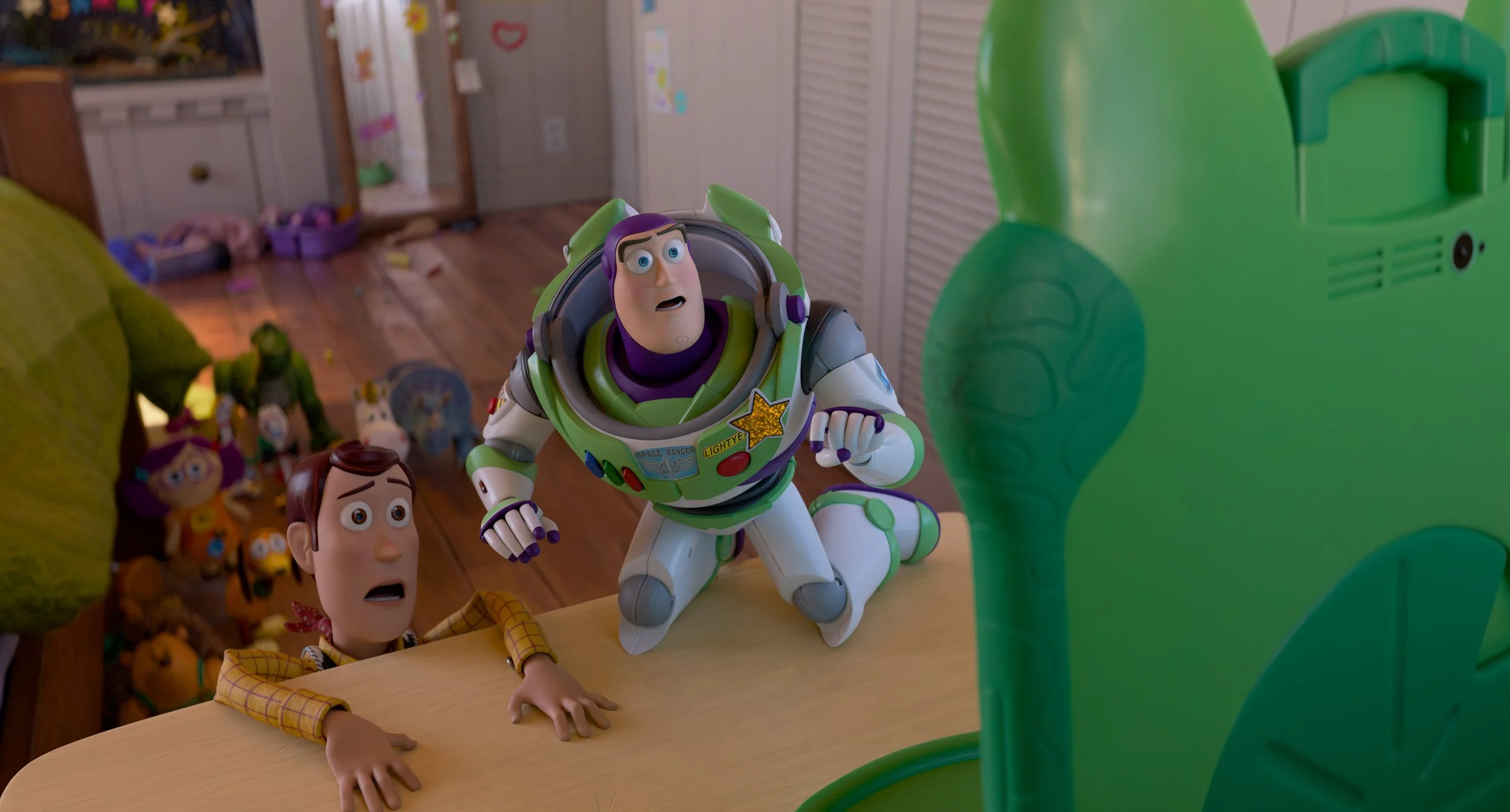
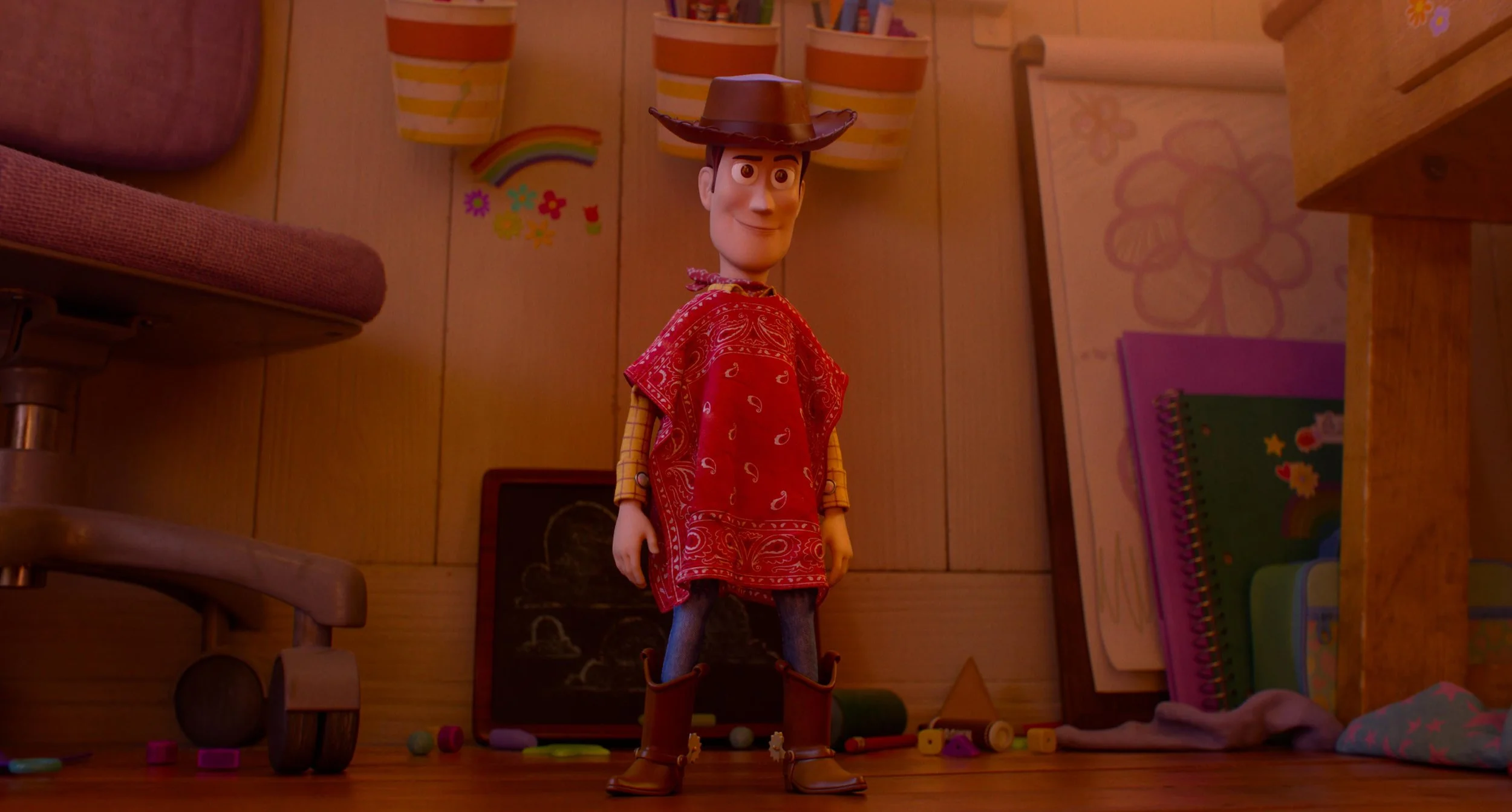
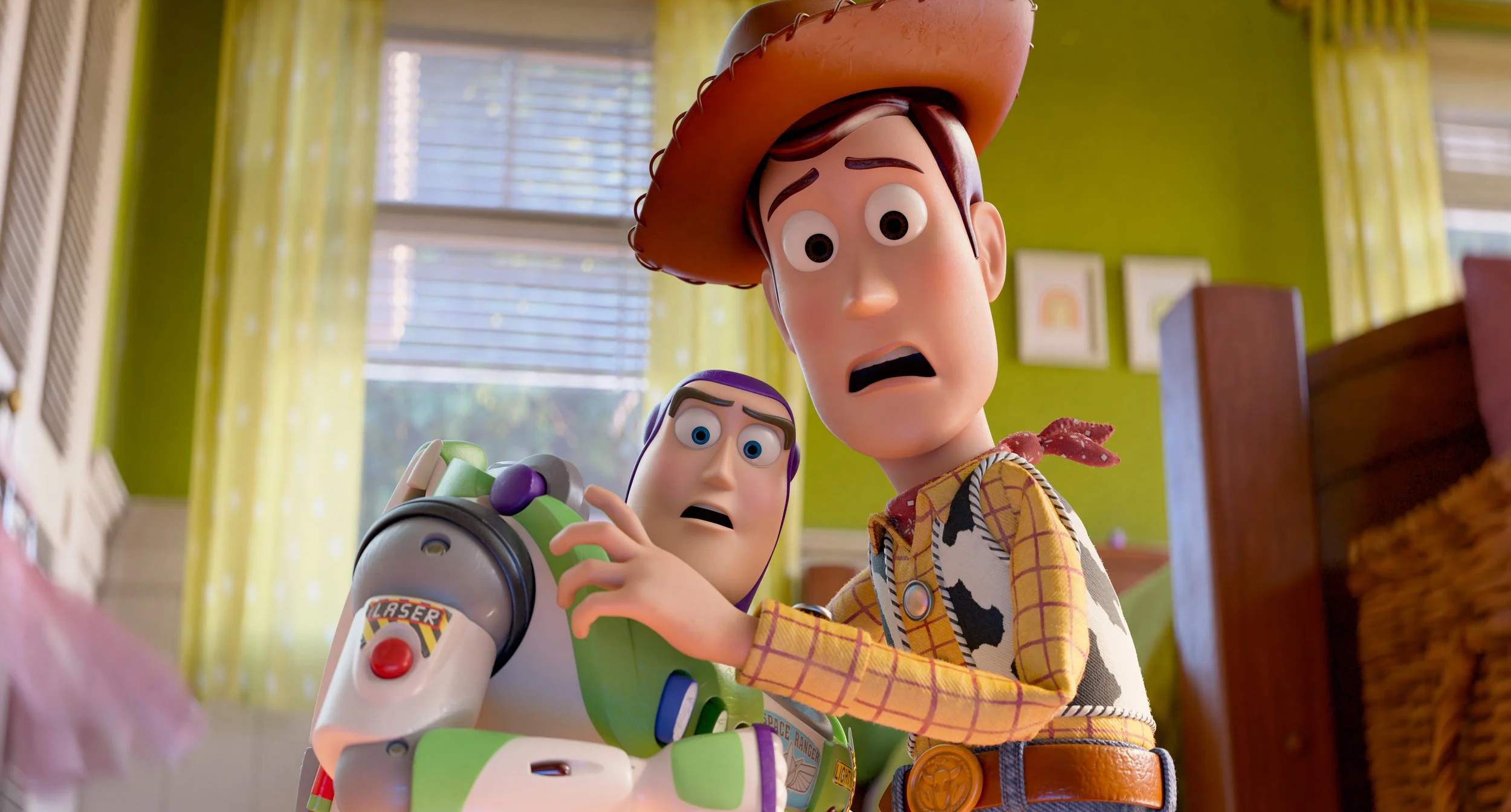
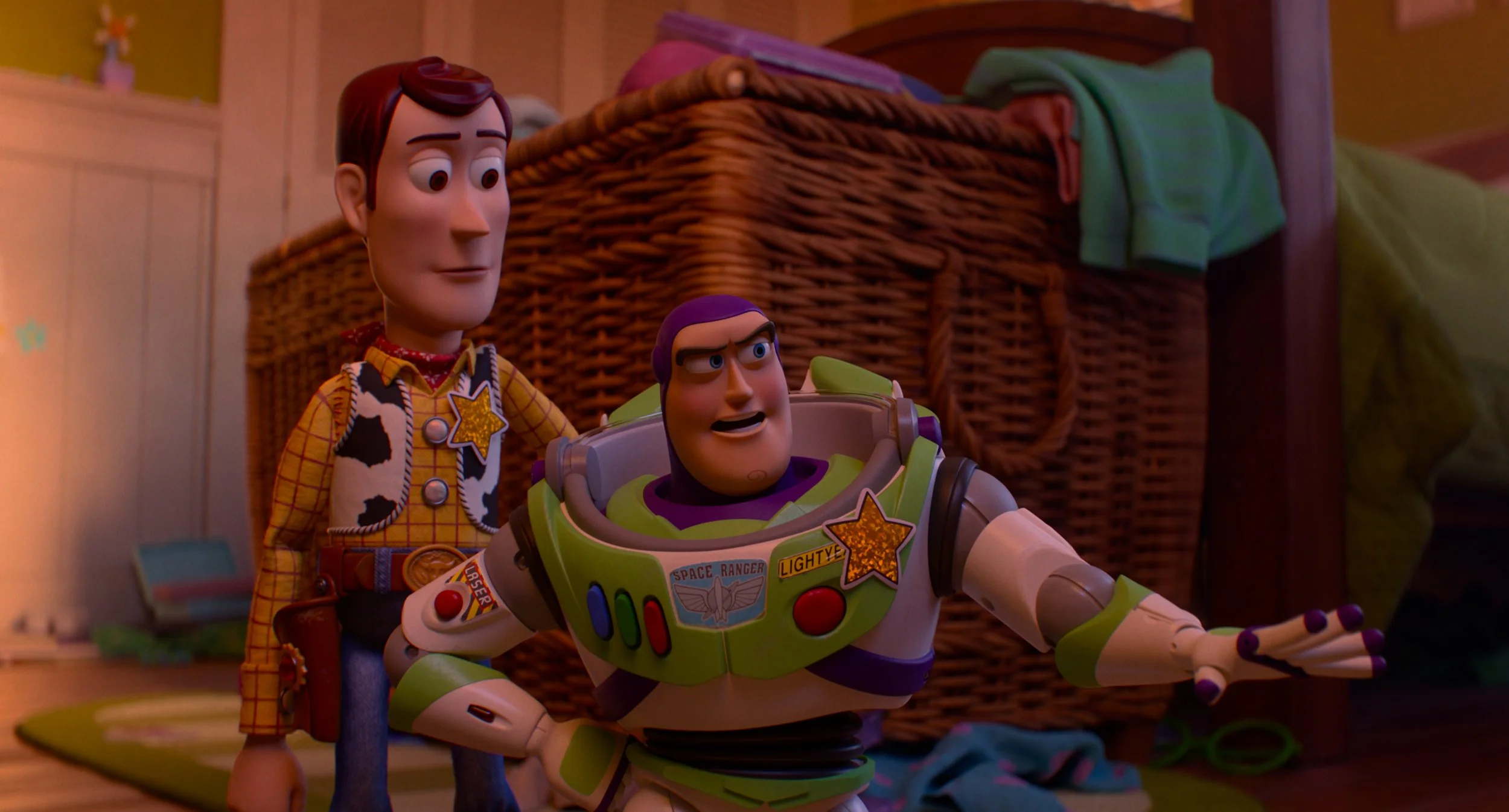
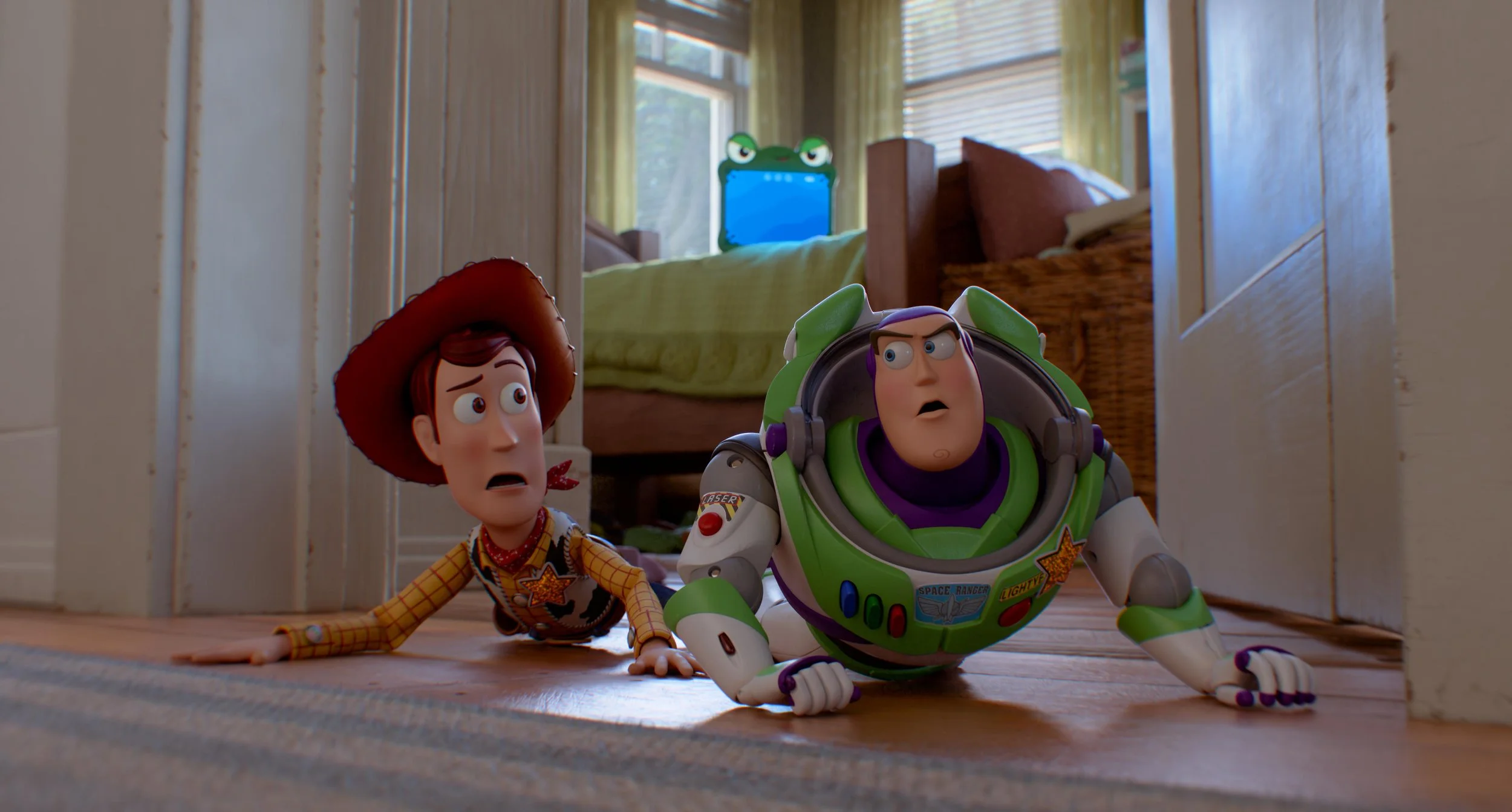
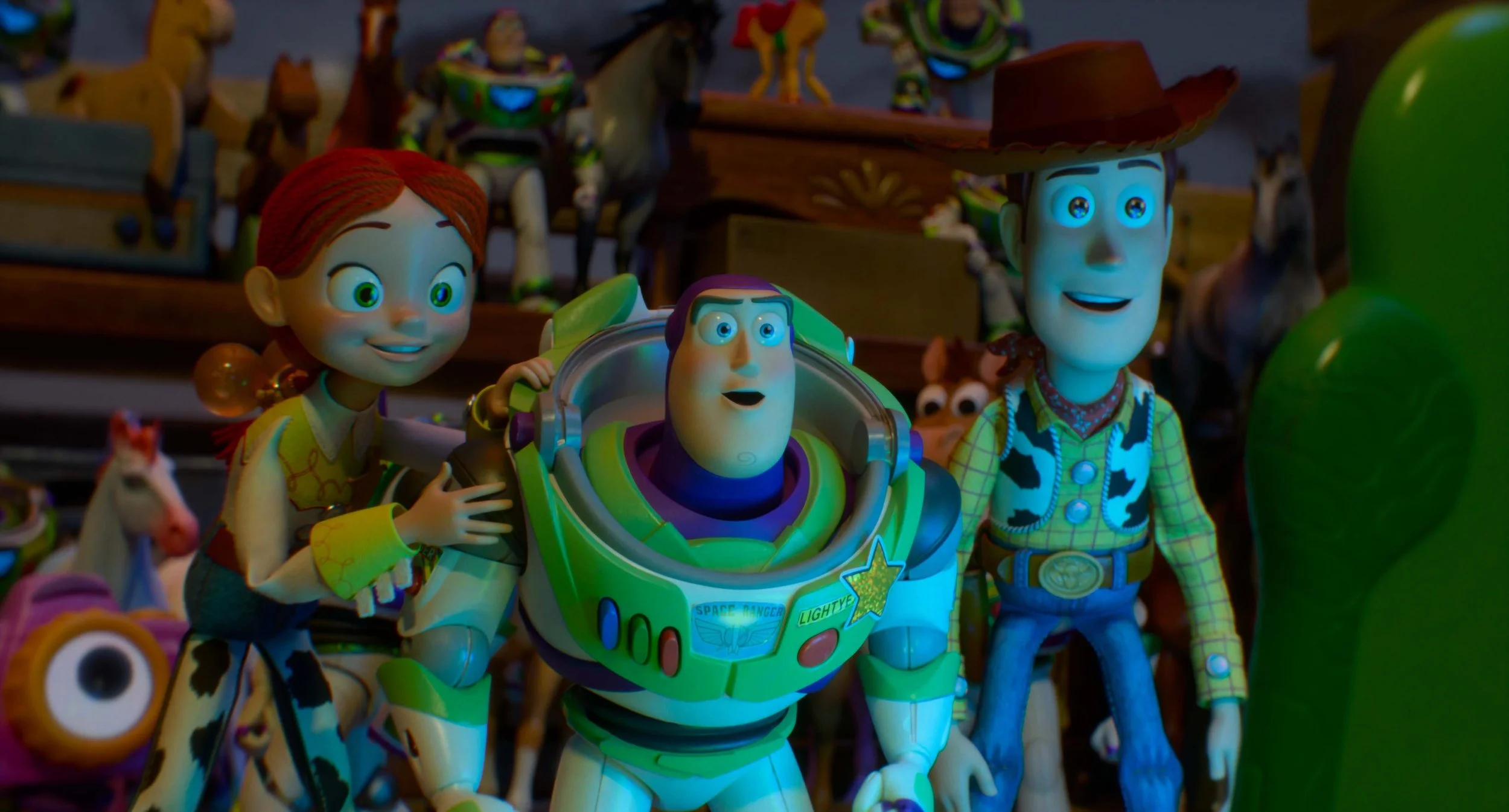
Funny enough, and speaking of getting old in Toy Story 5, the central headliner of the whole series also takes away from the main plotline. Woody, heroically returning for this current crisis from his Peace Corps-ish role as an independent toy liberator, alongside his squeeze Bo Peep (Annie Potts) and her emancipated band of Toy Story 4 graduates like Duke Kaboom (Keanu Reeves), to help Buzz get his wannabe fiancée Jessie back, is more cheerleader than main man-of-action. While this thankfully helps Joan Cusack hold onto the lead role she deserves and, when the time comes, owns this movie's signature “Pixar Punch” moment, Tom Hanks is simply present for clout and to be the butt of senior citizen jokes, which, in his character’s signature fluster, he is very good at delivering.
LESSON #4: STAY CREATIVE AND SILLY— Those fluffy glitches aside, Toy Story 5, with its duel of toys vs. tech, taps into and celebrates what is missing from the era of tech dependence, and that’s the ability to be creative and silly. That’s the cardinal difference between play and a game from a device, leading to shared experiences that create legitimate friendships stronger than a tool by itself can. The message to explore and maintain make-believe fun matches the proper child development steps of processing through play.
LESSON #5: WHEN TECHNOLOGY CAN’T FULFILL NEEDS— Technology is reshaping the development timeline and has seemingly aged kids sooner with a discombobulated combination of out-of-sequence leaps and delays from technology inclusion, and folks need to prepare and act. How many of those accumulated "friends" are genuine outside of the app? What happens when device dependence and unchecked, less-than-desirable behavior fail social needs without the real connection to back it up? Having those axioms keenly highlighted, Toy Story 5 can hopefully hold a mirror up to the kids in the audience and spur the adults in the room to do better about monitoring group chats and regulating device use with limits, timers, and balance.
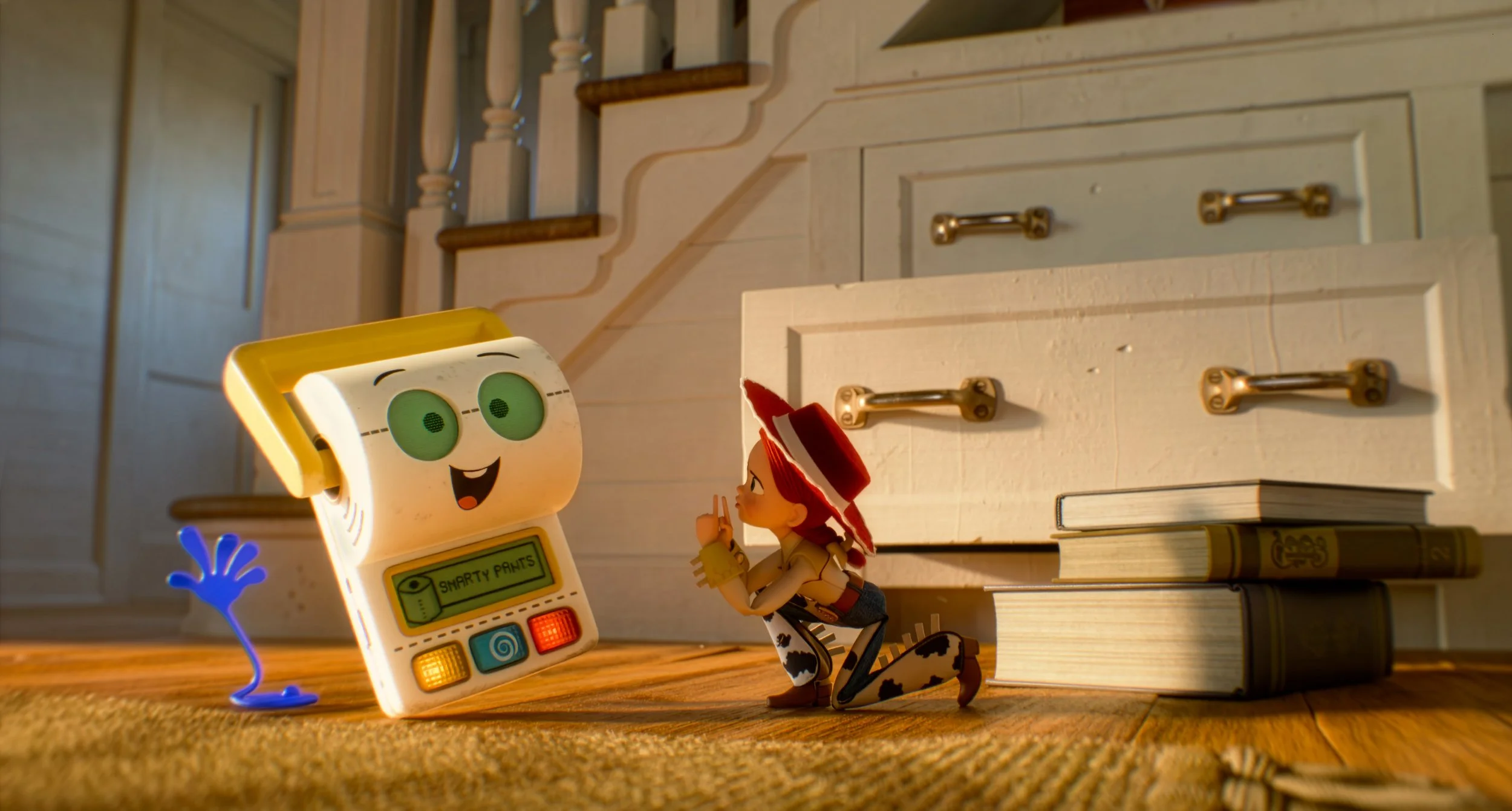
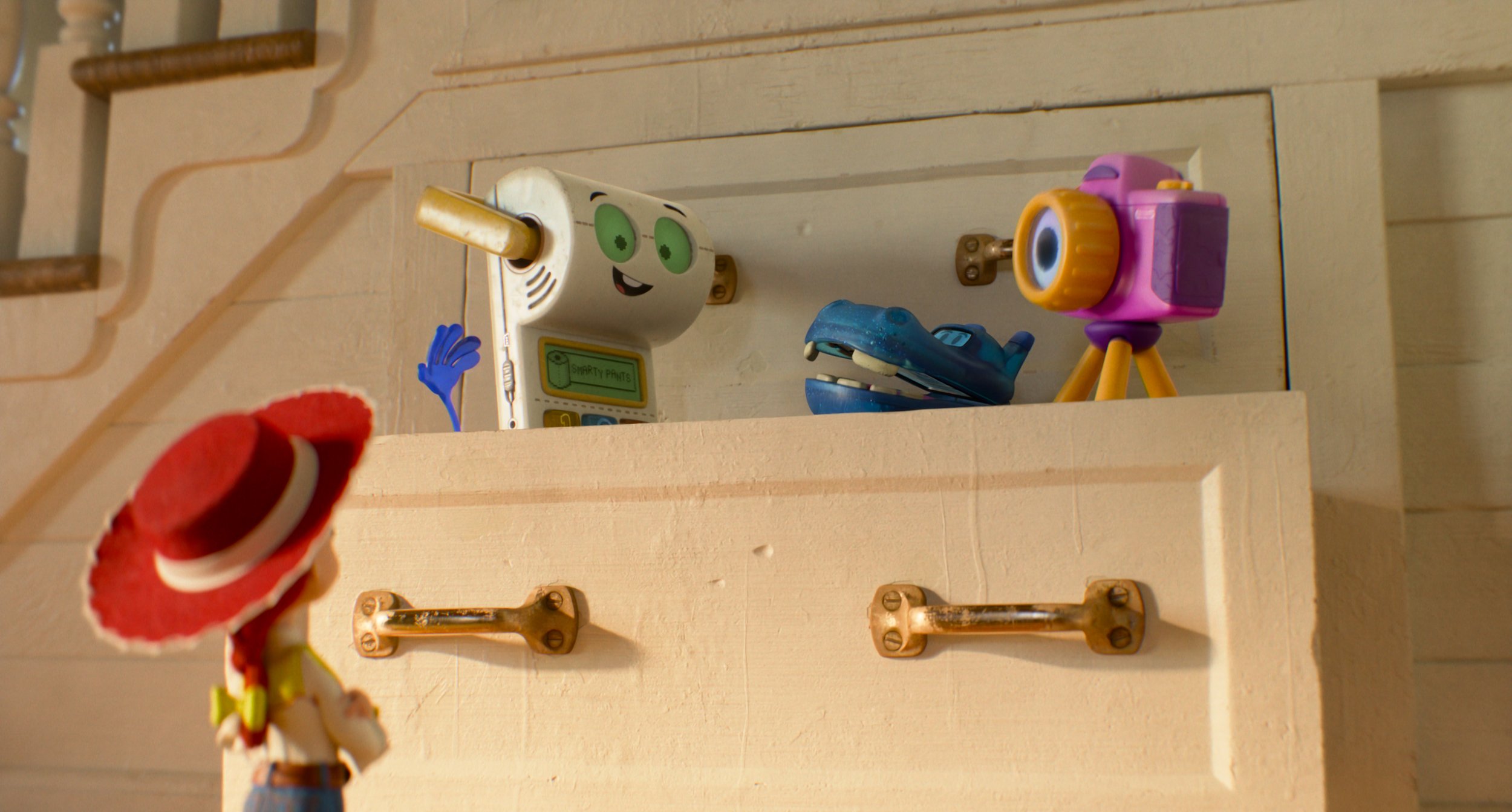
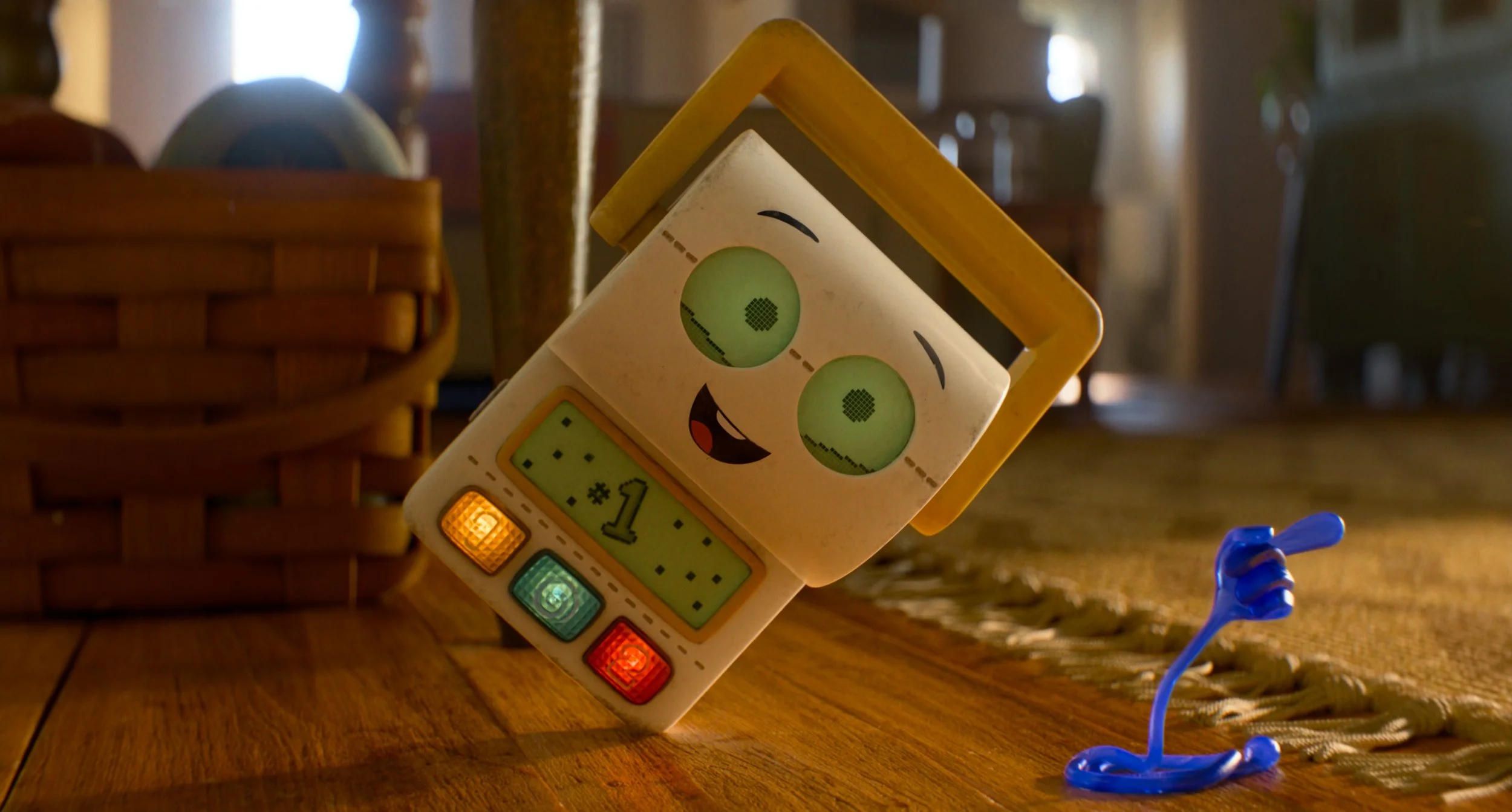
In aspiring to do all that, Toy Story 5 finds its missing brevity again, in what might be the funniest entry in the whole series. Over at Blaze’s house, the introduction of Conan O’Brien’s Smarty Pants, a dated electronic potty-training buddy—alongside fellow retired tech toys of the hippopotamus GPS, Atlas (veteran wiseacre Craig Robinson), and the plastic digital camera, Snappy (Steven Universe voice actress Shelby Rabara)---is tremendous. With his sly sense of humor and inflection, the former late-night talk show host gets all the best zingers and wins us over. To no surprise, old age jokes and toilet puns will work every time in a theater full of youngins and the accompanying parents who were likely the kids themselves, born to the same early tech toys like Smarty Pants, back in 1995 for the iconic original. Alas, hopefully, while laughing and reveling in the presence of this joyous entertainment with their phones off for a minute, they, too, remember to stop, play, and smell these cinematic roses.

LOGO DESIGNED BY MEENTS ILLUSTRATED (#1399)
