
Iconic Poker Scenes Capture Hollywood Tension
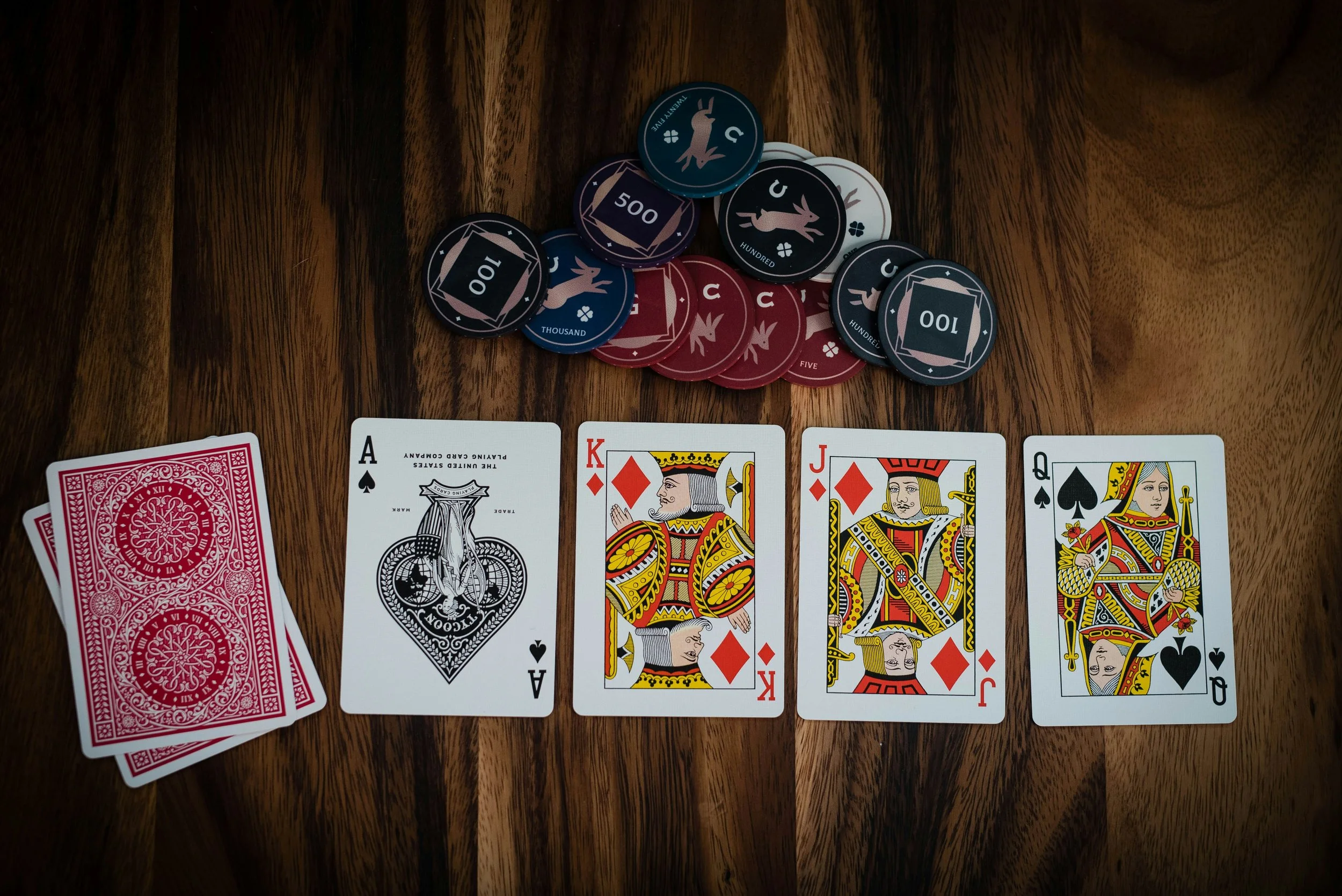
The final hand of Casino Royale runs for nearly 10 minutes. Four players remain. The pot exceeds $100 million. Daniel Craig's Bond holds a straight flush, and the camera moves between faces, chip stacks, and the five community cards on the felt. None of it is realistic poker. The hand sequence would occur roughly once in several billion deals. The scene works anyway because the filmmaking converts a card game into a compression chamber for character, stakes, and confrontation.
How Poker Functions as a Dramatic Device
A poker hand has a built-in dramatic structure. The deal establishes the premise. Each betting round raises the tension. The reveal resolves it. Screenwriters use that framework because it compresses conflict into a single physical space with fixed rules and escalating risk. Two characters sitting across a table with chips between them can express power, vulnerability, deception, and resolve without leaving the room.
The mechanics also generate visual rhythm. Close-ups on hands and faces alternate with wide shots of the table. Sound design isolates the click of chips, the snap of cards, the silence between bets. Directors use these elements the way a composer uses rests and crescendos. The game provides the tempo. The filmmaker controls the volume.
Card Games on Screen and Off the Table
Texas Hold'em dominates competitive poker broadcasts, but film has used many variants to build dramatic tension. Five-card draw appeared in westerns for decades before Hold'em became the standard. Omaha and Stud show up in underground game sequences where the rules themselves carry narrative weight. Audiences who play texas holdem recognize the betting rounds and community card structure that filmmakers use to time reveals and escalate confrontation across a single hand.
Other card games serve similar cinematic functions. Blackjack drives the plot of 21. Baccarat carries the early Bond films. Each game supplies its own rhythm for building suspense.
The Cincinnati Kid and the Template It Set
The 1965 film built its entire third act around a single stud poker hand between Steve McQueen's Kid and Edward G. Robinson's Lancey Howard. The hand runs through multiple streets with dialogue layered between bets. Each raise communicates something about the character's confidence, desperation, or calculation.
The film established conventions that poker movies still follow. The veteran opponent, the young challenger, the crowded room watching in silence, the final card that determines everything. These elements became the template. Rounders, Molly's Game, and Casino Royale all use variations of the same architecture, updated with different stakes and settings but built on the same dramatic bones.
Rounders and the Poker Boom Connection
Matt Damon's 1998 film depicted underground poker in New York City with a specificity that no previous film had attempted. The hands were plausible. The dialogue used real poker terminology. The culture of grinding, bankroll management, and table selection informed the plot rather than serving as decoration.
The final scene between Damon's Mike McDermott and John Malkovich's Teddy KGB condenses the entire film's tension into a single session. McDermott identifies a physical tell involving Oreo cookies and uses it to read his opponent's hand strength. The scene works because it dramatizes the skill component of poker through observation rather than luck.
Rounders reached a wider audience during the 2003 poker boom, when Chris Moneymaker's WSOP Main Event win brought millions of new players to the game. The film became required viewing in that community. Its depiction of poker as a skill-based pursuit played by serious people with real consequences aligned with what new players were discovering at the table. The timing was incidental, but the film's accuracy made it durable.
Casino Royale and the Spectacle Approach
The 2006 Bond film replaced baccarat, the franchise's traditional card game, with Texas Hold'em. The switch reflected the game's dominance in popular culture at the time. The poker sequence lasts roughly 30 minutes and centers a $150 million buy-in tournament at the Casino Royale in Montenegro.
The hands played in the film are statistically extreme. Four players at the final table hold a flush, a full house, a higher full house, and a straight flush. That combination is functionally impossible in a dealt hand. The filmmakers prioritized visual escalation over accuracy. Each reveal tops the last. The audience follows the drama through the reactions rather than the math. For a movie that needs the scene to carry geopolitical stakes, believability comes from performance, not probability.
Molly's Game and the View from Behind the Table
Aaron Sorkin's 2017 film told the story from the organizer's perspective rather than a player's. Jessica Chastain's Molly Bloom runs high-stakes games attended by celebrities, athletes, and financiers. The poker is secondary to the business around it, which inverts the usual formula. The game becomes a setting rather than a plot mechanism.
The film drew from Bloom's memoir and the real events that led to federal charges against her. The players at her tables included names that became public through court filings. The poker scenes show community cards and bet sizing accurately enough for knowledgeable viewers to follow, but the camera spends more time on the money moving through the room than on the hands being played.
Why Accuracy Matters Less Than Structure
Poker players routinely point out the implausible hands dealt in poker films. The criticism misses the function of the scene. A film does not need to depict a statistically likely outcome. It needs to build and resolve tension within the constraints of the scene's runtime.
The Sting used a rigged poker game to establish Robert Redford's con artist credentials in under 5 minutes of screen time. Maverick played the same structure as comedy. Cool Hand Luke used a bluff with nothing to define Paul Newman's entire character. Each film treated the cards as secondary to the human moment they framed.
The best poker scenes succeed because they use the game's structure as a framework for character conflict. The cards are props. The bets are dialogue. The river card is a plot twist. Filmmakers who understand this produce scenes that work for audiences who have never held a hand of cards and for players who have logged thousands of hours at the table. The mechanics are flexible enough to serve both.
What the Game Gives the Camera
Poker is one of the few competitive activities that takes place across a single table, at a pace the camera can follow, with visual elements that communicate conflict without narration. A chess match communicates through the board, which most viewers cannot read. A boxing match communicates through movement, which is intuitive but fast. Poker gives the camera faces, chips, cards, and silence. The filmmaker controls the reveal. That control is what makes it a durable source material for scenes that hold attention at any budget level. A $200 million Bond film and a low-budget indie can both put two characters at a poker table and produce tension. The game scales to the story. The story scales to the filmmaker's ability to use what the game already provides.
