
What Movie Set Design Teaches Us About Interior Walls and Finishes
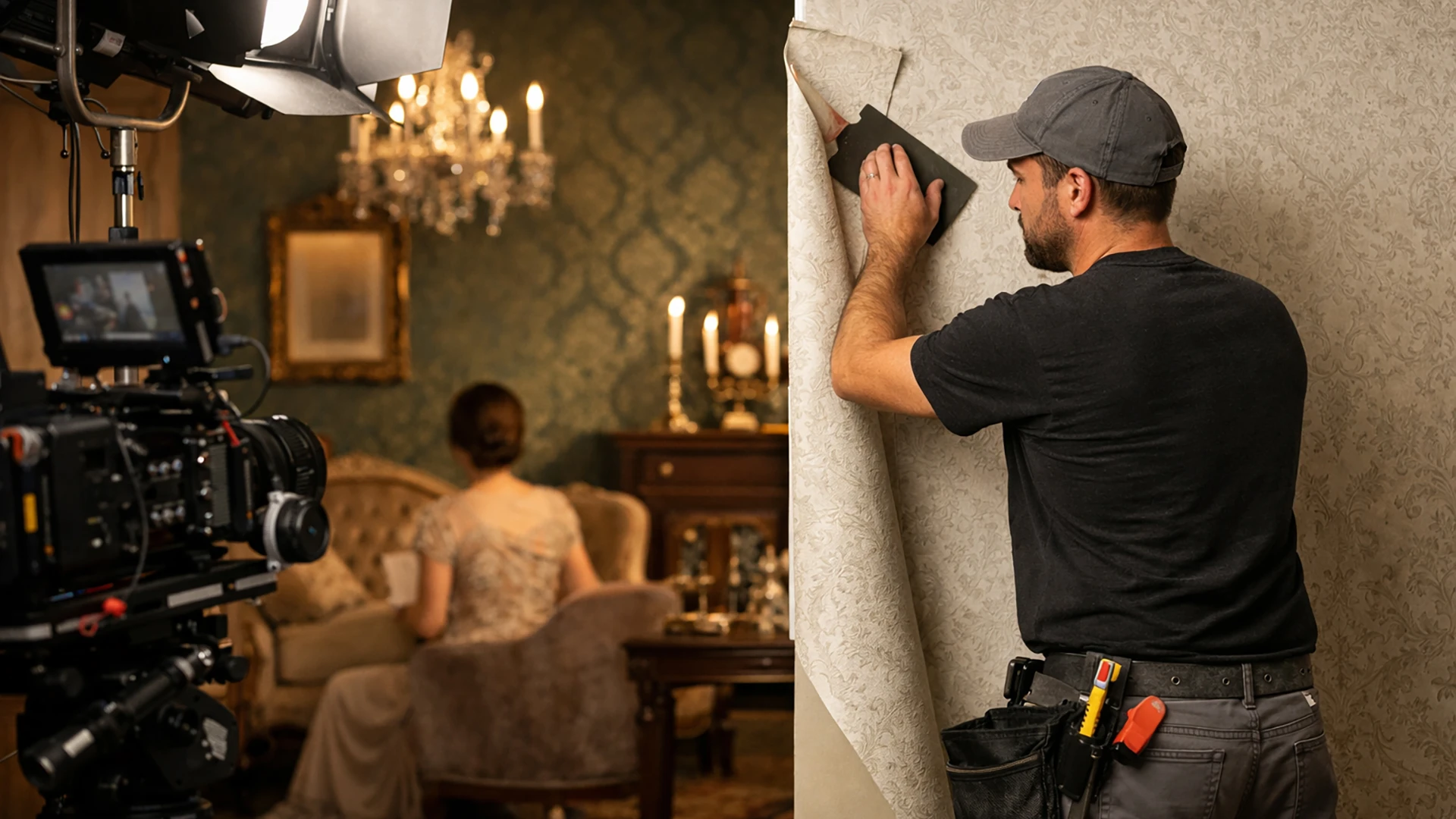
What Movie Set Design Teaches Us About Interior Walls and Finishes
When we watch a great film, we rarely think about the walls behind the actors. Yet, those walls are doing an enormous amount of work. They shape the mood, define the space, and subtly guide how we feel about every scene. From luxurious period dramas to minimalist modern thrillers, wall finishes are a core part of cinematic storytelling.
Surprisingly, the same principles used in movie set design apply directly to real homes — especially when it comes to wallpaper, textures, and surface preparation.
🎥 The Hidden Power of Walls in Film
In cinema, walls are never just backgrounds. Production designers carefully select materials, colors, and textures to support the narrative.
- A matte, textured wall can make a space feel grounded and intimate
- Glossy or reflective finishes can create tension or unease
- Patterned wallpaper often signals personality, wealth, or time period
Think about classic films set in historic homes — intricate wallpaper patterns immediately communicate elegance and tradition. On the other hand, modern films often use clean, seamless walls to emphasize simplicity and control.
🧠 Why Texture and Precision Matter
In both film and real interiors, imperfections stand out — especially on camera. That’s why movie sets are built with extreme attention to detail:
- Seams must be invisible
- Patterns must align perfectly
- Surfaces must be smooth and consistent
Even a small flaw can break the illusion on screen.
The same applies to real homes. Poorly installed wallpaper, misaligned patterns, or uneven walls can instantly downgrade the look of an otherwise well-designed space.
That’s why understanding how to install vinyl wallpaper properly is critical when aiming for a high-end, finished result.
🏠 Bringing Cinematic Design Into Real Homes
What works in film can absolutely work in residential interiors — if executed correctly. Many professionals, including the team behind EnjoyTheWall blog, often emphasize how preparation and precision define the final outcome.
Here’s how cinematic principles translate into real-world wall design:
1. Controlled Color Palettes
Just like in film, color should support the purpose of the space. Soft tones create calm environments, while bold contrasts add energy and drama.
2. Texture as a Storytelling Tool
Grasscloth, vinyl textures, or decorative plaster can add depth and character — much like set designers use layered materials to enrich a scene.
3. Clean Lines and Seamless Finishes
The most important factor is execution. No matter how good the material is, poor installation will ruin the effect.
🎯 Precision Is What Separates Average From Premium
In film production, teams spend hours perfecting details that viewers may never consciously notice — but always feel.
The same philosophy applies to wall finishing in real spaces:
- Proper wall preparation ensures long-term durability
- Accurate cutting and alignment create visual harmony
- Clean edges and transitions define the overall quality
Without these, even the best materials won’t deliver the intended result.
For a deeper breakdown of materials, preparation, and real-world challenges, read more here
In real projects, especially with textured or patterned materials, even a millimeter-level deviation can affect the entire visual perception of the wall.
🎬 Final Thought
Movie set design teaches us one key lesson: details matter. Walls are not passive elements — they actively shape how a space is experienced.
Whether on screen or in a home, the difference between ordinary and exceptional often comes down to precision, material selection, and execution. And just like in film, when everything is done right, the result feels effortless — even though it’s anything but.
